Schema Mode Overview
Schema Modes Explained: A Complete Guide to the Schema Mode Model
Written by Jess O'Garr (Clinical Psychologist)
Schema Mode Therapy gives us a way to understand something that can otherwise seem incredibly confusing in therapy: how the same person can think, feel, and behave completely differently depending on what has been triggered.
A patient might walk into your room as a highly competent 45-year-old professional who manages staff, raises children, pays a mortgage and functions perfectly well in most areas of their life. Twenty minutes later, they are talking about their mother, and suddenly they feel five years old. They are scared, ashamed and desperate for reassurance. A few minutes later, they are angry. Then they shut down and tell you they don't care. Then their inner critic kicks in and tells them they are pathetic for getting upset in the first place.
Welcome to Schema Mode Therapy.
The schema mode model gives us a framework for making sense of these rapid shifts. Rather than seeing them as random changes in mood or behaviour, we can understand them as different modes activating in response to different emotional needs, schemas, and situations.
The literature includes many different schema mode models and labels. Researchers have identified modes that appear more commonly in particular populations, including eating disorders and forensic populations, and clinicians will sometimes develop additional labels that better fit an individual patient. The exact words are not sacred. What matters is understanding the function of the mode.
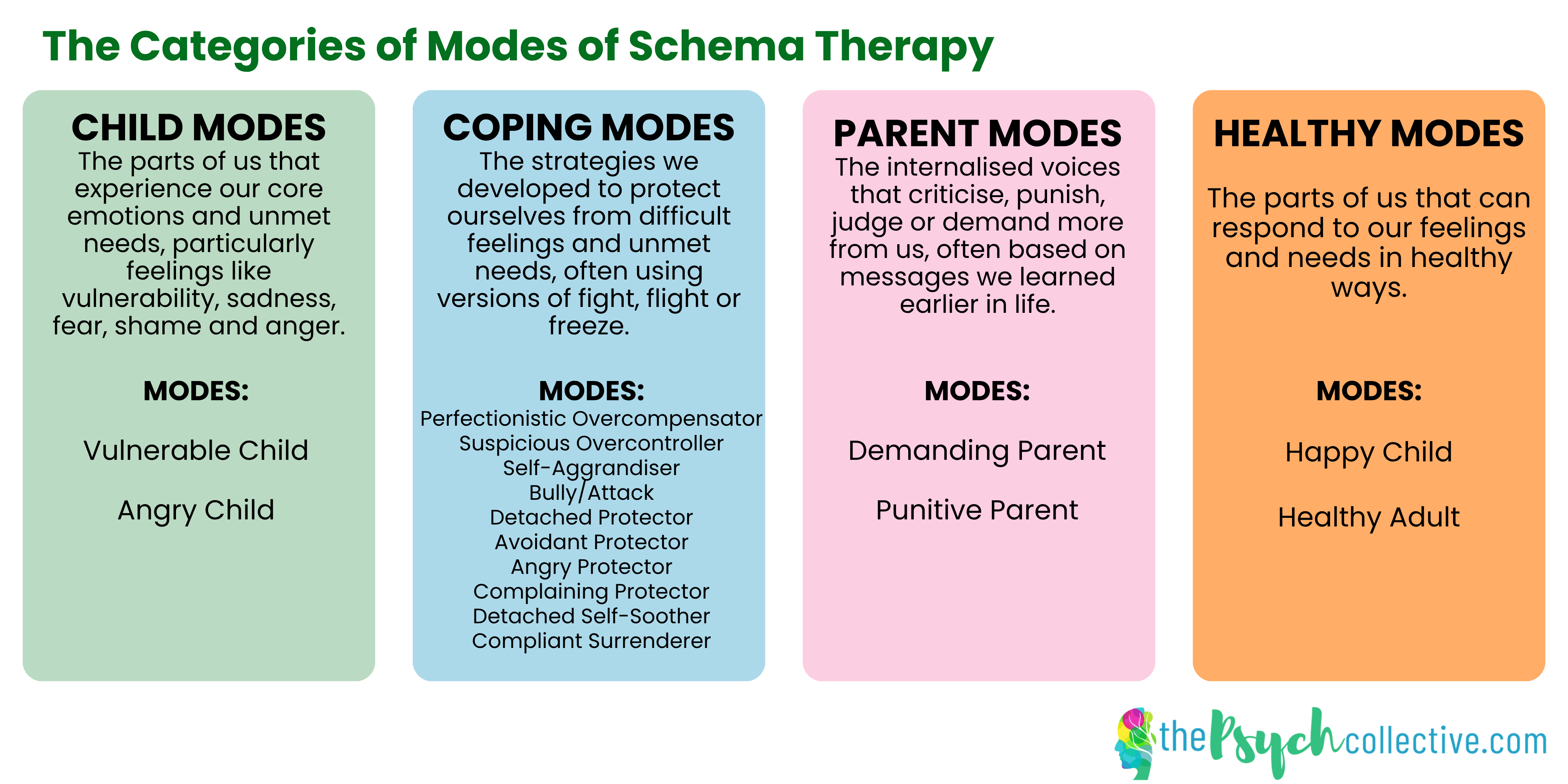
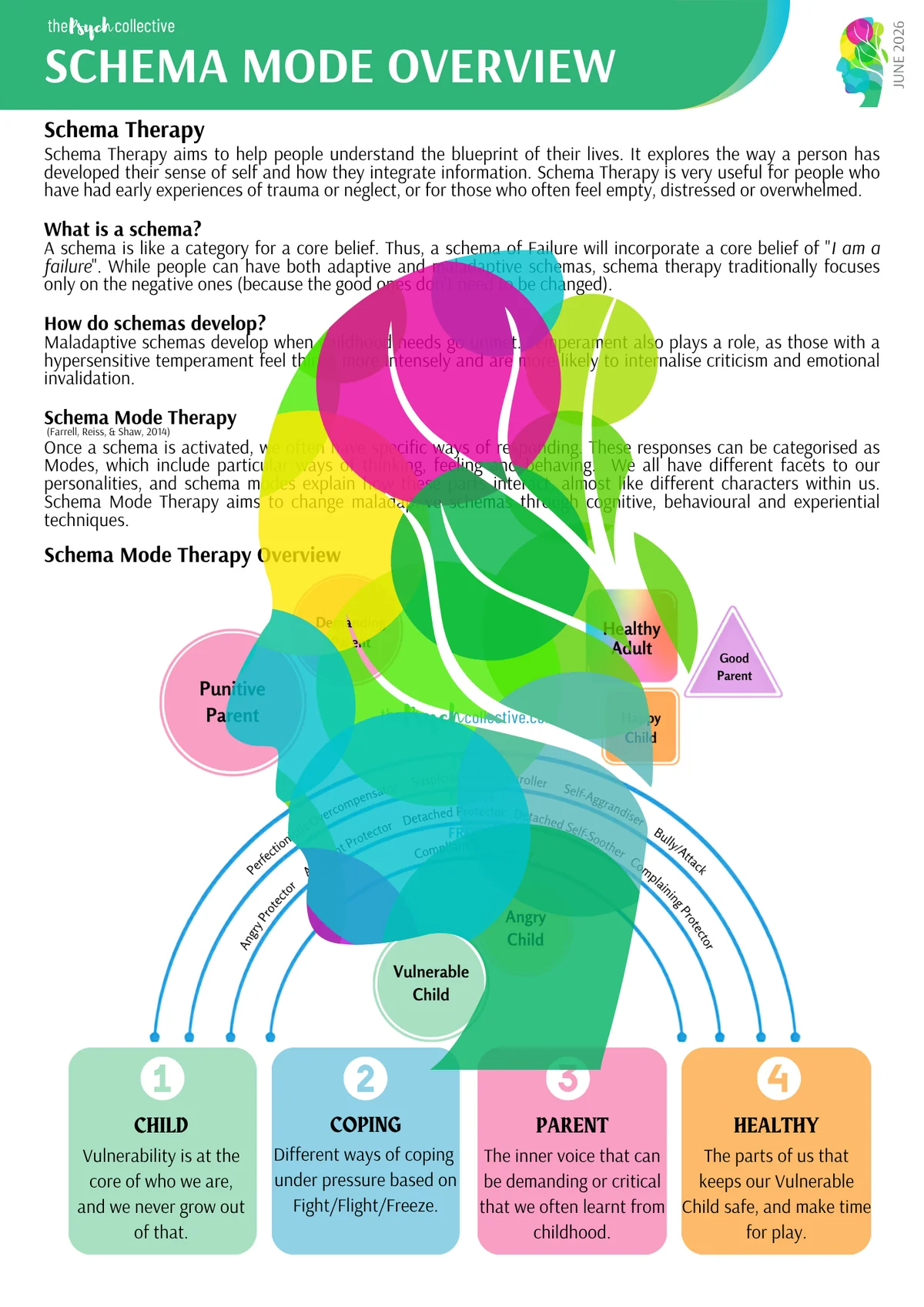
I teach schema modes using four broad categories: Child Modes, Coping Modes, Dysfunctional Parent Modes and Healthy Modes. You can rename a mode, modify the language or create a label that makes more sense to your patient, but you should still be able to work out where it belongs. Is this a child response? Is it coping? Is it critical and demanding? Or is it healthy functioning?
Once you understand those four categories, the whole model becomes much easier to work with.
What Is a Schema Mode?
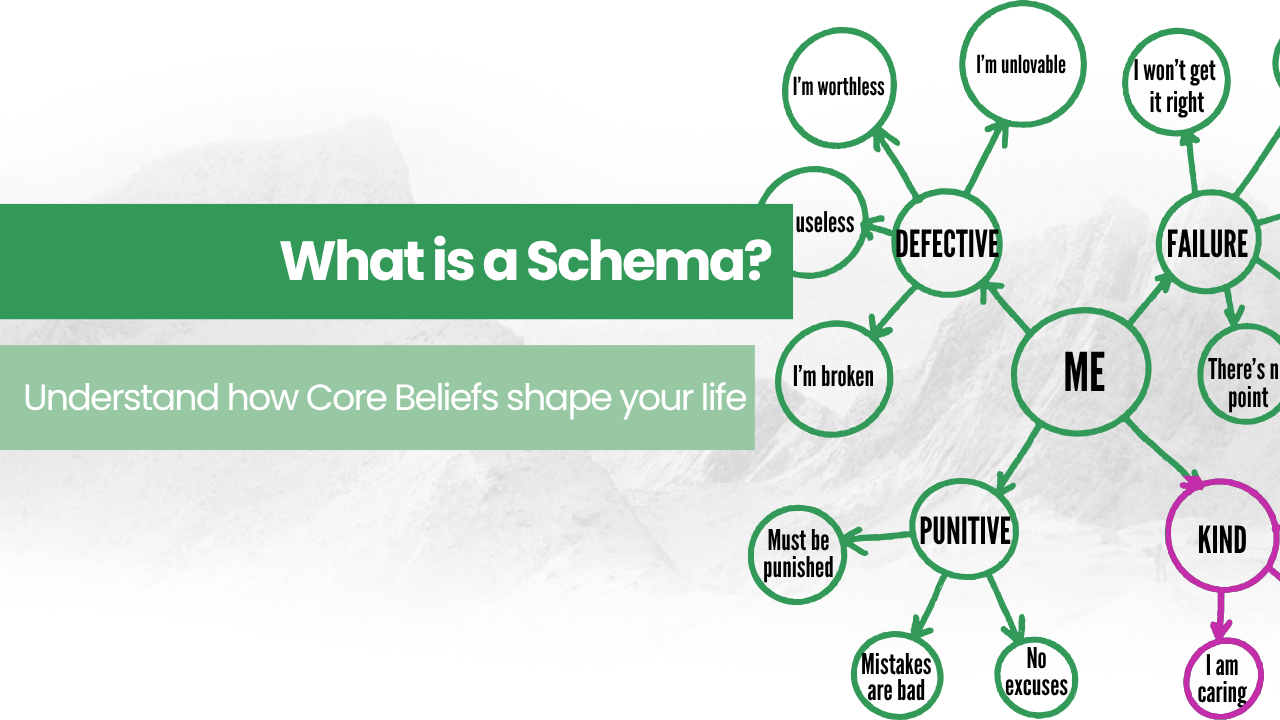
A schema mode is the emotional state, coping response, or internal voice active at a particular moment.
Schemas are the beliefs. Modes are the behaviours and feelings
This is why mode work can be particularly useful with complex presentations. A person might have multiple schemas activated simultaneously, but what we see in the therapy room is the mode those schemas have triggered. Instead of trying to analyse twelve different schemas while somebody is sobbing in front of you, we can recognise: Vulnerable Child is here.
Or perhaps the patient suddenly becomes dismissive and tells you none of this matters. Detached Protector has arrived. Maybe they start criticising themselves for crying. Punitive Parent has entered the room. Perhaps they become angry with you and insist therapy is pointless. Now we need to work out whether we are seeing Angry Child, Angry Protector or something else.
Modes give us language for understanding these shifts and, importantly, tell us what to do next.
The Schema Mode Model Starts With the Vulnerable Child
For me, everything starts with the Vulnerable Child.
The language comes from the origins of Schema Therapy and the idea that many maladaptive schemas develop when important emotional needs are not adequately met during childhood. The Vulnerable Child represents that part of us that still experiences feelings such as sadness, fear, shame, loneliness, helplessness and abandonment.
Some patients hate the word child. That's fine. We might call it the vulnerable part, or we might refer to a younger version of the person by name: What does little Sophie need right now? The terminology needs to help the patient understand themselves rather than forcing them into clinical jargon that doesn't resonate.
I tend to conceptualise the Vulnerable Child as being around five or six years old. That is old enough to know that something is wrong and old enough to say, "I'm scared", "I'm sad", "I don't like this" or "I want this to stop", but not necessarily old enough to know what to do with those feelings.
Five-year-olds do not have sophisticated emotion regulation skills. When they experience overwhelming feelings, they rely heavily on caregivers to help them understand, regulate and recover from those emotions. If those caregivers repeatedly fail to do that, the child still has to find some way of surviving the emotional experience.
That is where the rest of the model starts to emerge.
We have a PDF download available HERE if you want to read more.
What Is the Angry Child Mode?
The Angry Child is closely connected to the Vulnerable Child, but it serves a slightly different function. Angry Child says: "This isn't fair. This isn't okay. I don't like this. Something needs to change."
Imagine a five-year-old girl sitting in a room full of her family. Perhaps it is Christmas Day. She is crying, but none of the adults notice her. Now imagine she has an eight-year-old brother. He is old enough to recognise something is wrong with his sister, but not old enough to know how to fix it.
How does an eight-year-old get the attention of a room full of adults?
He has a tantrum.
He yells. He throws something. He pitches a fit. He creates enough disruption that eventually somebody has to pay attention.
That is the function of Angry Child. Underneath the anger is often the message: "There is a problem. Come here. Listen to me. Help me fix it."
This is an important distinction because not all anger modes mean the same thing. Angry Child wants engagement. Angry Child wants somebody to notice the problem. Angry Protector, which we will come to later, uses anger to push people away.
When we understand Angry Child as communication, the therapeutic response changes. Rather than simply trying to shut down the anger, we become curious about what it is trying to communicate. What happened? What isn't fair? What need has not been met?
Very often, once Angry Child has been properly heard and validated, Vulnerable Child appears underneath. The patient rants about what their mother did, what their partner said or how unfairly they were treated. Eventually they run out of puff and burst into tears.
Under the Angry Child, there is almost always vulnerability.
Want to read the handout on this one? Click HERE.
Why Do Coping Modes Develop?
If Vulnerable Child and Angry Child repeatedly fail to get what they need, the child has a problem. They still need some way of surviving their environment.
Humans are born with three basic survival responses: fight, flight, and freeze. Maladaptive coping modes can be understood as more complex psychological versions of these primitive survival strategies.
This becomes particularly important when we remember when these strategies were developed. If a child is not taught to recognise emotions, tolerate distress, communicate needs, regulate feelings, and solve problems effectively, they have to improvise. They find something that works well enough to get them through.
Then the five-year-old becomes fifteen and continues using the same strategy. The fifteen-year-old becomes 25. Then 35. Then 45.
Suddenly you have a highly intelligent 45-year-old sitting in your therapy room
using an emotional coping strategy that was effectively designed by a five-year-old.
Of course it isn't working particularly well anymore.
That does not mean the coping mode is stupid or that the person should simply stop doing it. At some point, it probably worked. It may have been the best option that child had available. At some level, it got them through. They are sitting in front of you, breathing, which means those coping strategies did their job.
This is why I like approaching coping modes with an attitude of: "Thank you for your service. You got little Jess, Sophie or whoever else this far. You helped them survive something they did not yet have the skills to manage differently."
But we don't need you running the whole show anymore.
Overcompensating Modes: Fighting Against Vulnerability
The first broad group of coping modes can be understood as fight responses. In Schema Therapy, these are often called overcompensating modes because the person copes with vulnerability by moving strongly in the opposite direction.
Take the Perfectionistic Overcompensator. Underneath might be a Failure schema or Defectiveness schema: "I'm worried I'm not good enough. I'm worried I'll get something wrong. I'm worried people will discover that I'm incompetent."
Perfectionism becomes the solution: "If I do everything perfectly, nobody can criticise me. If my work is flawless, everyone will think I am competent. If I proofread the slides six times, prepare for every possibility and never make a mistake, I can protect Vulnerable Child from the shame of criticism."
It makes perfect sense.
It is also exhausting.
Similarly, the Suspicious Overcontroller tries to protect vulnerability through control. "I don't trust anybody else to do this properly, so I'll do it myself." This can become micromanaging, overplanning and trying to control every possible worst-case scenario. "What if it rains? What if somebody forgets something? What if something goes wrong? What if nobody else has thought about the problem I have just thought about?"
The person keeps controlling because control creates an illusion of safety. Unfortunately, both perfectionism and overcontrol have a fairly predictable destination when the volume is turned up too high: burnout, exhaustion and often resentment.
The Self-Aggrandiser uses a different strategy. Instead of allowing people to notice vulnerability, the person draws attention towards everything impressive about themselves. "Look how successful I am. Look what I have achieved. Look how much I know. Look at all these wonderful things I can do."
It is psychological jazz hands: "Don't look over there at the part of me that feels inadequate. Look over here."
If that strategy is challenged, we may see Bully and Attack Mode emerge. This mode protects vulnerability through power and intimidation. "If I can make you feel small, I get to feel big. If I belittle you before you criticise me, perhaps you will never get close enough to see my vulnerabilities."
Again, the behaviour makes much more sense when we understand what it is trying to achieve.
Detached Protector and Avoidant Protector: Getting Away From the Feelings
Flight-based maladaptive coping modes tend to involve hiding, avoiding or disconnecting from vulnerability.
The Detached Protector is one of the most common and sometimes one of the hardest to detect because, outwardly, not much is happening. The patient can sit in the room, answer your questions and appear completely functional. They are oriented to time, place and person. They are not necessarily dissociating in the traditional sense.
But the lights are on, and nobody is home.
There is almost a psychological wall between the person and their feelings. They can tell you what happened without emotionally connecting to it. This can be particularly understandable in people who have experienced significant trauma. If feelings in the body have repeatedly been associated with unbearable experiences, turning those feelings off can become an extremely effective survival strategy.
The Avoidant Protector serves a similar function but tends to be more behavioural. Detached Protector can come to therapy and not emotionally engage. Avoidant Protector simply doesn't come. They cancel. They arrive 40 minutes late to a 60-minute session. They don't do the homework. They avoid the conversation, the person, the place or whatever else might activate the vulnerability.
Both are essentially saying: "If I don't get close to this, it can't hurt me."
What Is the Difference Between Angry Child and Angry Protector?
This distinction causes confusion because both modes involve anger, but the function of the anger is different.
Angry Child says: "Come here. There is a problem, and I need you to help me."
Angry Protector says: "Get the hell away from me."
Angry Protector uses anger as a push. "If I make myself intimidating enough, unpleasant enough or volatile enough, you will keep your distance and therefore you cannot get close to the vulnerable part underneath."
This is also what separates Angry Protector from Bully and Attack. Bully and Attack often want an audience. There is an element of power, dominance and making somebody else small. Angry Protector wants you to leave.
If you are in a room with somebody in Bully/Attack Mode, you may want to run away. If somebody is in Angry Protector, they want you to run away.
The behaviour might look similar on the surface, but understanding its function tells us which mode we are actually dealing with.
Complaining Protector: When Everything Is Somebody Else's Fault
The Complaining Protector externalises responsibility. The problem is always somewhere else.
I used to work in a private hospital, and we'd see this all the time. The patient who came for a three-week stay, and at the end of their admission they would complain that they didn't feel better. When asked why, we'd hear a litany of excuses: I didn't get better because...
"Housekeeping didn't make my bed properly. The kitchen overcooked my steak. I had to wait 15 minutes to get my medication and the psychiatrist was late to my appointment."
Do you think that it might be because you only attended 4 out of 12 group therapy sessions and never completed your homework?"
"No, of course not. This isn't my fault."
Again, this response is developmentally understandable in a young child. Ask a four-year-old who drew on the wall, and you may get a very confident "They did it" while they hide the crayon behind their back. At four, that is developmentally appropriate. At 44, it creates significant problems.
If nobody ever helped that child develop a more sophisticated way to take responsibility, tolerate mistakes, and solve problems, the strategy can simply continue into adulthood.
Detached Self-Soother: Making the Feeling Go Away
The Detached Self-Soother says: "I don't like this feeling, I can't handle this feeling, so I'm going to do something that takes the feeling away."
That something might be alcohol, drugs, food, shopping, gambling, sex, social media, gaming, or endlessly scrolling on a phone. In some people, self-harm can also serve this function.
The important thing is not the behaviour itself. It is the function and the volume.
All of us self-soothe. We should. I drink enormous cups of tea. Somebody else might colour in, go for a walk, watch television or scroll Pinterest for five minutes. If the behaviour is deliberate, contained and actually helps us regulate, that is not necessarily maladaptive.
Detached Self-Soother is different because the behaviour becomes the primary way of escaping emotion. It becomes compulsive, detached, harmful or difficult to control. Five minutes on your phone becomes three hours. Comfort eating becomes binge eating. A glass of wine becomes a bottle every night.
The problem is not soothing. The problem is when soothing becomes escaping.
Compliant Surrender: When There Is No Fight Left
Early Schema Mode Therapy only identified one FREEZE type of Maladaptive Coping, which they called Compliant Surrender.
This is what happens when the person feels as though every other strategy has been exhausted. There is no fight left. There is no energy to run. They have given up.
"Fine. Whatever. Do what you want. I don't care anymore."
It can look like acceptance on the surface, but it is important to distinguish Healthy Adult acceptance from complete resignation. Healthy Adult might recognise, "I cannot change this situation, so I am choosing not to fight it right now.
Compliant Surrender is more like: "I have no f*cks left to give".
Their battery is empty.
People can get incredibly stuck here because surrender becomes the final protection against further disappointment, conflict, or emotional exhaustion.
What Are the Critical Parent Modes?
So far, we have Vulnerable Child, Angry Child and layers of coping modes trying to protect them. But what are they being protected from?
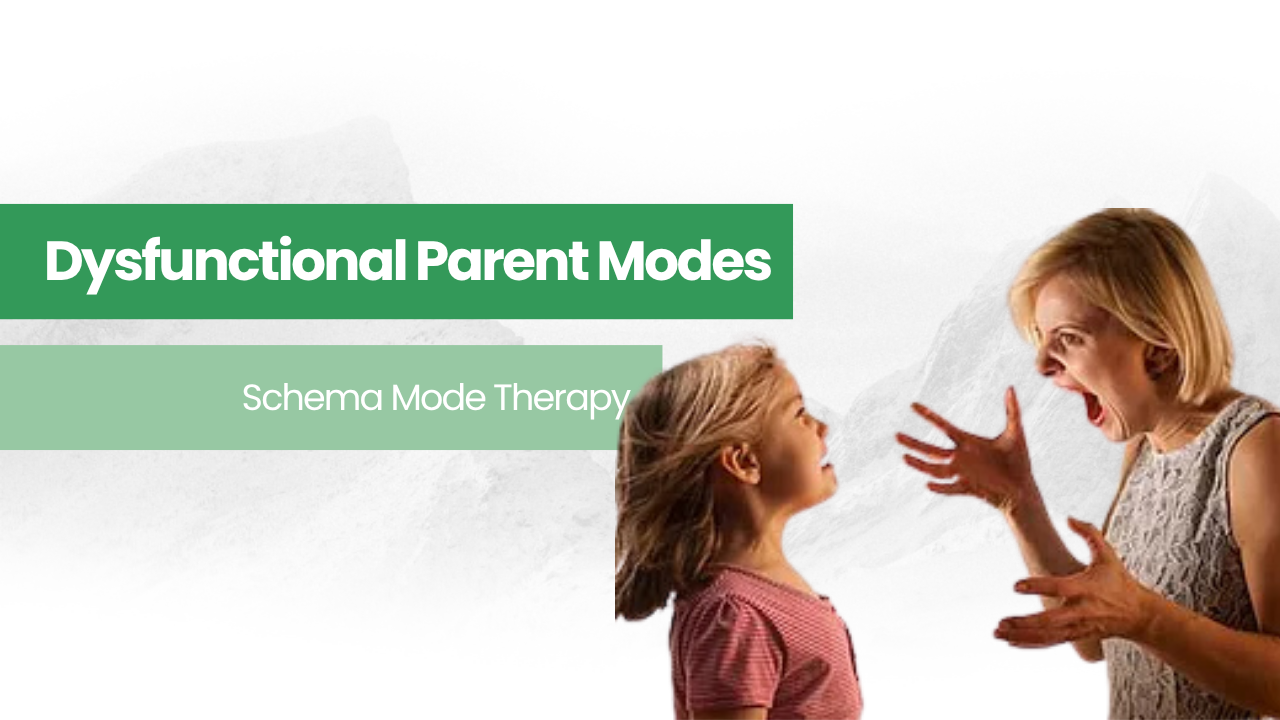
This is where the Dysfunctional Parent Modes enter the model.
Schema Therapy historically uses the language of parent modes because these critical voices are thought to develop partly through internalising messages from caregivers and other important people. The voice that begins outside eventually becomes an internal voice.
The Punitive Parent says: "You're crap. You're useless. Nobody likes you. You're ugly. You're pathetic. There's something wrong with you."
The Demanding Parent sounds different. It says: "Try harder. Do more. Keep going. That's not good enough yet. You got nine out of ten? What happened to the other mark?"
The distinction matters because they serve different functions and therefore require different interventions.
Sometimes patients clearly recognise the voice. If they grew up with an overtly critical parent, they may say, "That's Dad's voice." In some ways, that can make the critic easier to externalise because the person already recognises that it came from somewhere else.
Other patients say, "It's just my voice."
This often happens when criticism was less explicit. Perhaps nobody said, "You're not good enough." Instead, the child came home with 97% on a spelling test and nobody said well done. The child filled in the blanks: "I must not be good enough."
Happy Child: Why Play Matters in Schema Therapy
Not every schema mode is a problem.
The Happy Child represents our capacity for joy, spontaneity, fun, curiosity, connection and play. It is the part of us that gets to enjoy being alive rather than constantly managing threats.
For people who grew up in environments characterised by abuse, domestic violence, sexual abuse, poverty, chaos or chronic fear, Happy Child may be significantly underdeveloped. There may not have been much room for play. They were surviving rather than building joyful childhood memories.
This means therapy sometimes needs to actively create space for Happy Child.
When I used to run Schema Therapy groups, we had Happy Child days as part of the program. Patients chose what we did. One group watched The Little Mermaid, sat on the floor colouring in and made ice-cream sundaes. We had fairy bread. Another group organised a Mexican fiesta.
The point wasn't that fairy bread cures complex trauma.
The point was to give people permission to experience play, pleasure, and connection without having to earn it first.
Happy Child brings some light into a system that may have spent years dominated by fear, shame, anger, criticism and coping.
Healthy Adult: The Mode We Are Trying to Build
Ultimately, the Healthy Adult is where we are trying to get to.
Healthy Adult is the stage director. It notices the other modes, understands what they are trying to do and decides how to respond. Vulnerable Child can be scared without running the entire system. Angry Child can communicate that something is wrong without destroying a relationship. Coping modes can be used selectively rather than automatically. Critical Parent Modes can be challenged rather than believed.
I think of Healthy Adult as effectively giving the person a fourth coping option.
Instead of only fight, flight or freeze, we now have Healthy Adult.
The problem is that Healthy Adult has to be learned. A child does not automatically know how to regulate intense emotions, validate themselves, communicate assertively, set appropriate boundaries, soothe distress and make thoughtful decisions. Somebody has to model and teach those things.
For many of our Schema Therapy patients, nobody did.
That is where the therapist comes in.
Why Limited Reparenting Is Central to Schema Mode Therapy
One defining feature of Schema Therapy is limited reparenting. Within the appropriate boundaries of a therapeutic relationship, we attempt to provide some of the emotional experiences and guidance that were missing earlier in life.
In my schema mode model, I think of the therapist as the Good Parent.
We soothe the Vulnerable Child. We validate and listen to Angry Child. We help the patient understand their maladaptive coping modes rather than shaming them for having them. We challenge the Punitive Parent. We negotiate with Demanding Parent. We make space for Happy Child. Most importantly, we repeatedly model Healthy Adult.
This is where Schema Therapy feels quite different from standard CBT. Sometimes you have a 45-year-old sitting in front of you, but the emotional part presenting in that moment feels five. They are heartbroken, frightened or ashamed, and the therapeutic task is not simply to challenge a cognition. It is to work out what that vulnerable part needs and find an appropriate way of meeting that need within the therapeutic relationship.
Over time, the patient starts internalising what we are doing.
I jokingly describe successful therapy as haunting your patients.
They go to do something and hear my voice in their head: "How's that working out for you? What do you actually need right now? Is that Punitive Parent talking? What would Healthy Adult say?"
Technically, we call that internalisation.
I prefer haunting.
What Does Schema Mode Therapy Actually Do With Each Mode?
Once you understand the model, the broad treatment direction becomes much clearer.
Vulnerable Child needs to be soothed and supported. Angry Child needs to be heard and validated, while also learning healthier ways to communicate needs. Coping modes are not necessarily eliminated; instead, we work on volume control, flexibility and choice. Punitive Parent is challenged and, as much as possible, banished. Demanding Parent is negotiated with because there may be some useful standards underneath all that pressure, but we do not need them operating at maximum volume.
Happy Child needs opportunities to play, connect and experience pleasure. Healthy Adult needs to be deliberately developed, practised and strengthened. The therapist initially provides much of the Good Parent function, then gradually steps back as the patient becomes increasingly able to do this for themselves.
Even coping modes can sometimes be useful when they are under conscious Healthy Adult control. A therapist hearing a particularly traumatic story may need a little Detached Protector during the session. We temporarily put our own emotional reaction aside so we can remain present and useful to the patient. Afterwards, we turn our feelings back on, process what happened, seek supervision if necessary and look after ourselves.
The problem is not having coping modes.
The problem is when coping modes take over and don't know how to leave.
Can Patients Move Between Schema Modes Quickly?
Absolutely. We call this mode flipping or mode switching.
A patient can move from Vulnerable Child to Angry Child, into Angry Protector, across to Detached Protector and then straight into Punitive Parent remarkably quickly. Sometimes as a therapist it feels like that scene in Jurassic World where Chris Pratt is standing in the middle trying to keep multiple velociraptors contained.
 Source: Jurassic World from Universal Studios
Welcome to Schema Mode Therapy.
The job is not to panic and chase every shift. The job is to recognise what has entered the room, understand what function it is serving and respond to that mode appropriately.
If Punitive Parent appears, address Punitive Parent. If the patient flips into Demanding Parent, respond to that. If they suddenly detach, recognise that a protective mode may have stepped in because something just became emotionally threatening.
The mode is information.
Do You Have to Use the Traditional Schema Mode Names?
No.
The labels are tools, not rules.
This is particularly important with adolescents, where clinical jargon may have absolutely no relevance to the person's world. You can use characters, pop-culture references, colours, nicknames or other labels that make intuitive sense to the patient.
I have had a patient with what we called Pollyanna Mode. Everything was fine. Everything was wonderful. Everything would work out beautifully. It was a kind of toxic positivity that prevented her from acknowledging legitimate difficulty.
So I could say, "Thanks, Polly. Now can I hear from Healthy Adult?"
Healthy Adult might respond, "Yeah. This is actually a bit sh!t."
Perfect.
The personalised label helped us recognise the pattern.
You can modify the language as much as you need to, provided you understand what the mode is doing and where it fits conceptually. Is Pollyanna a Child Mode, Coping Mode, Critical Mode or Healthy Mode? What function is it serving? What is it protecting? What would Healthy Adult do differently?
That is much more important than memorising a definitive list of mode names.
How Schema Modes Help Us Understand Complex Patients
One of the reasons I love the schema mode model is that it takes behaviours that can be incredibly frustrating in therapy and makes them understandable.
The patient who keeps cancelling isn't simply "non-compliant". Perhaps Avoidant Protector is desperately trying to keep them away from something painful.
The patient who shuts down isn't necessarily refusing to engage. Detached Protector may have spent decades making sure they never have to feel what Vulnerable Child is carrying.
The perfectionist isn't simply rigid. Perfectionistic Overcompensator may genuinely believe that one mistake will expose something fundamentally defective underneath.
The patient who gets angry with you may have Angry Child screaming, Please listen to me, or Angry Protector screaming, Don't you dare come any closer.
Understanding the mode doesn't mean accepting every behaviour. Validation is not the same as permission. We can understand why a coping strategy developed while still helping the patient recognise that it is no longer working.
That is the balance.
We respect what the mode did for the child while helping the adult develop something better.
The Goal of Schema Mode Therapy Is Flexibility, Not Perfection
Ultimately, the goal is not to create somebody who never feels vulnerable, never gets angry, never avoids anything and never self-soothes.
That would not be particularly healthy either.
We want flexibility.
We want Vulnerable Child to be able to say, I'm scared, and have Healthy Adult respond rather than immediately calling in three layers of protection. We want Angry Child to communicate that something is wrong without having to scream until somebody notices. We want coping modes available when they are genuinely useful, but sitting on the bench rather than controlling the game.
We want Punitive Parent to lose its microphone. We want Demanding Parent to learn that good enough is sometimes actually good enough. We want Happy Child to have space to play.
Most importantly, we want Healthy Adult to become strong enough to manage the whole system.
At the beginning of Schema Mode Therapy, the therapist often has to do a lot of that work. We provide the containment, validation, soothing, boundaries, reality testing and guidance. We are the Good Parent standing outside the system, helping organise the chaos.
Then, gradually, we step back.
The patient starts recognising the modes before we point them out. They hear the critic and challenge it themselves. They notice Detached Protector arriving and decide whether they actually need it. They recognise Vulnerable Child and respond with compassion rather than immediately trying to escape the feeling. They communicate what they need. They set boundaries. They make room for fun.
Healthy Adult starts taking over the job.
Eventually, the therapist no longer needs to direct the show.
That is the point.
Explore Each Schema Mode in More Detail
This article provides the big-picture map of Schema Mode Therapy, but each mode has its own origins, triggers, behaviours, functions and therapeutic interventions. Understanding those differences allows clinicians to move beyond simply identifying modes and know what to do when a particular mode walks into the therapy room.
For clinicians wanting to use the model practically, The Psych Collective's Schema Therapy resources include patient-friendly worksheets, mode mapping tools and clinician resources designed to help translate the theory into actual therapy. Our Schema Therapy workshops take this further by teaching clinicians how to recognise modes as they emerge, understand what is driving them and select interventions based on the mode in front of them.
Because identifying the mode is only the beginning.
The real skill is knowing what to do next.
Watch the Video
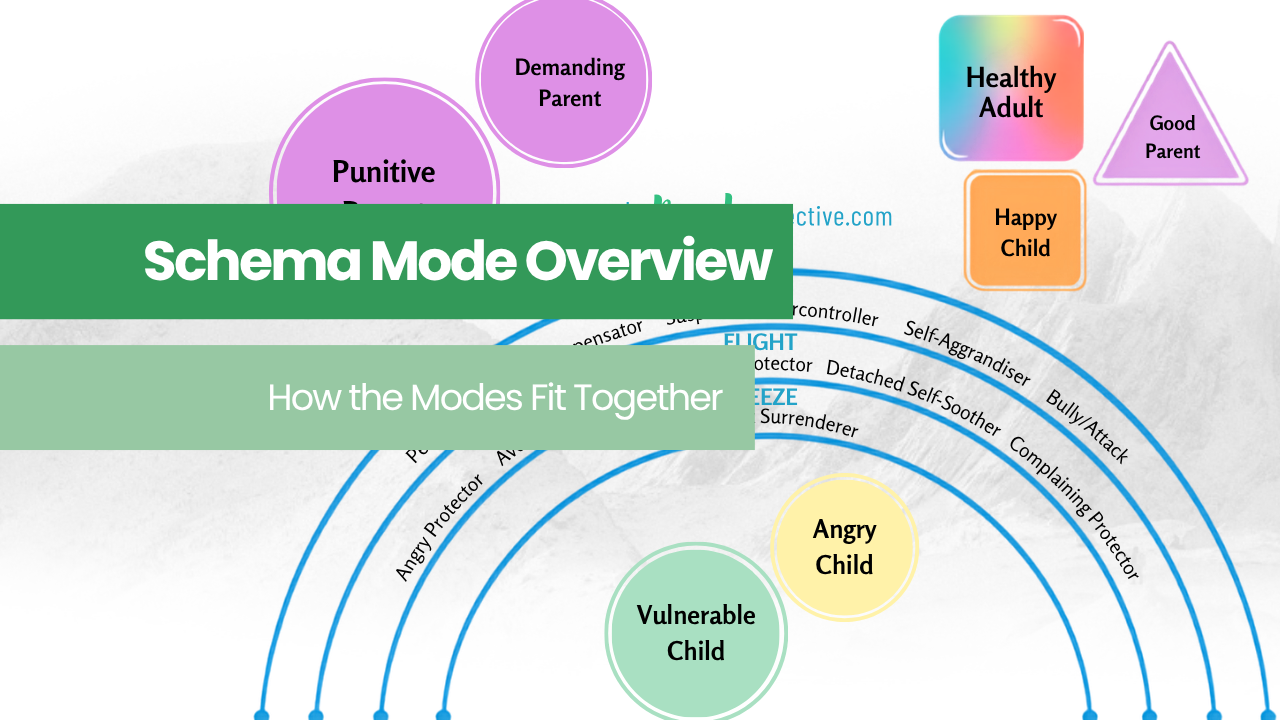
Here I have tried to briefly explain how the modes fit together. And yes, we know that we accidentally cut off the top of the board. My Healthy Adult is telling my Perfectionistic Overcompensator to sit with it. The handout below should help fill in the blanks.
Need More?
A diagram of the schema modes and how they interact.
This worksheet accompanies Jess's talk on Schema Therapy Modes (Part 1) and shows how the different types of schema modes fit together.
There is also a full-page version of the model in case you need a closer look.
Are you a clinician?
For clinicians who want to use the model in practice, The Psych Collective's Schema Therapy resources include patient-friendly worksheets, mode mapping tools, and clinician resources designed to help translate the theory into actual therapy. Our Schema Mode Therapy Workshops take this further by teaching clinicians how to recognise modes as they emerge, understand what is driving them and select interventions based on the mode in front of them.
About Our Resources