Vulnerable Child Mode
What Is the Vulnerable Child Mode? The Core of Schema Therapy
Written by Jess O'Garr, Clinical Psychologist and Schema Therapy trainer at The Psych Collective.
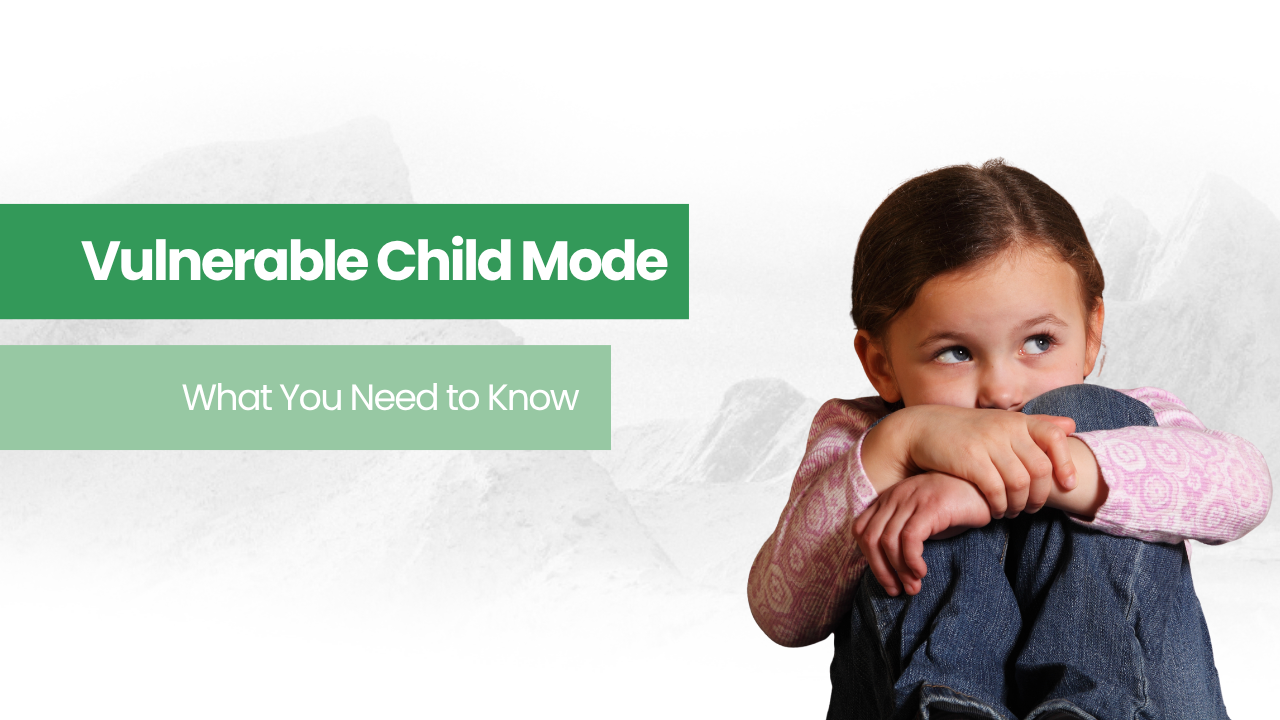
The Vulnerable Child Mode is the part of us that holds our vulnerability: sadness, fear, loneliness, shame, helplessness, feeling unsafe, feeling unwanted and feeling like we aren't good enough. In Schema Mode Therapy, the Vulnerable Child sits at the centre of everything. It is often where we hold the emotional impact of painful experiences and unmet emotional needs, and it is usually what our other Schema Modes are trying to protect.
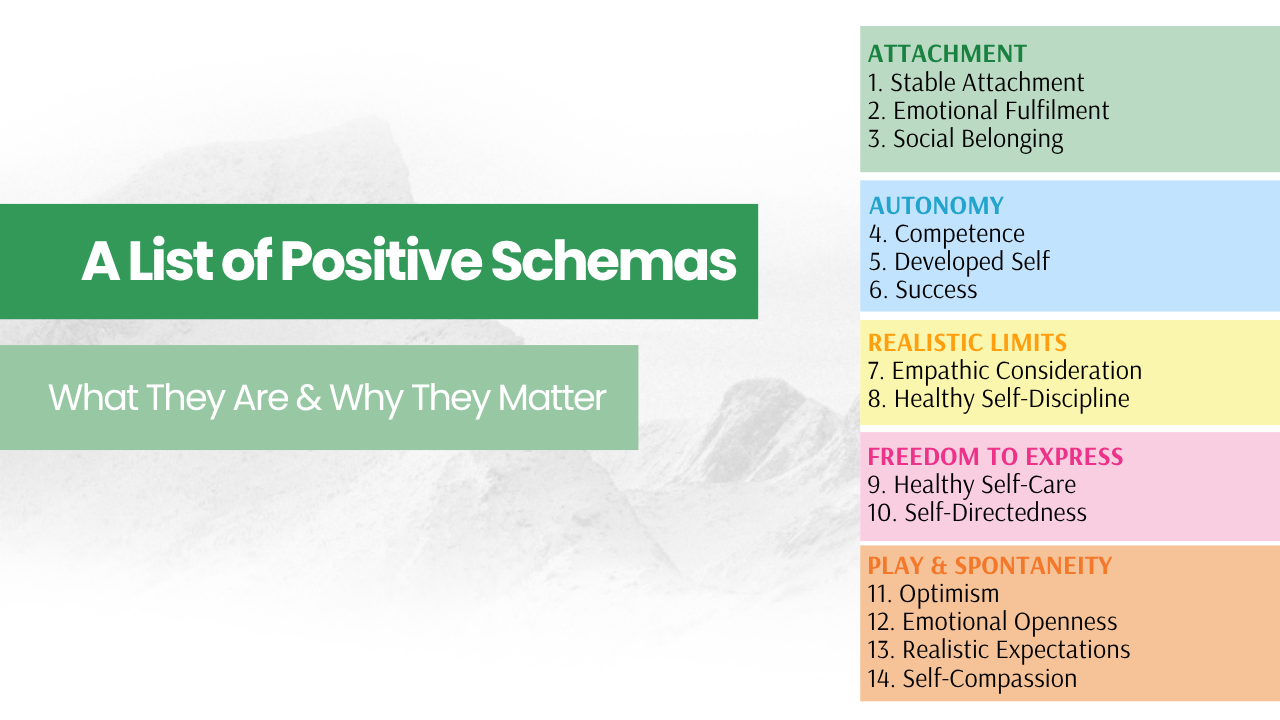
Despite the name, the Vulnerable Child isn't something we grow out of when we become adults. As I often explain to patients, adults are really just old children. We get older on the outside, but our core emotional needs don't disappear. We still need safety, connection, love, acceptance and belonging. We still need autonomy, appropriate boundaries and opportunities for play, spontaneity and enjoyment. When these needs aren't being met, our Vulnerable Child can still be activated.
The difficulty is that most adults have become extremely good at not feeling vulnerable. We stay busy, shut down, disconnect, get angry, try harder, become perfectionistic, please other people or tell ourselves to get over it. In Schema Mode Therapy, we understand many of these responses as Maladaptive Coping Modes. They help us avoid vulnerability temporarily, but they don't resolve what made us vulnerable in the first place.
This is why the Vulnerable Child is so important in Schema Mode Therapy. If we work only on the coping behaviour without understanding what is underneath it, we miss why that coping mode developed in the first place.
Why do we call it the Vulnerable Child?
As children, we are inherently vulnerable. A young child can't independently provide their own food, shelter, protection or safety, so they rely entirely on caregivers to do this for them. But that dependence isn't just physical. Children also rely on their caregivers to help them understand, tolerate and regulate their emotional world.
Ideally, a caregiver responds to a distressed child with something like, "I can see that you're upset. I'm here with you. You're safe. We'll work through this together." The child doesn't immediately know how to self-soothe or regulate intense emotions; they learn through repeated experiences of another person helping them regulate first.
Over time, those experiences become internalised. The child gradually learns they can experience a big emotion without being completely overwhelmed. They learn that feelings make sense, that asking for help is okay, that other people can be safe and that distress eventually passes.
When those experiences aren't consistently available, children may be left with intense emotions they don't understand and don't know how to manage. They can become easily overwhelmed and may struggle to identify or describe what is happening internally. Most importantly, they may never learn the fundamental skills required to soothe themselves when they are distressed.
And children who don't learn these skills don't magically acquire them when they turn 18. I sometimes compare it to learning a language. If nobody taught you French as a child, you wouldn't expect yourself to suddenly speak fluent French as an adult. You would have to learn it deliberately. Emotional regulation, self-soothing and self-compassion can be much the same.
Got a kid who needs help with their feelings? Check out our Feeling Cards for Kids, designed by Jess and Al's kids.
What does the Vulnerable Child Mode feel like?
The Vulnerable Child Mode looks different from person to person, but it commonly involves feelings of sadness, loneliness, fear, anxiety, shame, helplessness, worthlessness or emptiness. You might feel unwanted, unlovable, abandoned, rejected, excluded or unsafe. You may also feel strong physical sensations, such as tightness in the chest, butterflies or discomfort in the stomach, heaviness, tension, or that familiar physical sense of being overwhelmed.
For some people, however, the first thing they notice is almost an absence of feeling. This is particularly common when someone has become very good at detaching from vulnerability. They may experience numbness or disconnection without recognising that, immediately before they detached, something happened that made them feel rejected, frightened, ashamed or lonely.
This is one reason the Vulnerable Child can be difficult to identify. You might be very aware of what you do when you're distressed without being particularly aware of what you feel. You notice that you've started cleaning the entire house, working until midnight, scrolling for hours, drinking, withdrawing from everyone or becoming angry. What you don't necessarily notice is the vulnerable emotion that happened immediately beforehand.
Vulnerable Child Video:
Listen to Jess explain the Vulnerable Child Mode to Dr Al.
Why do we try to get rid of the Vulnerable Child?
A lot of the patients I work with have learned that vulnerability is bad. Vulnerability means weakness. It is embarrassing, shameful or unsafe, and it needs to be hidden from other people. If you grew up with messages like "stop crying or I'll give you something to cry about", you quickly learn that sadness isn't something you show. If reaching out for comfort resulted in criticism, rejection or dismissal, you learn not to reach out.
Those messages don't necessarily have to come from childhood either. Later-life environments can also strongly reinforce the idea that you shouldn't show fear, ask for help, or admit you're struggling. Regardless of where the message came from, the result can be the same: vulnerability becomes something that needs to be shut down as quickly as possible.
This is where the Maladaptive Coping Modes come in. When the Vulnerable Child is activated, another mode steps in to manage it. You might detach from everyone, become extremely compliant, get angry, become controlling or throw yourself into perfectionistic overachievement. The coping strategy isn't random. At some point, it probably helped you manage feelings that were otherwise too difficult to tolerate.
The problem is that coping modes don't actually meet the underlying emotional need. They postpone the vulnerability, suppress it or help you disconnect from it for a while. But they don't make it disappear.
How does the Vulnerable Child trigger coping modes?
One of the simplest ways to understand this process is to look at what happened before the coping behaviour. The Vulnerable Child is generally activated because an emotional need isn't being met. Perhaps you were excluded from something, and your need for belonging wasn't met. Someone became angry, and you no longer felt safe. Someone important withdrew, triggering your need for connection. You made a mistake and suddenly felt that your acceptance depended on getting everything right.
That unmet need creates vulnerability, and then your coping mode responds. In simple terms, the pattern is: something happens, an emotional need isn't met, the Vulnerable Child is activated, and a coping mode tries to protect you from the feeling.
Usually, the coping mode is much easier to recognise because it involves something observable. You know you worked until midnight. You know you stopped replying to messages. You know you got angry. You know you drank too much or spent three hours scrolling on your phone. What's much harder to recognise is the moment just before that, when you felt lonely, frightened, ashamed, rejected, or not good enough.
That's why working with the Vulnerable Child starts with developing mode awareness.
How do you recognise your Vulnerable Child Mode?
Initially, you may only recognise your Vulnerable Child afterwards, once the dust has settled. That's completely fine. Go back and work through what happened. What triggered you? What did that situation mean to you? Which emotional need wasn't being met? What emotions came up? What happened in your body? And then, importantly, what did you do next?
You might realise, for example, that you weren't invited to something, which triggered your need for belonging. You felt rejected and lonely, then detached and told yourself you didn't care anyway. Or perhaps you made a mistake, felt ashamed and inadequate, and responded by becoming perfectionistic and working even harder to prove that you were competent.
With practice, you start recognising these patterns earlier. Instead of only noticing the coping mode after you've been in it for six hours, you begin to catch the vulnerability underneath it. That's important because awareness creates a choice point. If you don't know the Vulnerable Child has been activated, you'll probably respond automatically. Once you recognise it, you can decide what you want to do next.
The Psych Collective offers two ways of capturing this information to build your mode awareness. The simple version is to use the Distress Cycle worksheets, which help you record moments of regrettable actions. Or we have more advanced schema awareness worksheets in the Clinician's Guide to Schema Mode Therapy.
How do you work with the Vulnerable Child?
This is usually the part people don't like. Schema Therapy isn't about getting rid of the Vulnerable Child. It's about learning to turn towards vulnerability instead of automatically turning away from it.
If you've spent your whole life avoiding vulnerable feelings, I'm not suggesting you suddenly throw yourself completely into them. Sometimes that idea is genuinely terrifying. Instead, make a 10-degree turn. Start by simply noticing what is happening and naming it: "I'm feeling lonely. I'm scared. I'm feeling rejected. This is really hard for me right now." This is about practising Self-Validation.
You don't have to like the feeling. You don't need to enjoy being vulnerable, and you certainly don't need to wallow in it. Initially, the task is simply to acknowledge that the vulnerability exists rather than immediately trying to suppress it, criticise it or escape from it.
Once you can do that, you can start asking a much more useful question: What does this part of me actually need?
Try the childhood photograph exercise
One technique I often suggest is finding a photograph of yourself at around four or five years old. I like using a photograph because it makes the Vulnerable Child much more tangible. It puts you back in the context of who you actually were at that age, rather than relying on the distorted version of yourself you may have carried into adulthood.
Look at the child in the photograph and ask yourself what you would want for that child. Would you want them to feel safe and protected? Would you want them to know that someone would be there when they were frightened? Would you want them to feel loved, accepted and comforted when they were upset? Would you expect a four-year-old to have adult judgement, adult responsibility or an adult capacity to regulate intense emotions?
For people who grew up with abuse, neglect or significant criticism, this can be particularly important because children often internalise responsibility for things that could never realistically have been their responsibility. Looking at an actual young child can challenge the adult belief that the child should have known better, behaved differently, or prevented what happened.
Then comes the harder part: remembering that the child in the photograph was you. The needs that child had didn't suddenly disappear because you got older.
If using your own photograph feels too confronting, start with a picture of another child of a similar age. Ask yourself what you would want for that child. Sometimes compassion for another child is an easier starting point before directing that same compassion toward yourself.
From mode awareness to mode management
Once you recognise that your Vulnerable Child has been activated, the next step is mode management. In other words: now that I know what is happening, what am I going to do about it?
You still have the option of doing what you've always done. You can detach, overwork, become perfectionistic, get angry, please everyone else or find some other way of escaping the feeling. Or you can begin practising a different response.
For the Vulnerable Child, mode management primarily involves self-compassion, self-soothing, emotional validation and learning healthier ways of meeting your emotional needs. A lot of this starts with self-talk. Instead of criticising yourself for having the emotion, you might practise saying, This is really difficult for me right now. I understand why I'm upset. I'm safe. I don't have to get rid of this feeling immediately. I'm going to look after myself while I work through it.
It can also involve deliberately doing something soothing or nurturing. For me, that can be as simple as making a proper cup of tea. Not boiling the kettle, throwing a teabag into a mug and drinking it while I keep working, but actually stopping, getting out the good tea, sitting down and deliberately putting some effort into doing something nice for myself. Nobody else benefits from that. It is simply an act of care directed towards me.
The particular activity isn't the important part. The message underneath it is: I'm worth looking after.
How do you heal the Vulnerable Child in Schema Therapy?
Schema Mode Therapy refers to the Good Parent Mode and uses a process called limited reparenting to help meet emotional needs that weren't adequately met earlier in life. Within therapy, the therapist provides appropriate experiences of safety, validation, empathy, boundaries and support. At the same time, the goal is to strengthen your Healthy Adult Mode so you can increasingly recognise your own needs and respond to them yourself.
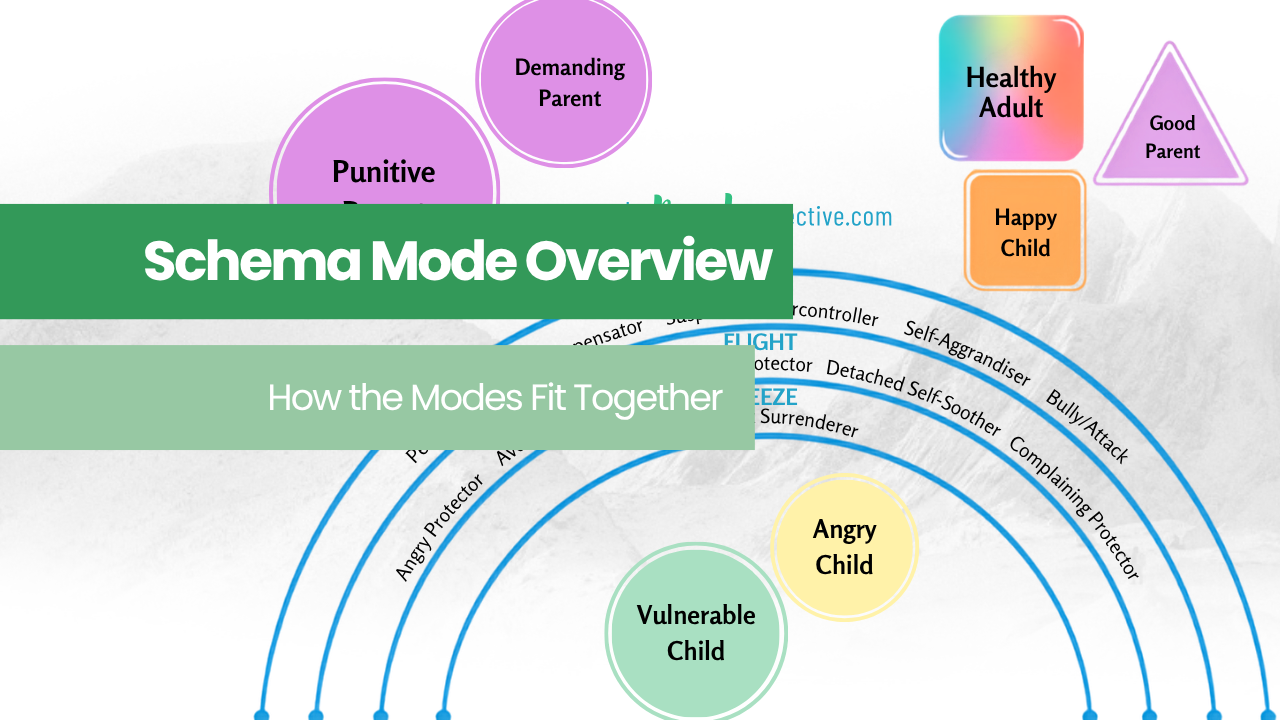
This is where the Vulnerable Child connects with the rest of the Schema Mode model. When you recognise vulnerability and respond appropriately, the other modes often don't need to work as hard. The Angry Child doesn't need to scream as loudly when the hurt underneath the anger has been acknowledged. The Perfectionistic Overcompensator doesn't have to constantly prove your worth when making a mistake no longer means you're worthless. The Detached Protector doesn't need to shut everything down when you gradually learn that you can tolerate uncomfortable emotions safely.
This is why the Vulnerable Child sits at the centre of Schema Mode Therapy. We aren't trying to eliminate vulnerability. We're trying to change the way you look after it.
If you've spent decades learning to push vulnerability away, it won't feel natural right away. Start with awareness. Notice when your Vulnerable Child appears. Work out which need feels unmet. Pay attention to the coping mode that usually follows. Then, instead of automatically turning away, practise turning towards your vulnerability—even if, initially, it's only by 10 degrees.
How to Give a Blanket Hug
Watch the video to see Jess explain how to use a blanket hug as a self-soothing method for the Vulnerable Child.
You can purchase them HERE.
Frequently asked questions about the Vulnerable Child Mode
What is the Vulnerable Child Mode?
The Vulnerable Child Mode is a Schema Therapy Mode associated with feelings such as sadness, fear, loneliness, shame, helplessness, worthlessness and feeling unsafe or unwanted. It is commonly activated when important emotional needs such as safety, connection, acceptance or belonging are not being met.
What triggers the Vulnerable Child Mode?
Triggers vary between people, but common examples include rejection, criticism, abandonment, conflict, exclusion, failure, feeling unsafe or situations that activate unmet needs for connection, belonging, acceptance, autonomy or security.
Is the Vulnerable Child the same as the inner child?
There is some overlap between the ideas, but the Vulnerable Child Mode has a specific meaning within Schema Therapy. It sits within the broader Schema Mode model alongside other Child Modes, Maladaptive Coping Modes, Dysfunctional Parent Modes and the Healthy Adult Mode.
How do I know when my Vulnerable Child has been activated?
Look for feelings such as sadness, fear, loneliness, shame, helplessness or worthlessness, as well as physical signs of distress. It can also help to work backwards from your coping behaviour. If you suddenly detach, become perfectionistic, angry, compliant or avoidant, ask yourself what vulnerable emotion or unmet need occurred immediately beforehand.
How do you heal the Vulnerable Child?
Schema Mode Therapy focuses on recognising the emotional needs underneath Vulnerable Child activation and learning healthier ways to respond through limited reparenting, emotional validation, self-compassion, self-soothing, and strengthening the Healthy Adult Mode. Where the Vulnerable Child is connected with significant trauma or overwhelming emotions, this work is best undertaken with an appropriately trained mental health professional.
Want to understand your own schemas and modes?
Understanding your Vulnerable Child is much easier when you can see how it connects with your schemas, coping modes and Healthy Adult. Our Complete Set of Schema Mode Therapy Worksheets will help explain each mode you experience, while our Schema Mode Therapy Cards help make schemas and modes easier to recognise in everyday life.
Explore our Schema Therapy resources →
Are you a Clinician?
Knowing the Schema Mode model is only the beginning. The clinical skill is learning how to recognise what is happening in the room, get underneath the coping mode, access the Vulnerable Child safely and then strengthen the Healthy Adult response. Our Schema Therapy Clinician Guide provides practical tools to support this work, and my Schema Therapy and Schema Mode Therapy training focuses on translating the model into interventions you can actually use with clients.
Explore the Schema Therapy training →
About Our Resources