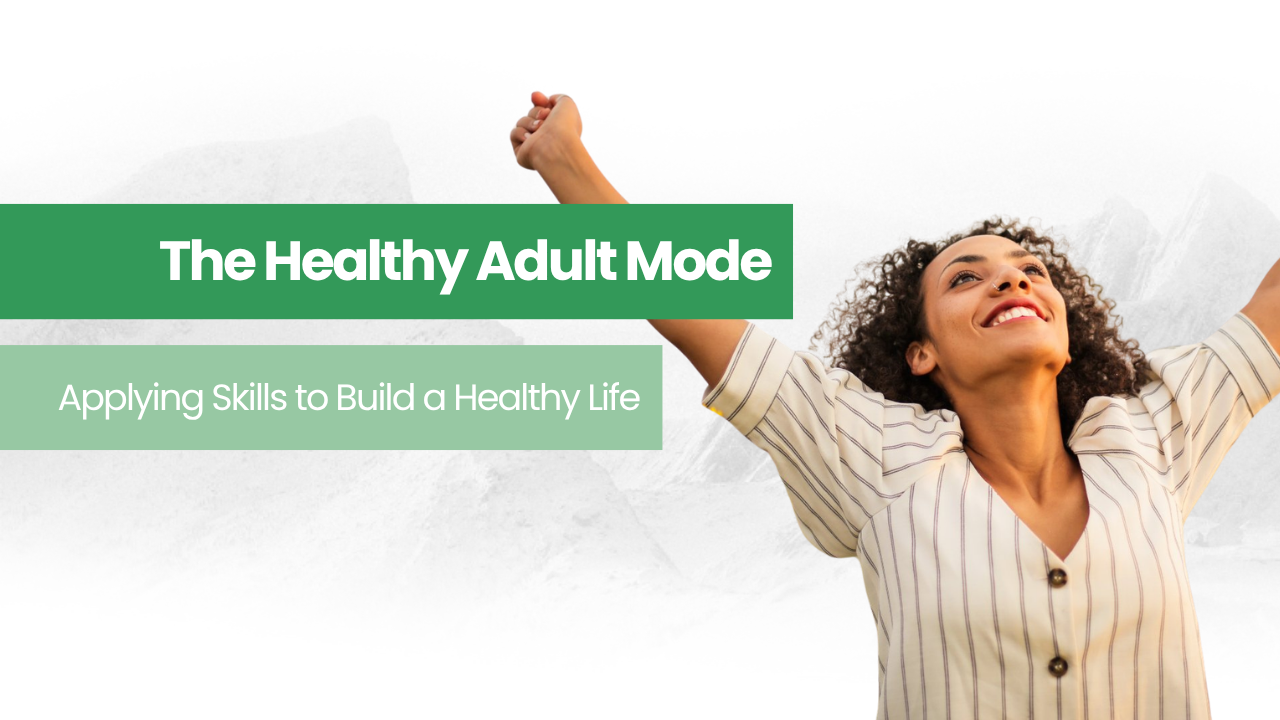
The Healthy Adult Mode
Healthy Adult Mode: The Mode That Learns to Run the Show
Written by Jess O'Garr, Clinical Psychologist and Schema Therapy trainer at The Psych Collective.
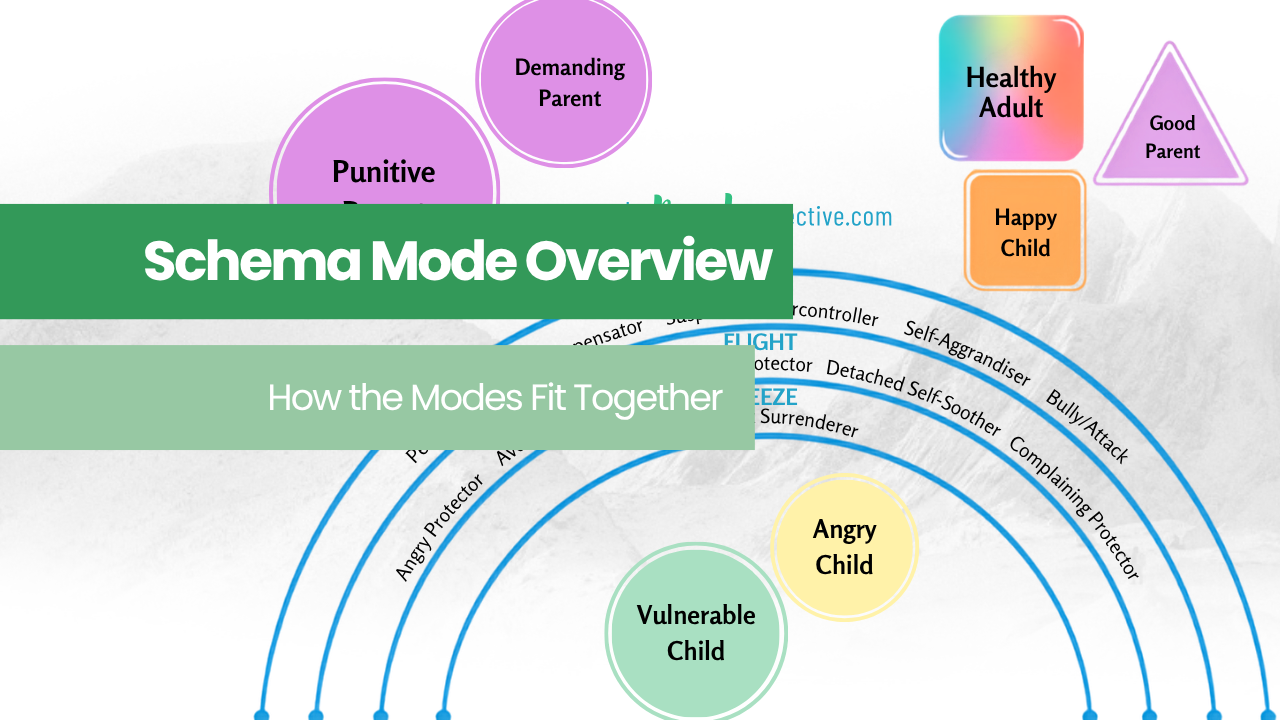
Healthy Adult Mode is the part of you that makes skilful choices, meets your emotional needs and manages your other Schema Modes. Its primary job is to look after the Vulnerable Child, but it also sets boundaries with the Angry Child, manages Maladaptive Coping Modes, challenges Dysfunctional Parent Modes and makes sure there is space for the Happy Child.
I think of the Healthy Adult as the stage director of Schema Mode Therapy. All of your different modes are characters on the stage, and without a strong director, somebody else inevitably starts running the show. For some people, that's the Punitive Parent. For others, it's a Detached Protector, Perfectionistic Overcompensator or another coping mode. Strengthening the Healthy Adult means gradually being able to say, Right, I'm in charge now.
What is Healthy Adult Mode?
The Healthy Adult is essentially our adulting mode. It helps us navigate work, relationships, emotions, responsibilities, boundaries, self-care and all of the complicated stuff that comes with being a functioning human being. It gives us the capacity to learn, make mistakes, recover from them, and keep growing without losing our underlying sense of self-worth.
Being in Healthy Adult Mode doesn't mean always knowing the right answer or never becoming distressed. Healthy adults still get angry, frightened, overwhelmed and hurt. They make mistakes and occasionally make terrible decisions. The difference is their capacity to recognise what is happening, respond skilfully and repair things when necessary.
A useful question is: "Am I making a skilful, recovery-focused choice that is reasonably likely to serve me well later?" You don't need a crystal ball. You simply need to consider the likely consequences rather than allowing whichever mode is shouting the loudest to make the decision.
Watch the Video
Hear Jess give an overview of the Healthy Adult Mode
Are we born with a Healthy Adult Mode?
No. This is one of the important differences between Healthy Adult and some of our Child Modes. We are born vulnerable. We naturally express anger, and children naturally seek opportunities to play and explore. Healthy Adult skills, however, have to be learnt.
Ideally, we learn them by watching healthy adults. Other people teach us how to manage emotions, resolve conflict, look after our bodies, handle money, maintain relationships, set boundaries and cope with stress. We gradually absorb those skills until we can apply them independently.
I think of Healthy Adult almost like a language. If the people raising you didn't speak that language themselves, you couldn't simply absorb it from them. This is one reason people can reach adulthood highly capable in some areas while feeling completely lost in others. They may never have been taught the skills they are now expected to know.
The good news is that Healthy Adult can be learnt later. This is a major focus of Schema Mode Therapy and one of the roles of the Good Parent within therapy: initially providing coaching, modelling and support that can eventually be internalised by the Healthy Adult.
What does the Healthy Adult do with the Vulnerable Child?
The Vulnerable Child gets priority. Its emotions and needs are central to the model, so the Healthy Adult needs to learn how to notice vulnerability rather than immediately escaping, suppressing or attacking it.
Instead of saying, "Stop being ridiculous. Get over it", the Healthy Adult turns towards the emotion with curiosity: "What's happening here? What am I feeling? What triggered this? What do I need?" It uses emotional validation and soothing rather than judgement.
This doesn't mean believing every thought that accompanies an emotion. You can validate that you feel rejected without automatically concluding that everybody hates you. The Healthy Adult acknowledges the emotion, checks the facts and then works out what the Vulnerable Child actually needs.
How does the Healthy Adult manage the other Schema Modes?
Each mode needs a slightly different response. With the Angry Child, the Healthy Adult allows the anger to be expressed while maintaining behavioural boundaries: It is perfectly okay to feel angry. It is not okay to hurt people or break things because you're angry. It listens for the unmet need underneath the anger and decides what needs to happen next.
With Maladaptive Coping Modes, the Healthy Adult becomes the decision-maker. We don't necessarily need to eliminate every coping strategy forever. Occasionally detaching, avoiding or becoming highly task-focused may actually be useful. The difference is that the Healthy Adult decides when a coping strategy is appropriate rather than automatically allowing the coping mode to take over. Most of the time it can say, Thanks, but I don't need you to save me anymore. I've got this.
The Punitive Parent gets a much firmer response. That mode doesn't offer anything useful, so the Healthy Adult works to banish it: Get out. I'm not listening to you anymore. The Demanding Parent is different because some standards and internal motivation are useful. Rather than eliminating it, the Healthy Adult turns the volume down and negotiates more realistic expectations.
Finally, the Healthy Adult protects space for the Happy Child. No matter how old we get, we still need fun, play, creativity and connection. A life consisting entirely of responsibility and productivity isn't particularly healthy either.
What does a strong Healthy Adult look like?
A strong Healthy Adult can lean into emotions rather than automatically running away from them. It approaches feelings with curiosity, uses self-validation, and still checks whether its interpretation of the situation is accurate. From a DBT perspective, this reflects Wise Mind: integrating emotional information with rational thinking rather than letting either one dominate completely. A Healthy Adult can balance Dialectics.
You're also building trust in yourself. You can make choices based on your own values and needs without constantly needing approval from other people. You develop a more stable sense of who you are, what you like, what you don't like, what you will tolerate and what you won't.
That stability carries into relationships and boundaries. Sometimes you may temporarily reduce self-care because something genuinely important needs your attention. But once that period passes, Healthy Adult says, I'm done now. I need to recover. It doesn't allow one exceptional week to become six months of self-neglect.
Healthy Adult also learns to cope ahead rather than catastrophise ahead. If you know a situation is likely to be triggering, you can anticipate it and plan which skills you'll use beforehand, during the situation and afterwards. The attitude becomes: "This might be difficult, and I have a plan for how I'm going to manage it."
What gets in the way of Healthy Adult Mode?
One major barrier is simply not knowing how. If you didn't have healthy adults modelling these skills, you're learning something new rather than retrieving something you already know. That takes time.
Another barrier is willfulness. Therapy and behavioural change are hard, and sometimes there is a strong wish for somebody else to rescue us or fix the situation. Taking responsibility for your own recovery can be frightening because adulthood comes with responsibility, consequences and difficult choices. Healthy Adult work asks: "Regardless of how I got here, what am I going to do now?"
For others, the barrier is low self-worth. If your Punitive Parent has spent decades telling you that you don't deserve care, treating yourself with compassion can feel completely wrong. You may intellectually understand what a Healthy Adult would do while still believing that you're not entitled to do it for yourself.
Finally, there is consistency. Developing Healthy Adult means repeatedly practising new responses until they become more familiar. Knowing the skill isn't the same as using it. This is where discipline matters: choosing the healthier response often enough that you gradually build a different way of living.
The Healthy Adult as stage director
Imagine all of your Schema Modes standing on a stage. For years, perhaps your Punitive Parent has had the megaphone, criticising everybody and running the show. Maybe your Detached Protector eventually took over because it couldn't tolerate listening to the Punitive Parent anymore.
Then the Healthy Adult walks onto the stage, takes the megaphone and says: "Right. I'm in charge now."
The Vulnerable Child comes front and centre, because its emotions and needs matter. Angry Child can stand nearby because sometimes anger contains useful information. The Coping Modes move into the wings: "I'll call you if I genuinely need you, but you don't need to automatically jump in anymore."
Punitive Parent gets thrown out of the theatre. Demanding Parent can sit quietly in the corner because occasionally its input might be useful, but it no longer gets to flog everybody into submission. Happy Child gets room to wander around the stage, explore, play and have some fun.
Then life happens. Something difficult rolls onto the stage, and the Healthy Adult decides how everybody responds. "What does my Vulnerable Child need? What is my anger telling me? Do I actually need this coping strategy? What is the skilful choice here?"
That's Healthy Adult Mode. Not perfect. Not endlessly calm. Just increasingly capable of running the show.
Frequently asked questions about Healthy Adult Mode
What is Healthy Adult Mode in Schema Therapy?
Healthy Adult Mode is the part of you that manages your other Schema Modes, meets emotional needs, sets boundaries and makes skilful choices that support your longer-term wellbeing.
Are you born with Healthy Adult Mode?
Healthy Adult skills are largely learnt through modelling, guidance and experience. If healthy adult behaviour wasn't modelled adequately earlier in life, these skills can still be developed through therapy and deliberate practice.
Does Healthy Adult get rid of the other Schema Modes?
No. Healthy Adult learns how to respond appropriately to each mode. It prioritises and soothes Vulnerable Child, sets limits around Angry Child behaviour, manages Coping Modes, challenges Parent Modes and creates space for Happy Child.
How do I strengthen my Healthy Adult?
Start with mode awareness. Notice which mode is currently running the show, identify the emotion or need underneath it, and ask what response is most likely to support your wellbeing in the longer term. With practice, these Healthy Adult responses become easier and more automatic.
Build your Healthy Adult
Our Schema Mode Cards, Schema Therapy Patient Workbook and Complete Set of Schema Therapy Worksheets provide practical tools for mapping your modes, understanding the needs underneath them and planning what your Healthy Adult can do differently.
The worksheets also include a framework specifically designed to help you develop your Healthy Adult response, so you can move from simply recognising your modes to actively managing them.
Explore our Schema Therapy Mode resources →
Are you a Mental Health Clinician?
Our Schema Mode Therapy Clinician Guide provides practical tools for identifying and working with Schema Modes, while my Schema Therapy and Schema Mode Therapy training focuses on translating the model into practical clinical interventions you can actually use with clients.
About Our Resources