The Good Parent Mode
What Is the Good Parent in Schema Mode Therapy?
Written by Jess O'Garr, Clinical Psychologist and Schema Therapy trainer at The Psych Collective.
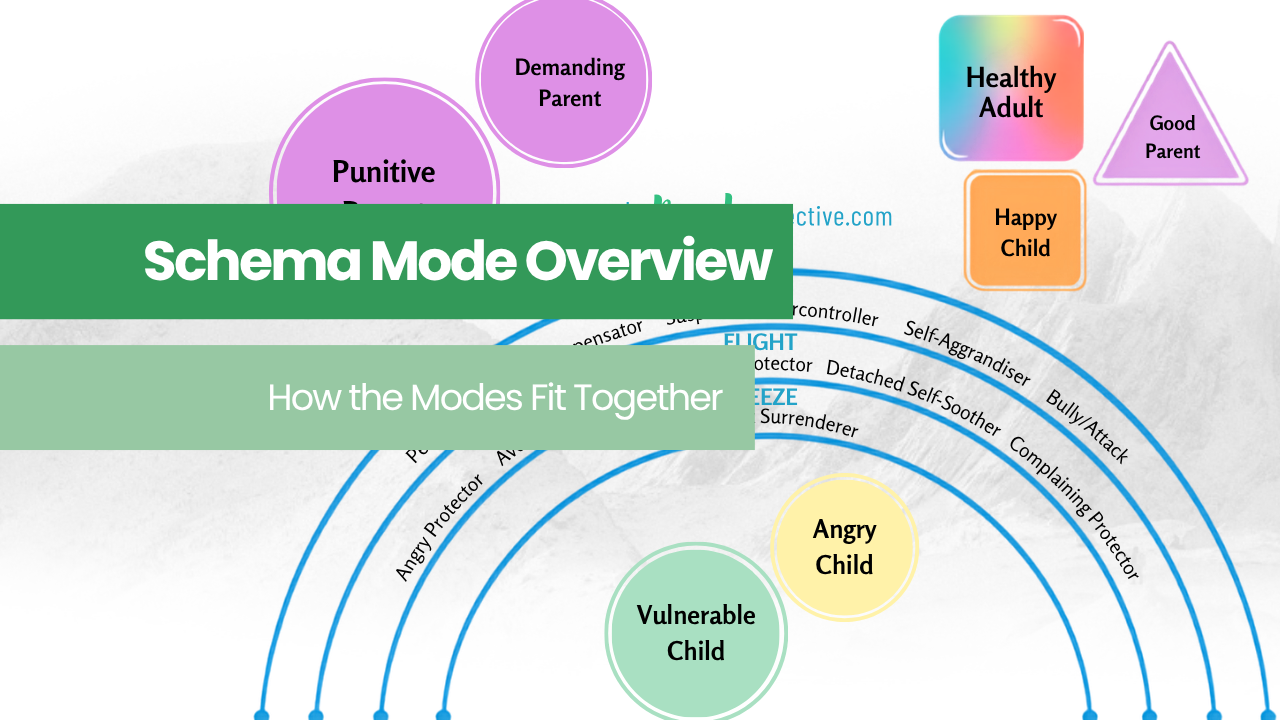
The Good Parent in Schema Mode Therapy is an external influence that helps you develop your Healthy Adult and learn how to meet the needs of your Vulnerable Child. Unlike most Schema Modes, the Good Parent isn't really another part inside your head. It is the person, relationship or therapeutic experience that teaches you the skills and messages you need to eventually look after yourself.
I think of the Good Parent as the mechanism of change in Schema Mode Therapy. Initially, somebody else (your therapist) provides the support, validation, guidance and boundaries that may have been missing earlier in life. Over time, those messages become internalised. Eventually, the aim is for your Healthy Adult to be able to do for yourself what the Good Parent once did for you.
Watch The Video
Hear Jess explain the Good Parent Mode
What does a Good Parent actually do?
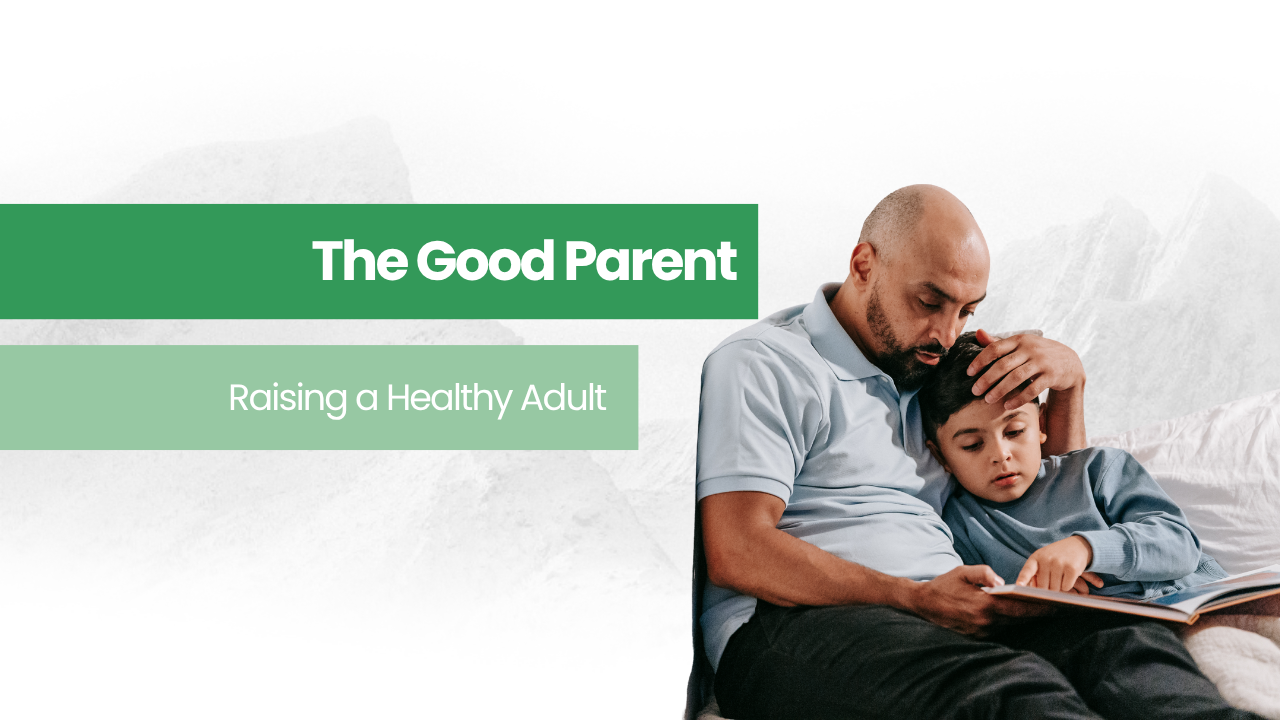
Babies arrive in the world with absolutely no idea how to look after themselves. A Good Parent starts with a very hands-on role because an infant is completely dependent on other people. They feed them, bathe them, dress them and keep them safe. As the child grows, they gradually teach them how to do these things independently.
But parenting is about much more than practical self-care. Children also need someone to teach them what their feelings are called, what to do with those feelings and how to communicate them. They need to learn how to ask for what they want, tolerate not always getting it, set boundaries, understand other people's boundaries and navigate increasingly complicated relationships.
The Good Parent is therefore a coach. Early on, they do a lot of the work. As the child develops, they increasingly step back, provide guidance and allow the child to practise doing things for themselves. Eventually, the message shifts from I've got this to You've got this, and I'm here if you need me.
To help parents teach their kids about emotions, we have developed Feeling Cards for Kids, designed by Jess and Dr Al's kids.
How does the Good Parent become the Healthy Adult?
Children's brains are effectively sponges, soaking up messages from the people around them. A Good Parent provides messages such as: "I'm here for you. I believe in you. I love you. You're safe with me. We'll work this out together."
As the child gets older, those messages change slightly: "I trust you. Have a go. You can manage this. If it falls apart, we'll work out what to do next." Initially, those messages are completely external. They are literally coming from another person.
Over time, however, we want them to become internalised. When that child grows up and encounters something difficult, ideally they carry an internal sense of reassurance, self-worth and confidence with them. They can almost hear that supportive voice saying, Trust yourself. You've got this. Give it a go. If it doesn't work out, we'll figure out what happens next.
That internalised voice becomes part of the Healthy Adult Mode.
What if you didn't have a Good Parent growing up?
Most of the people I work with in Schema Mode Therapy didn't get enough of this. That doesn't necessarily mean their parents were deliberately harmful or didn't love them. Often, their parents simply didn't have those skills.
We don't have to go very far back historically to find very different ideas about parenting. "Children should be seen and not heard" was once considered completely normal. Physical punishment was widely accepted. Emotional literacy, validation, healthy boundary setting and teaching children how to regulate emotions haven't always been treated as essential parenting skills.
For the most part, parents do the best they can with the skills and knowledge they have available. If nobody taught your parent how to regulate emotions, resolve conflict or communicate needs, they may have struggled to teach those things to you. Sometimes, of course, children do experience genuinely abusive, neglectful or deliberately harmful parenting. Either way, the adult can arrive in therapy without having internalised the Good Parent messages and skills they needed.
That is where limited reparenting becomes an important part of Schema Therapy.
What is the therapist's role as a Good Parent?
Within Schema Mode Therapy, the therapist can temporarily take on aspects of the Good Parent role. They become another coach who helps the patient's Healthy Adult Mode learn the skills and messages that weren't sufficiently developed earlier.
Instead of responding to emotion with criticism and judgement, the therapist teaches self-validation. Instead of automatically complying when the boss expects a 13-hour unpaid workday, the therapist helps you learn to set boundaries. Instead of remaining indefinitely in a relationship that is causing harm, the therapist helps you consider your needs, choices and limits.
The therapist isn't supposed to make all of those decisions for you. The aim is to strengthen your Healthy Adult, so you become increasingly capable of making them yourself. The Good Parent offers guidance, modelling and support while the Healthy Adult practises taking over.
As a therapist, I know this process is working when a patient tells me that my voice popped into their head during the week. My patients will tell me that they were about to make a decision based on an old coping strategy, and then hear my voice saying, " How's that working out for you? and then choose to respond differently. I love hearing that I'm haunting them because it means the external therapeutic message is starting to become internalised.
A Good Parent isn't endlessly nice
Good parenting isn't simply telling somebody that everything they do is wonderful. The Good Parent combines compassion, validation and support with boundaries, challenge and accountability.
You want somebody in your corner who believes in you and has your back. But sometimes having your back means saying, "Yeah, that probably wasn't a great choice. What are we going to do differently next time?" Support doesn't mean removing consequences or agreeing with every decision.
My patients sometimes call me the compassionate ass kicker, which captures the balance fairly well. A Good Parent can say, "I understand why you did that, and I can see how distressed you were, while also saying, We're going to need a different strategy next time."
That combination is important because the Healthy Adult needs both sides. It needs compassion for the Vulnerable Child, but it also needs boundaries and the capacity to make choices that support long-term wellbeing.
Who can be your Good Parent?
If you didn't receive enough Good Parent messages growing up, you don't necessarily have to get all of them from a therapist. Think about the people you've encountered throughout your life. Who feels safe? Who is genuinely in your corner? Who provides warmth and reassurance while still giving you useful guidance?
Perhaps Mum and Dad couldn't provide that, but an aunt or grandparent did. Maybe you had a friend's parent who always made you feel welcome, a really good boss, a teacher, a coach or somebody else who modelled the kind of relationship you needed.
You don't even need ongoing access to that person. You can ask yourself: "If Aunty Sue was here right now, what would she say to me? How would she help me think about this situation?" The aim is to borrow that perspective while your own Healthy Adult is developing.
You can even use an imaginary or fictional Good Parent. What matters is that the person represents the qualities you're trying to internalise: safety, acceptance, encouragement, appropriate boundaries, compassion and belief in your capacity to cope. What would Mrs Weasley say?
What should a Good Parent say?
The exact words matter less than the underlying message. A Good Parent communicates: "I'm here. You're important. Your feelings make sense. Your needs matter. I believe in you. You can do difficult things. You are allowed to make mistakes. We can work out what happens next."
Importantly, the message gradually shifts from "I will rescue you" to "I believe you can manage this." The goal isn't dependence on the Good Parent. It is developing enough support and guidance that you eventually don't need somebody else to provide the message every time.
This is why the relationship between the Good Parent and Healthy Adult is so important. The Good Parent isn't the final destination. The Healthy Adult is.
To help our patients practise self-soothing and the Good Parent Script, we have created Good Parents blankets, available for purchase HERE.
Listen to the Good Parent Script
Here is a video by Jess reading out the Good Parent Script
How can you develop a Good Parent voice?
Start by identifying what you needed to hear but perhaps didn't hear enough. When your Vulnerable Child is frightened, ashamed, lonely or overwhelmed, what would a genuinely supportive parent say? When you're making an unhealthy choice, how could they challenge you without humiliating or attacking you?
Then practise bringing those messages into situations where your old modes would usually take over. If the Punitive Parent says, "You're useless", what would your Good Parent say instead? If the Demanding Parent says, "Keep going, you haven't done enough", would the Good Parent recognise that you need a break? If your Vulnerable Child says, "I can't handle this", how would a Good Parent combine reassurance with encouragement?
At first, this can feel incredibly artificial, particularly if compassionate language is unfamiliar. That's okay. You're learning a different way of responding to yourself, and new skills generally feel less natural than the patterns you've practised for decades.
Eventually, the aim is that you don't have to ask what your therapist, aunt, teacher or imaginary Good Parent would say. You know what you need, and your Healthy Adult knows how to respond.
Frequently asked questions about the Good Parent
Is the Good Parent a Schema Mode?
The Good Parent is slightly different from the other Schema Modes. It is best understood as an external influence that promotes development of the Healthy Adult, helping you learn to recognise and meet the needs of your Vulnerable Child.
What is limited reparenting in Schema Therapy?
Limited reparenting is the therapeutic process in which the therapist provides some of the safe, validating and appropriately boundaried experiences that were missing earlier in life, within the limits of a professional therapeutic relationship.
Can someone other than a therapist be a Good Parent influence?
Yes. Helpful Good Parent influences can include family members, friends, mentors, teachers or other safe people. You can also use an imagined Good Parent to help consider what a compassionate, supportive and appropriately challenging response might sound like.
What is the difference between the Good Parent and Healthy Adult?
The Good Parent teaches and models the response; the Healthy Adult learns to internalise it. Over time, the goal is for the Healthy Adult to become increasingly capable of meeting emotional needs, setting boundaries and making healthy choices independently.
Build your Good Parent and Healthy Adult
Our Schema Mode resources are designed to help you understand what happens when your schemas are triggered and what you need to do differently. The Schema Mode Cards help you identify Vulnerable Child, Coping, Parent and Healthy Modes, while our Complete Set of Schema Mode Therapy Worksheets provide practical exercises for building mode awareness and strengthening your Healthy Adult.
Our Schema Therapy resources also include exercises specifically designed to help you explore the Good Parent, identify the messages you need and practise responding to your Vulnerable Child differently.
Explore our Schema Therapy Mode resources →
Are you a Mental Health Clinician?
Our Schema Mode Therapy Clinician Guide provides practical tools for identifying and working with Schema Modes, while my Schema Therapy and Schema Mode Therapy training focuses on translating the model into practical clinical interventions you can actually use with clients.
Explore upcoming Schema Therapy training →
About Our Resources