Dysfunctional Parent Modes

Dysfunctional Parent Modes: Punitive Parent and Demanding Parent in Schema Therapy
Written by Jess O'Garr, Clinical Psychologist and Schema Therapy trainer at The Psych Collective.
Dysfunctional Parent Modes are the internalised critical and demanding voices we carry with us from earlier experiences. In Schema Mode Therapy, the two main Dysfunctional Parent Modes are the Punitive Parent and the Demanding Parent. Both can sound like a harsh voice inside your head, but they do different things. The Punitive Parent attacks your worth: You're useless. You're worthless. There's something wrong with you. The Demanding Parent focuses more on standards and performance: You should be doing more. You need to get this right. That's not good enough.
How do Dysfunctional Parent Modes develop?
Have you ever met a two-year-old? What do they think of themselves? Generally, two-year-olds think they're awesome.
They aren't born believing they're defective, lazy, useless or only worthy when they achieve. Dysfunctional Parent Modes develop over time as we absorb messages from the people and environments around us, until eventually those external messages start sounding like our own.
The word "parent" can be slightly misleading because we're not necessarily blaming Mum and Dad. In Schema Therapy, Parent Modes represent messages that were internalised from people in positions of authority or influence during our development. That might include parents, grandparents or other family members, but it can also include teachers, coaches, religious educators, older siblings, peers or other important people.
All children experience some criticism and expectations. Being told that you could have tried harder on your homework isn't necessarily damaging, and children need appropriate rules and boundaries. Problems are more likely to develop when criticism, punishment, or demands are excessive, harsh, persistent, or aren't balanced by enough warmth, validation, acceptance, and encouragement.
Sometimes the child hears messages that are very explicit: "You're useless. What's wrong with you? You never do anything right. Other times, they focus more on performance: "You need to work harder. Why did you only get 85%? You should have won. You need to look a certain way, behave a certain way and make sure you never embarrass yourself."
There can also be an absence of positive messages. A child doesn't necessarily have to be repeatedly told "I don't love you" to develop a sense that they aren't lovable. If affection, praise, emotional support or validation are consistently missing, children can fill in those blanks themselves, and unfortunately our brains aren't always generous when they do that.
Over time, these messages become internalised. Eventually, nobody else needs to tell you that you're not good enough because you've learnt to do it yourself. You become your own Dysfunctional Parent.
What I've notied in my patients is that if they heard negative or critical mesaages growing up, their internale critic sound slike the person who used to speak to them like that, But if they didn't hear the messages, but inferred them from a lack of positive message, their inner critic is more likely to sound like themselves, and unfortuantley that can be harder to shift becuase it feels egosyntonic.
What is the Punitive Parent Mode?
The Punitive Parent Mode is the harsh internal critic that shames, blames, insults and punishes you. It says things like: "You're useless. You're worthless. You're an idiot. Nobody wants you. You screwed that up. Of course they don't like you."
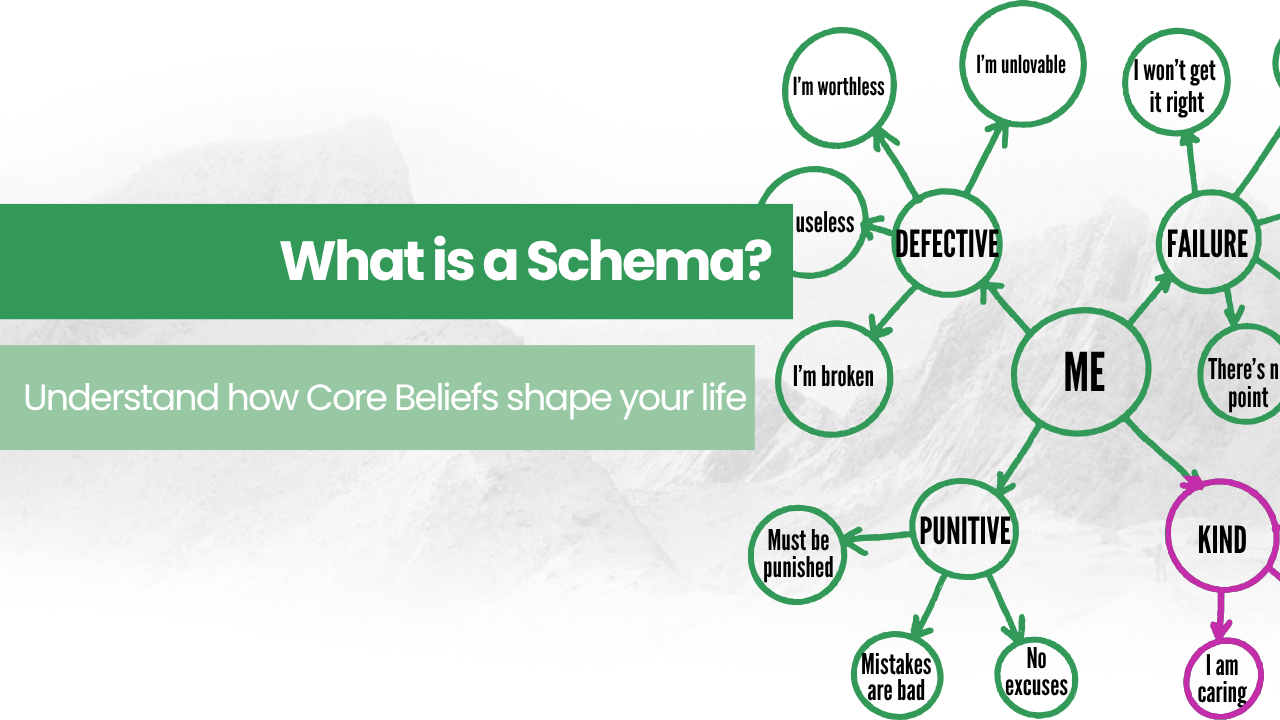
It is closely associated with schemas such as Defectiveness, Failure and Punitiveness, although Dependence/Incompetence and Abandonment can also become involved. If you already believe something is fundamentally wrong with you, the Punitive Parent provides a running commentary on all the evidence it thinks proves the point.
Triggers can include making a mistake, anticipating failure, being judged by somebody else or experiencing difficulty in a relationship. If a friend doesn't invite you somewhere, the Punitive Parent doesn't simply notice that you weren't invited. It says, "Of course they didn't invite you. You're boring. They don't really like you. Everyone eventually realises how terrible you are."
The emotional consequences are often shame, guilt, loneliness and self-hatred. For some people, punishment becomes behavioural as well. This might include self-harm or deliberately restricting positive experiences because "I don't deserve to be happy. I don't deserve to have fun." The Punitive Parent erodes self-esteem, denies the needs of the Vulnerable Child and reinforces the belief that you simply aren't worthy of care.
Watch the Video
Hear Jess explain the Punitive Parent Mode
What is the Demanding Parent Mode?
The Demanding Parent Mode focuses less on telling you that you're worthless and more on telling you what you should be doing. It is the internal voice carrying the whip: Do more. Go faster. Get it right. Don't take a break. You should have finished that already. Make sure everybody else is looked after first. You need to be better.
This mode is often associated with Unrelenting Standards, but Failure, Defectiveness, Punitiveness, and sometimes Emotional Deprivation can also sit underneath it. If love, approval or emotional support felt conditional on behaving or performing in a particular way, you may have learnt that meeting expectations is how you maintain connection and avoid criticism.
The Demanding Parent can become active around work, study, household tasks, appearance and relationships. Even social situations can become another performance: "Don't embarrass yourself. Don't say anything stupid. Make sure everybody likes you. Present yourself properly."
Unlike the Punitive Parent, the Demanding Parent can actually have some useful intent buried inside. We all need a voice that occasionally says, "You've hit snooze three times; get out of bed, or you'll be late for work." We need to wash our clothes, eat some vegetables, meet reasonable deadlines and fulfil our responsibilities. The problem is when that voice has no off switch, and there is no room for rest, mistakes or humanity.
Watch the Video
Hear Jess explain the Demanding Parent Mode
Punitive Parent vs Demanding Parent: what's the difference?
The easiest way to distinguish these modes is to listen to what the voice is actually saying. Punitive Parent attacks who you are. Demanding Parent attacks what you are doing. Punitive Parent says, "You're a failure". Demanding Parent says, "You must not fail."
The Punitive Parent tends to generate shame and self-hatred. It wants punishment and focuses on your flaws. The Demanding Parent creates pressure, stress and guilt by setting rules and standards that you are expected to meet. Punitive Parent says, "You're useless". Demanding Parent says, "You need to work harder, so you're not useless."
Of course, they can work together. The Demanding Parent sets an impossible standard: "You need to do this perfectly". You push yourself desperately trying to meet it, and when you inevitably fall short, the Punitive Parent arrives to say, "See? I told you that you were useless."
That combination can be brutal.
How do Parent Modes trigger Maladaptive Coping Modes?
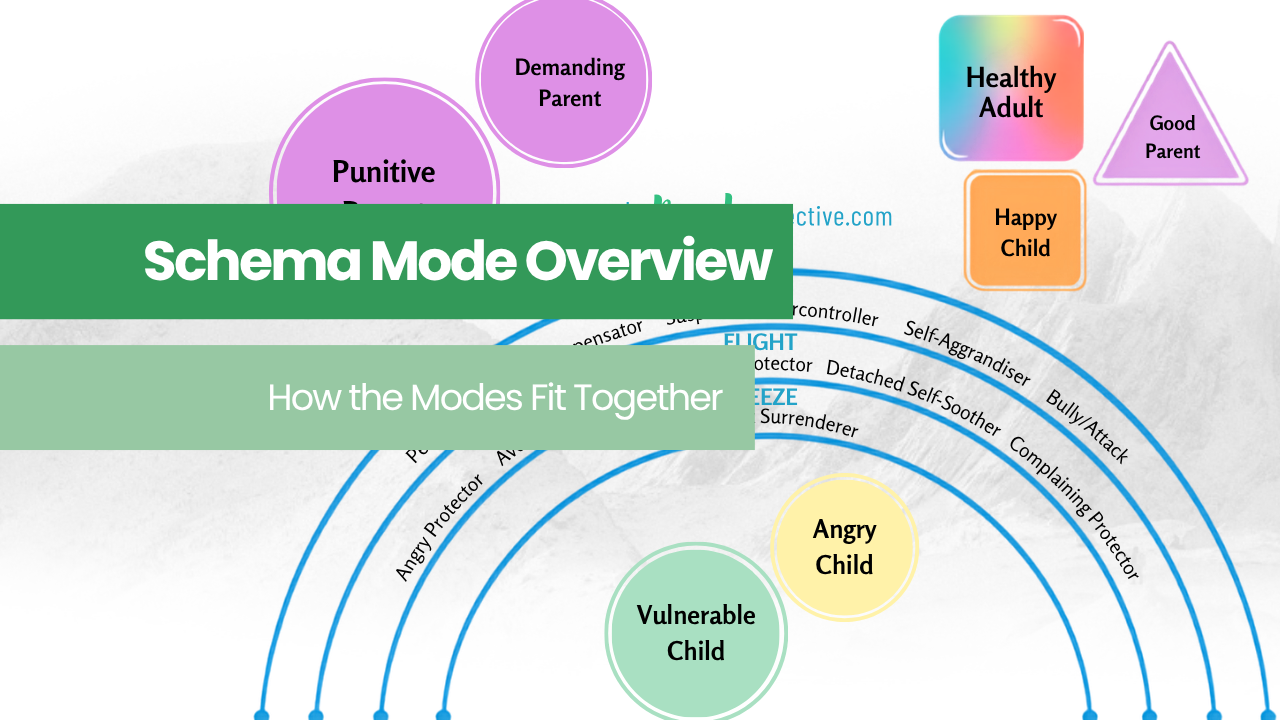
Dysfunctional Parent Modes often trigger the Vulnerable Child, and our Maladaptive Coping Modes then step in to protect it. Imagine a bully in the playground targeting a small child and another student stepping between them. The coping mode is trying to protect the child, although unfortunately Maladaptive Coping Modes don't always do that particularly skilfully.
A strong Demanding Parent often works closely with the Perfectionistic Overcompensator. I think of the Demanding Parent as the CEO issuing orders: I want this done. It needs to be perfect. You need to work harder. The Perfectionistic Overcompensator is the anxious employee saying, Yes, yes, absolutely. I'll get it all done. I promise it will be perfect.
Other people may respond differently. A Detached Protector might eventually say, This is too hard. I don't care anymore. I'm out. Someone might surrender to the criticism or use another Fight, Flight or Freeze strategy. Understanding the Parent Mode helps us understand why the coping behaviour happens in the first place.
How does the Healthy Adult manage the Punitive Parent?
The Healthy Adult's response to the Punitive Parent is relatively straightforward in principle, although difficult in practice: banish it. The Punitive Parent doesn't offer much useful. People sometimes argue they need their inner critic because it motivates them, but the useful motivational part is more likely to come from the Demanding Parent. You don't need to call yourself worthless to get out of bed or complete a task.
One useful strategy is externalisation. Start recognising that these messages didn't originate with you. They were learnt somewhere. Some people can identify the particular person whose voice they hear, while others recognise a collection of messages from different experiences. Naming or even drawing the Punitive Parent can help create some distance: "I hear that voice, but I recognise that it isn't what I choose to believe about myself."
Then set limits. Imagine somebody was speaking to a vulnerable child the way your Punitive Parent speaks to you. Would you stand there and agree? Or would you step in and say, You don't get to speak to them like that? That is the role we want the Healthy Adult to begin taking internally, while replacing criticism with self-validation, acceptance and compassion.
How does Schema Mode Therapy differ from Internal Family Systems?
Schema Mode Therapy and Internal Family Systems (IFS) overlap significantly. Both use a part-work approach and believe that these parts started in childhood. However, Schema Mode Therapy stems from Cognitive Behavioural Therapy and therefore strongly focuses on change. IFS aligns more with Acceptance and Commitment Therapy and therefore focuses more on acceptance. The Schema Mode Therapy approach to dealing with the Punitive Parent Mode differs from IFS, which advocates that all parts have value and get to stay.
When I run Schema Mode Therapy training, I invariably get into this discussion with someone in the room who has done IFS training. They will argue that the inner critic keeps us on track, helps us perform better, stops us from being lazy, and tries to protect us. And I will argue that the Healthy Adult Mode can do all of those things, but with compassion for the Vulnerable Child.
When raising children, the carrot works better than the stick.
How does the Healthy Adult manage the Demanding Parent?
The approach to the Demanding Parent is different because we don't necessarily want to eliminate it completely. There is value in having some internal drive, discipline and responsibility; we just don't need it screaming at us all day. So instead of an on/off switch, for this we need volume control.
The Healthy Adult therefore negotiates: "Yes, these three things genuinely need to be done today. We'll do them, and then we're taking a break. The other things can wait until tomorrow." It balances pushing yourself with knowing when you've done enough.
This is also where planned recovery becomes important. If you used your phone for 15 hours and the battery went flat, you wouldn't scream at the phone for being lazy. You'd recognise that it needs to be charged. Humans also need recovery, and needing rest isn't evidence that you've failed.
Other people can help reinforce this by acknowledging effort without adding more demands. Helpful support sounds like: "You've done a lot today. That's enough. Take a break." Over time, the aim is to replace the relentless more, more, more with a healthier balance between responsibility, achievement, rest and play.
Can you completely get rid of Dysfunctional Parent Modes?
Probably not. If you've listened to a critical or demanding voice for decades, it can become incredibly habitual. The goal isn't necessarily to reach a point where the thought never appears again; the goal is to change what happens when it does. So while Schema Mode Therapy aims to banish the Punitive Parent, we also know that isn't 100% possible. But you can banish the Punitive Parent's messages in the moment.
With the Punitive Parent, that means recognising: There it is. I'm not listening to that today. With the Demanding Parent, it might mean: "Yes, I hear that there are things to do, but your expectations are unreasonable. Here's what we're actually doing."
Over time, the Healthy Adult becomes louder and more credible. The old Parent Mode may still turn up, particularly during stress, failure or uncertainty, but it doesn't automatically get to run the show.
Frequently asked questions about Dysfunctional Parent Modes
What are Dysfunctional Parent Modes in Schema Therapy?
Dysfunctional Parent Modes are internalised critical or demanding messages learnt through earlier relationships and experiences. The two main modes are the Punitive Parent, which criticises and punishes, and the Demanding Parent, which imposes rigid standards and expectations.
Do Parent Modes always come from your parents?
No. The messages can come from parents, but also grandparents, teachers, coaches, siblings, peers, religious figures or other influential people. They can also develop from what was missing, such as insufficient warmth, validation or acceptance.
What is the difference between a Punitive Parent and a Demanding Parent?
Punitive Parent attacks your worth: You're useless. Demanding Parent focuses on standards and performance: You need to do better. Punitive Parent is primarily managed by challenging and externalising it, while the Demanding Parent needs to be moderated and negotiated with.
What is the difference between Demanding Parent and Perfectionistic Overcompensator?
The Demanding Parent sets the standard; the Perfectionistic Overcompensator tries to meet it. Think of the Demanding Parent as the CEO giving the orders and the Perfectionistic Overcompensator as the employee frantically trying to comply.
How do you change Dysfunctional Parent Modes?
Change starts with recognising the voice, understanding where its messages came from and strengthening the Healthy Adult response. Punitive messages need firm limits, externalisation and self-compassion, while demanding messages need more realistic standards, boundaries and planned recovery.
Want practical tools for working with Schema Modes?
Understanding your modes is much easier when you can actually see how they connect. Our Schema Mode Therapy Cards help you identify your Vulnerable Child, Dysfunctional Parent Modes, Maladaptive Coping Modes and Healthy Modes, making it easier to map what happens when a schema is triggered and work out what your Healthy Adult needs to do next.
For a more structured approach, our Complete Set of Schema Mode Therapy Worksheets provides practical exercises for understanding schemas, identifying modes, recognising unmet needs, and developing healthier responses.
Explore our Schema Therapy Mode resources →
Are you a Mental Health Clinician?
Our Schema Mode Therapy Clinician Guide provides practical tools for identifying and working with Schema Modes, while my Schema Therapy and Schema Mode Therapy training focuses on translating the model into practical clinical interventions you can actually use with clients.
About Our Resources