Planned Recovery
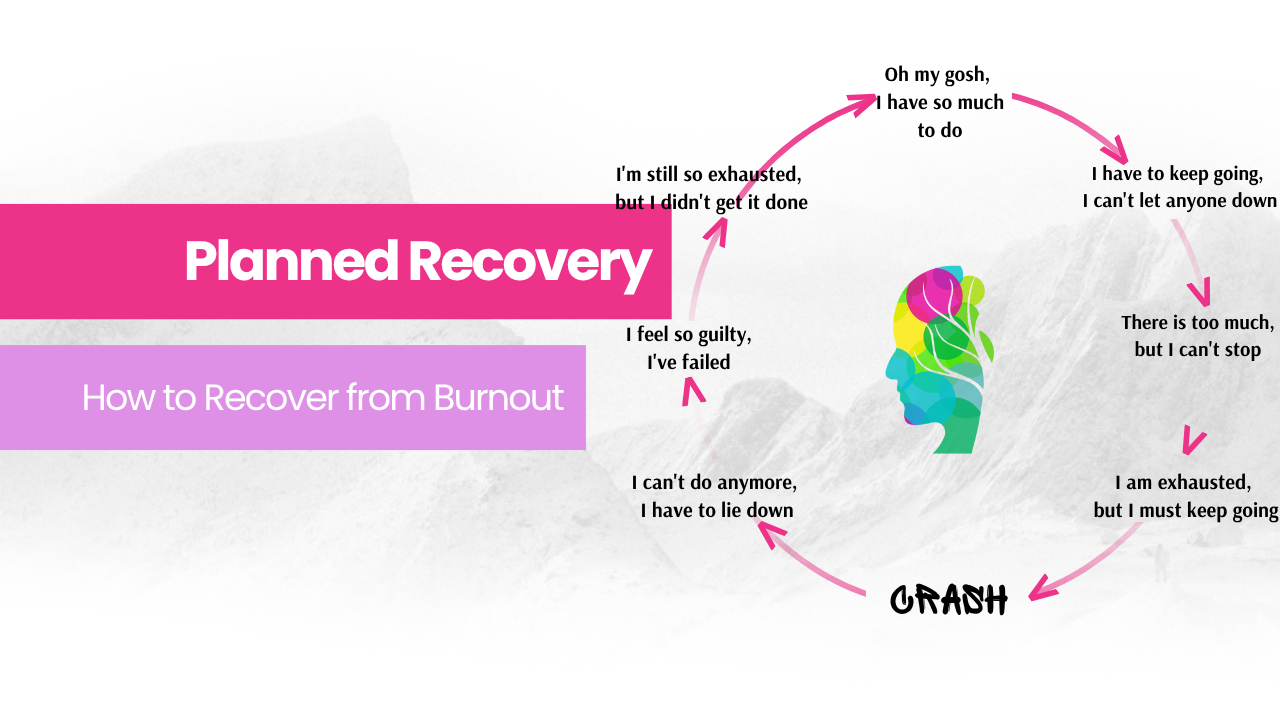
"Resilience is about how you recharge, not how you endure."
I love this quote. It comes from a really good article written by Harvard Business Review a few years ago and I keep coming back to it.
Here is the original article: https://hbr.org/2016/06/resilience-is-about-how-you-recharge-not-how-you-endure
This brings me to something really important which I talk about with my patients all the time called Planned Recovery. But first, let me explain the CRASH cycle.
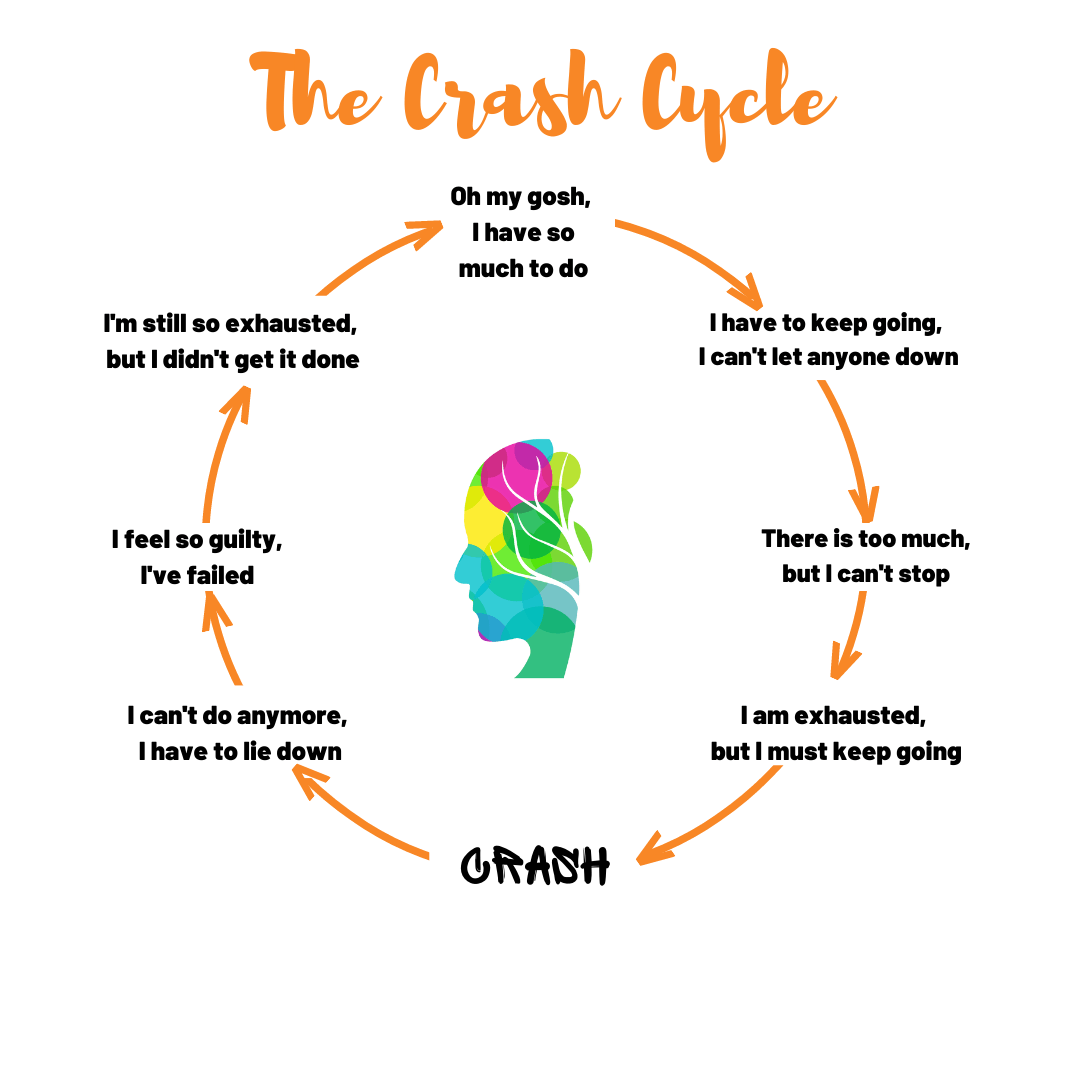
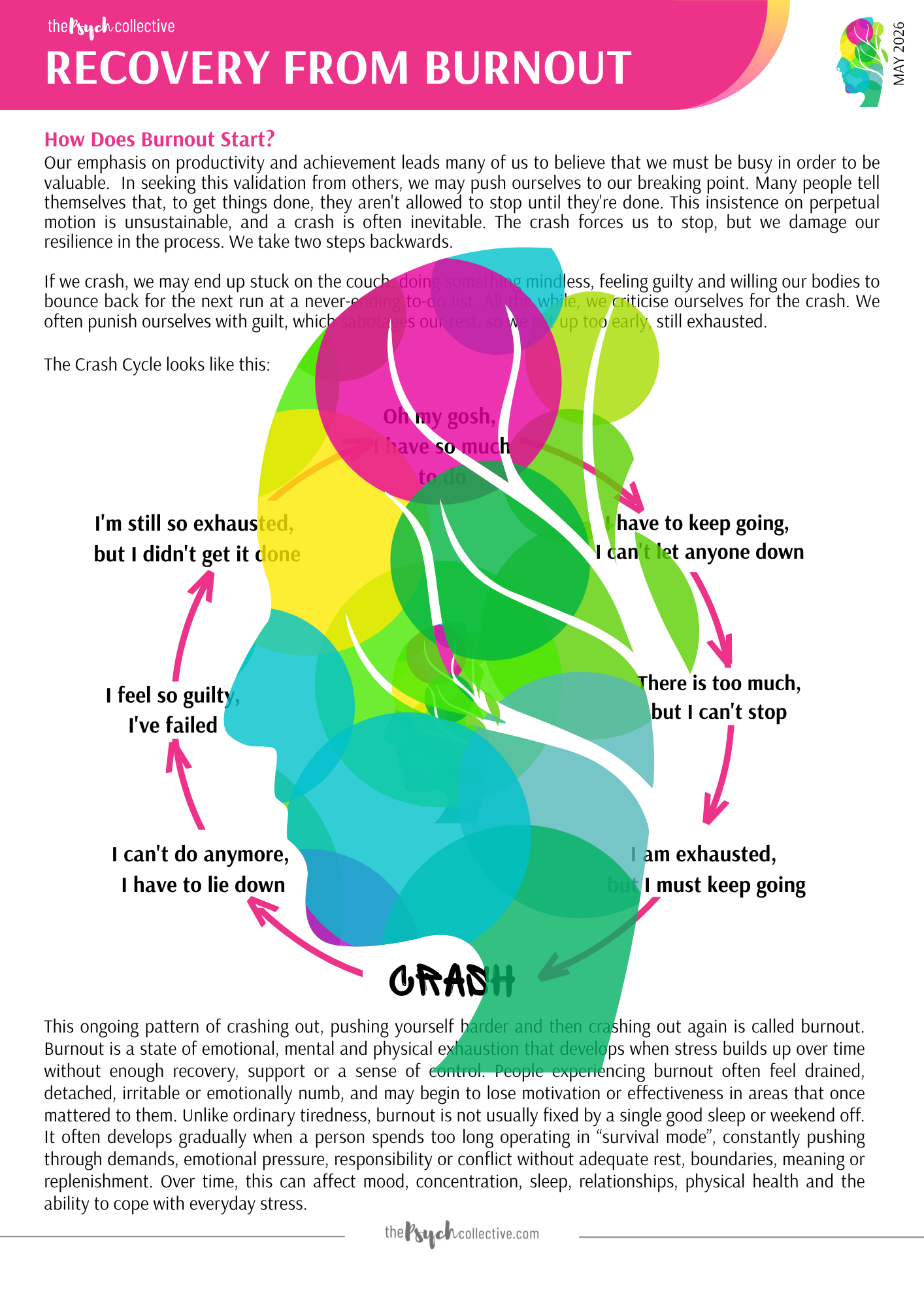
The Crash Cycle
Our emphasis on productivity and achievement leads many of us to believe that we must be busy in order to be valuable. In seeking this validation from others we may push ourselves to our breaking point. Many people tell themselves that in order to get things done, we aren't allowed to stop until it is done. This insistence on perpetual motion is unsustainable and a crash is often inevitable. The crash forces us to stop but we damage our resilience in the process. We take two steps backwards.
If we crash, we may end up stuck on the couch, doing something mindless, feeling guilty and willing our bodies to bounce back for the next run at a never-ending to-do list. All the while we criticise ourselves for the crash. We often punish ourselves with guilt which sabotages our rest: so we get up too early when we are still exhausted.
The Crash Cycle looks like this:
Sound familiar?
Many people believe that in order to get everything done, they aren't allowed to stop until it is done.
But this creates feelings of resentment, burnout , guilt and shame.
People may take a break, but after hours of watching TV or having a nap, they still feel burnout because they have criticised themselves needing the break, perceiving it to be a failure.
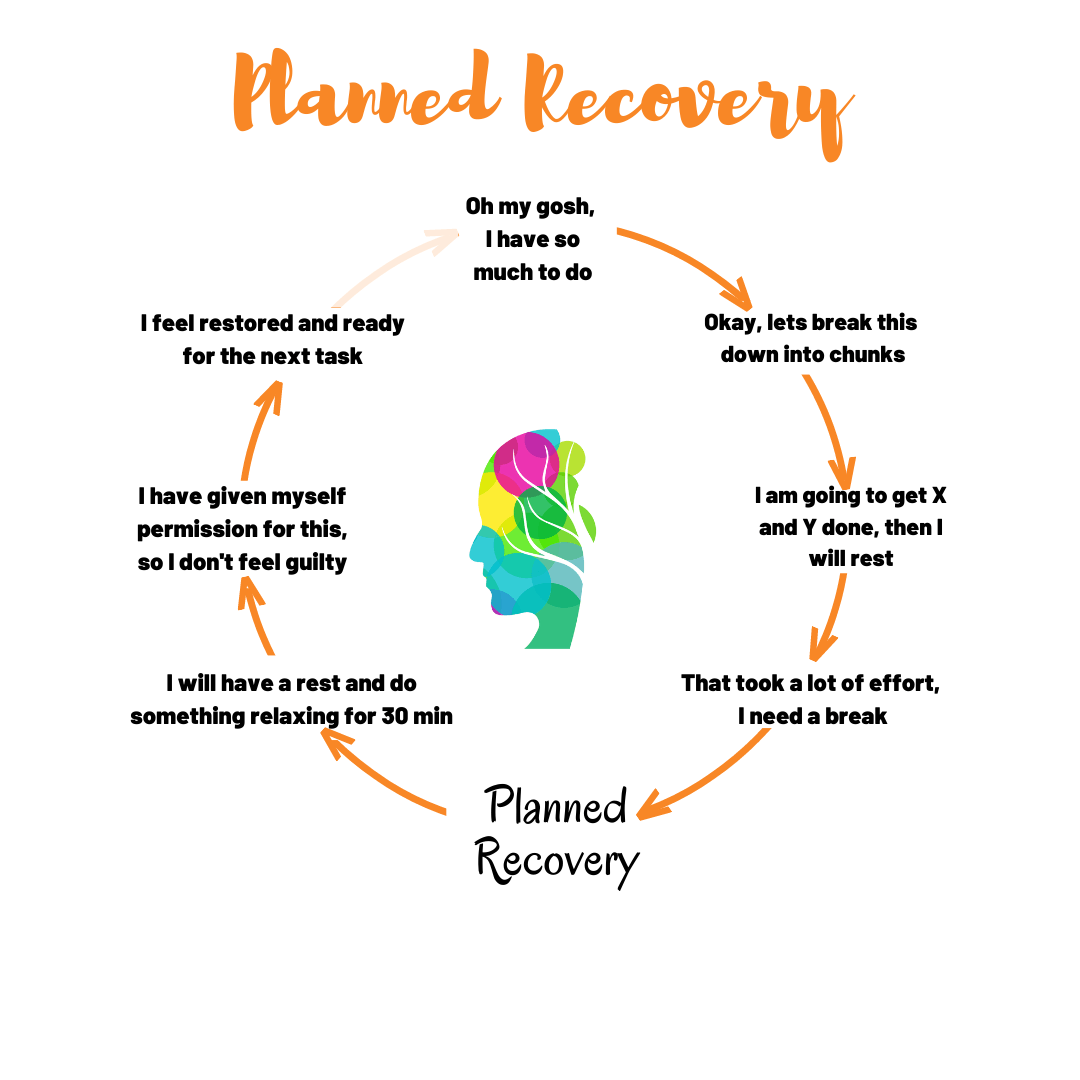
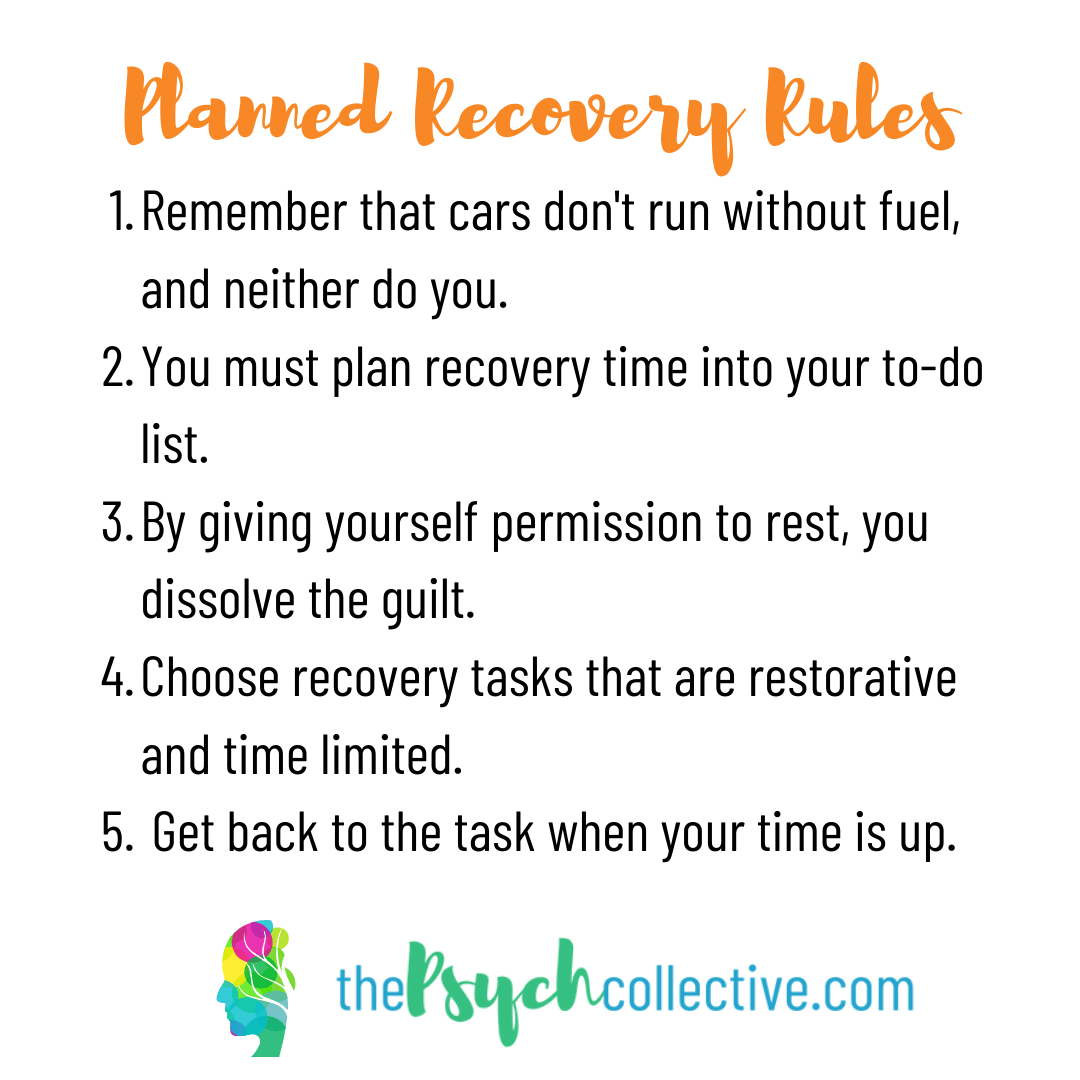
Here is an alternative:
Not convinced?
Let's imagine that you decided to drive across the country, so you fill up the tank and start driving. Eventually your car would run out of fuel and you would need to stop.
Are you going to then yell at the car for running out of fuel? Will you criticise it and call it weak? Kick the tyres, tell it that it has failed and insist that it keep going anyway?
Chances are that you will acknowledge that cars need fuel, put more in and then keep going when you're ready.
You need fuel too. Criticising yourself for it won't change that.
The Benefits of "Planned Recovery"
- A balance between productivity and recovery.
- Reduced guilt and shame for taking breaks.
- Recovery time is faster.
- Decreased feelings of burnout.
- Increased self-compassion through practising self-care without criticism.
- Increased productivity which is sustainable.
Opportunities to incorporate enjoyable activities into your day.
Want more?
Watch the YouTube video below as Jess explains this topic in more detail and download the free handout from our Resources page.
About Our Resources