How to Use Schema Therapy Cards in Session
How I Use Schema Therapy Cards in Therapy
And Why They Make Schema Therapy Easier to Understand
Written by Jess O'Garr, Clinical Psychologist and Schema Therapy trainer at The Psych Collective.
Schema Therapy is one of the most powerful therapies we use for helping people understand long-standing patterns in their emotions, relationships and behaviour. The challenge is that there are a lot of moving parts.
There are unmet emotional needs.
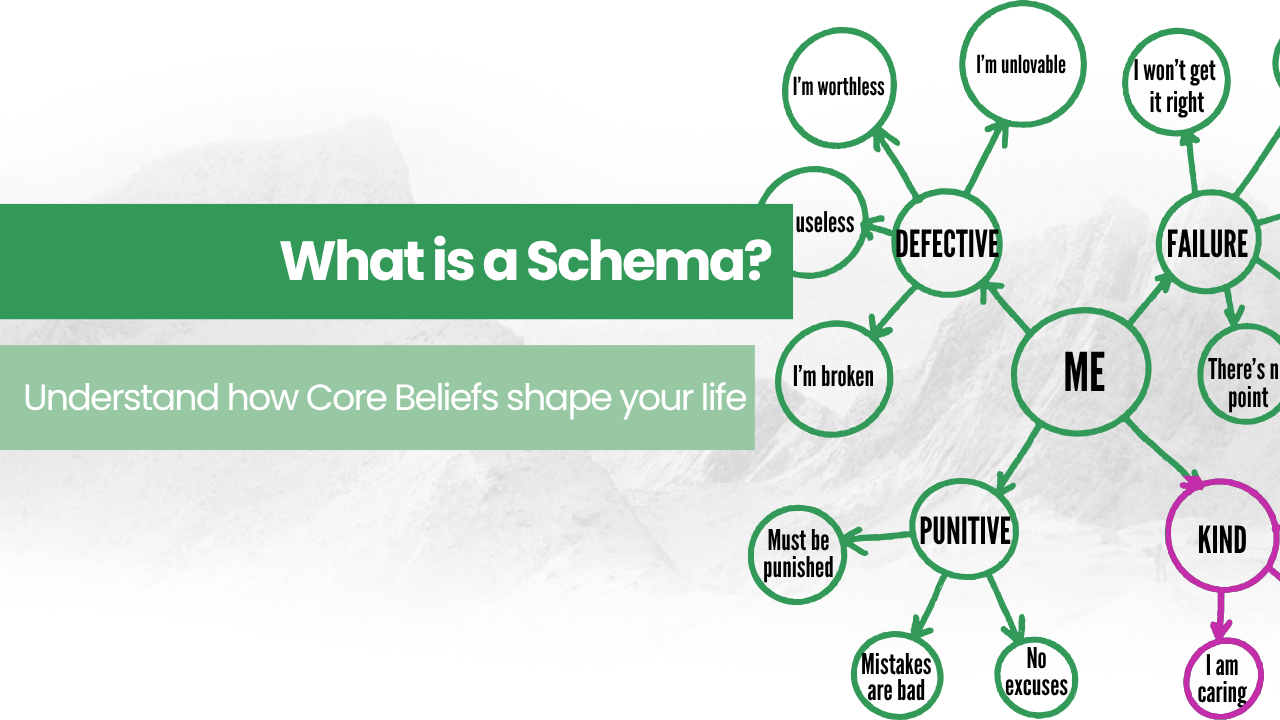
There are maladaptive schemas.
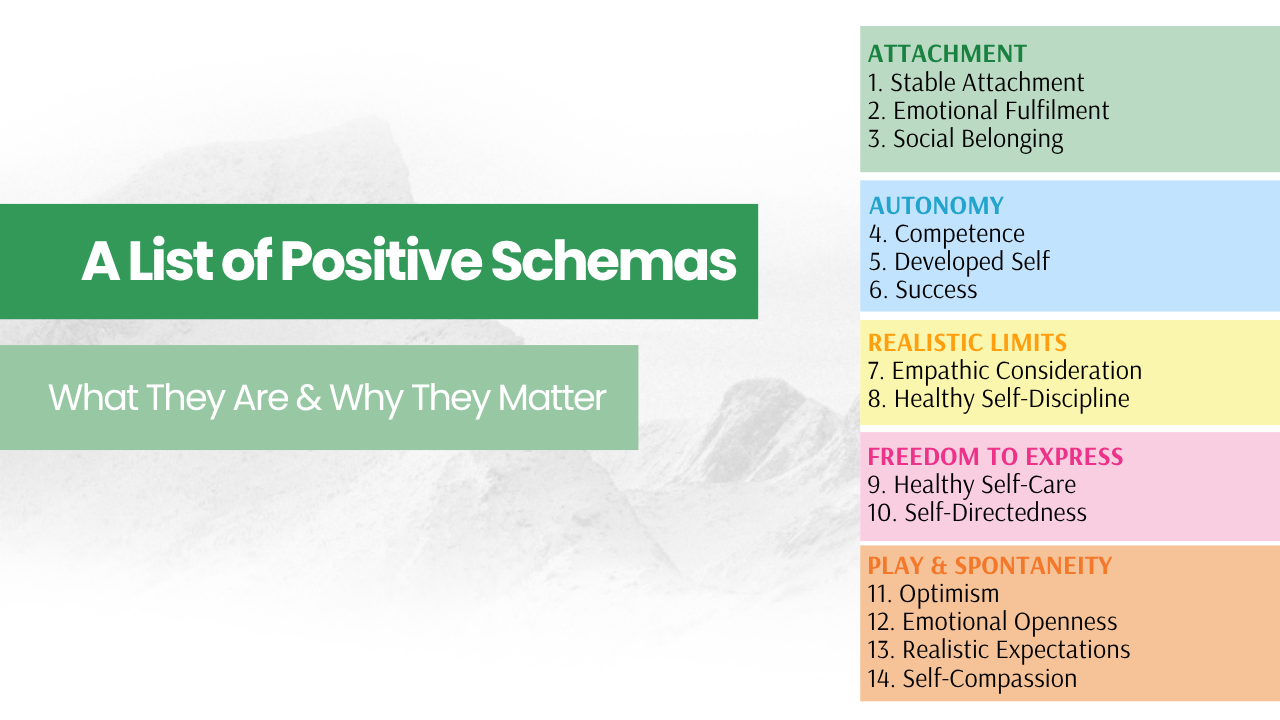
There are healthy adaptive schemas.
There are coping styles.
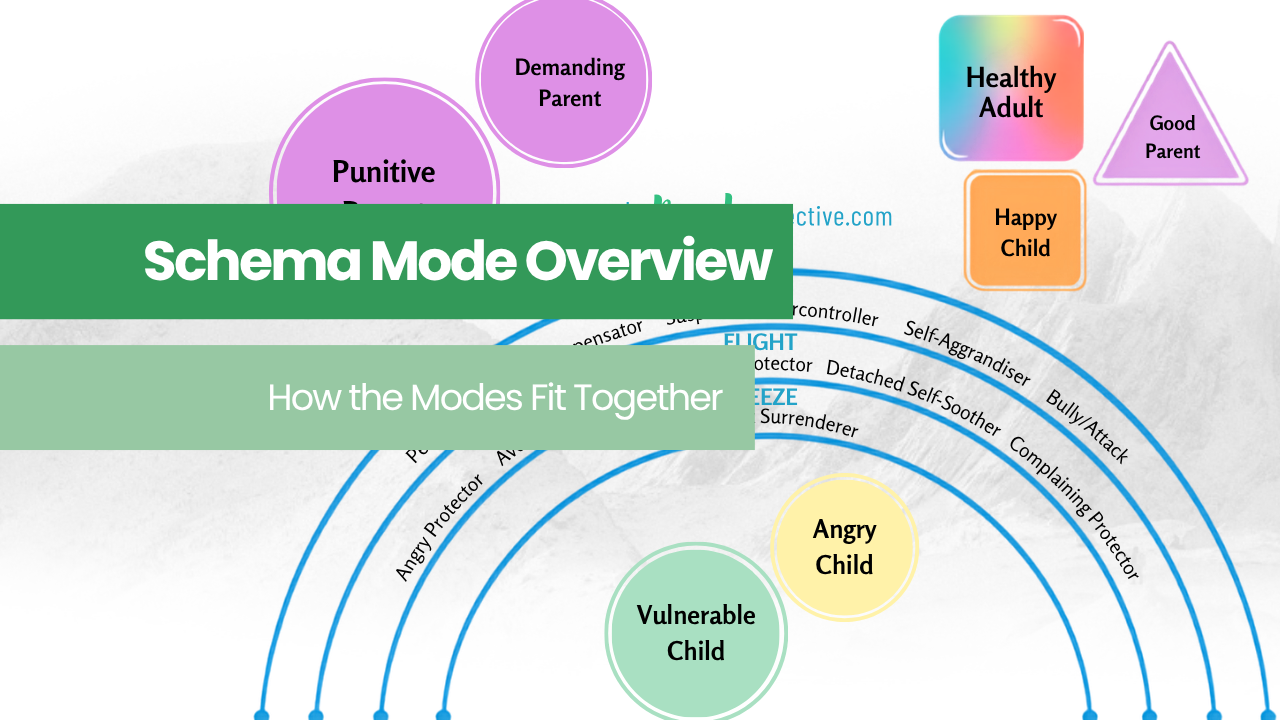
There are schema modes.
And then there are all of the skills that help people make lasting change.
For many people, that's simply too much information to hold in their head.
That's exactly why we created our Schema Therapy Card System.
Rather than expecting people to remember dozens of concepts from a workbook or therapy session, the cards make Schema Therapy tangible. Instead of talking about the model, you can literally lay it out on the table and see how everything fits together.
After using these cards with hundreds of clients in therapy, they've become one of the most useful tools sitting beside my therapy chair.
Why we created the Schema Therapy Cards
Most Schema Therapy resources explain the model really well.
The problem is that during an actual therapy session, you don't always want to flick through a textbook trying to find the right page or print another worksheet.
Instead, I wanted something that let me immediately respond to whatever was happening in the room.
If a client suddenly says,
"I'm terrified everyone is going to leave me."
I don't need to spend five minutes explaining the Abandonment Schema.
I simply reach over, hand them the Abandonment card and say:
"Have a read through this. Tell me whether this sounds like you."
Within a minute they're reading the description, recognising their own thinking and saying,
"That's exactly how my brain works."
That moment of recognition is incredibly powerful.
Instead of me telling them who they are, they're discovering it for themselves.
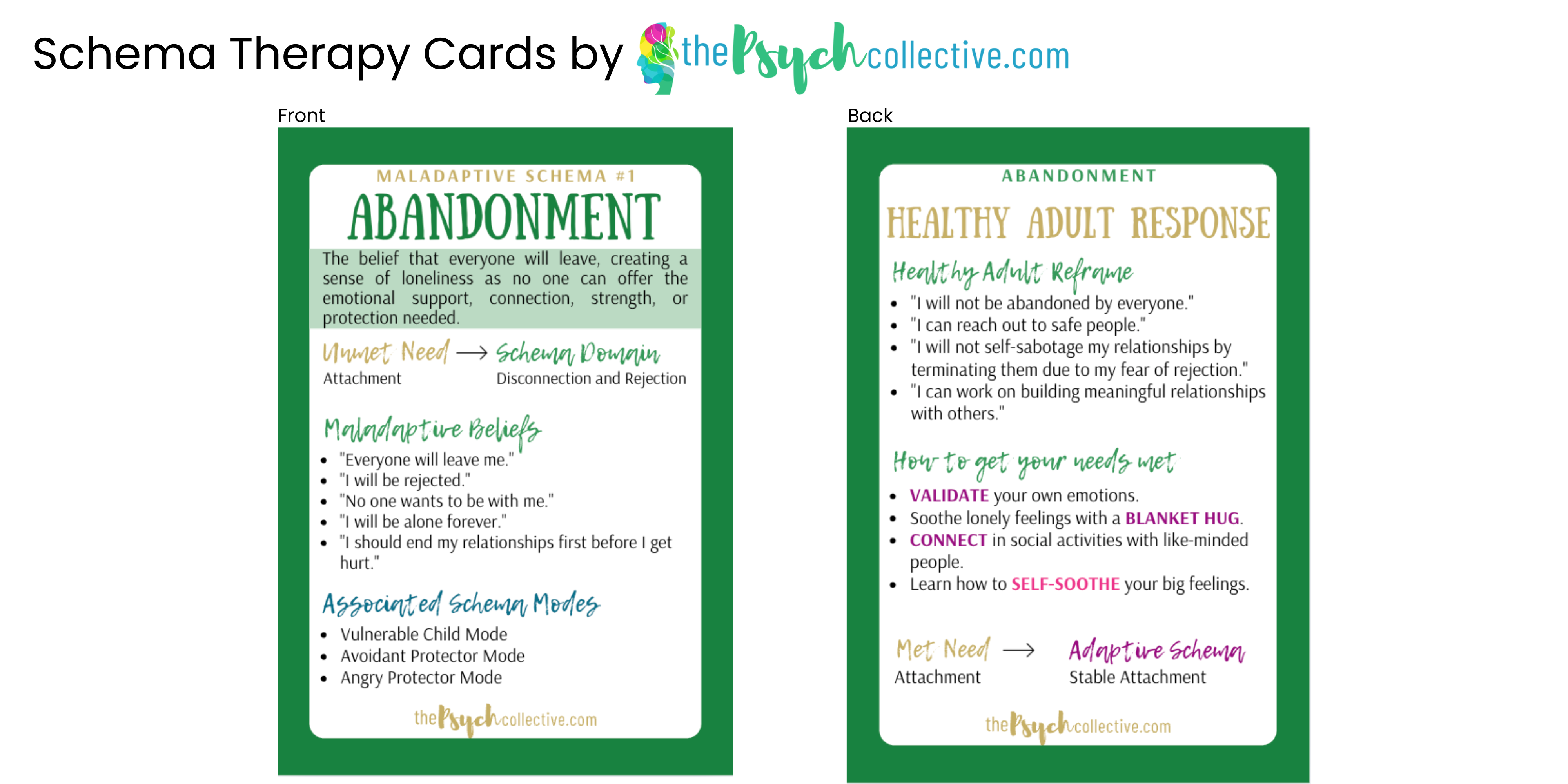
Here is an example of the Abandonment Schema Card from the Schema Therapy Cards.
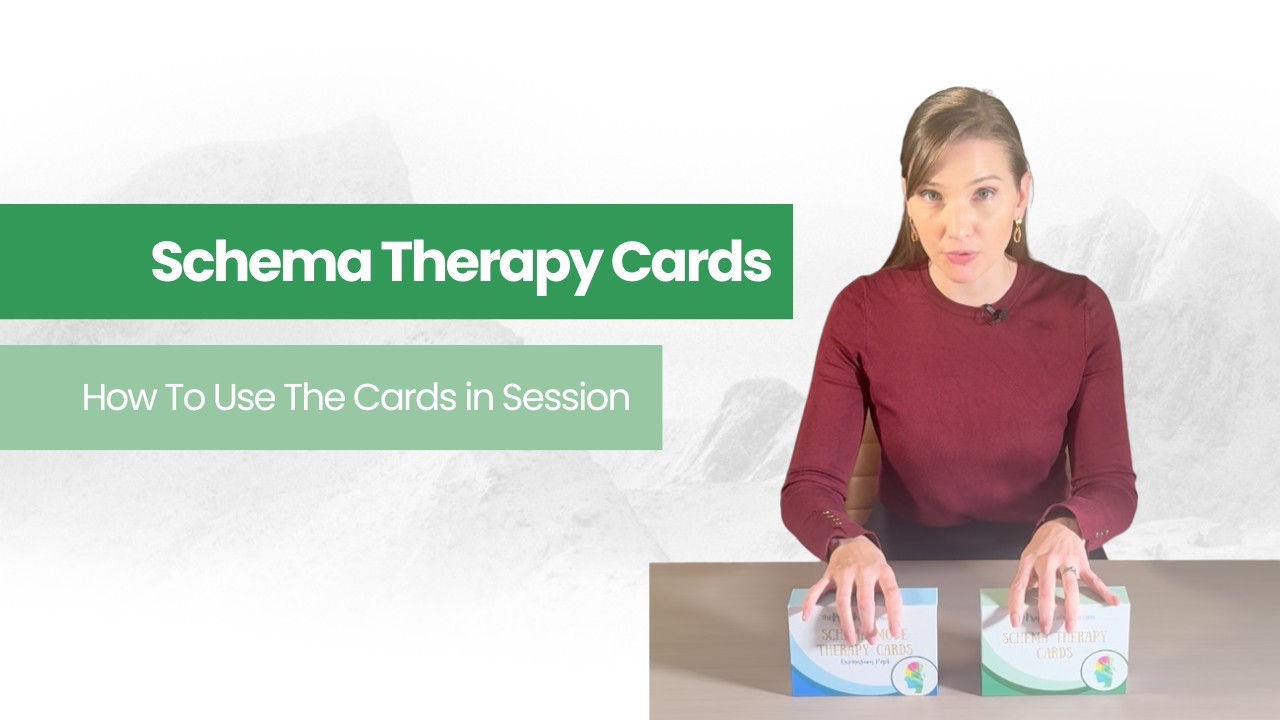
Two card decks that work together
The complete card system consists of two separate decks that are designed to complement each other.
Box One: Schema Therapy Cards
This deck contains three types of cards:
- Maladaptive Schemas
- Adaptive Schemas
- Emotional Needs
Together, these explain why schemas develop and what healthy alternatives look like.
Box Two: Schema Mode Cards
The second deck focuses on:
- Schema Modes
- Healthy Adult Skills
- Schema Therapy techniques
Together, the two boxes contain 93 cards, allowing you to move from understanding the problem to practical treatment strategies.
Starting with emotional needs
Everything in Schema Therapy begins with our core emotional needs.
These include needs such as:
- Secure attachment
- Autonomy
- Freedom to express emotions
- Realistic limits
- Play and spontaneity
When these needs are consistently met during childhood, healthy beliefs about ourselves naturally develop.
When they aren't, maladaptive schemas begin to form.
One of the nicest features of the cards is that this relationship becomes visual.
You can literally place the Emotional Needs cards on the table and see how unmet needs lead to particular schemas.
Suddenly, Schema Therapy stops feeling like abstract psychology and starts making intuitive sense.
Understanding maladaptive schemas
Each maladaptive schema card explains:
- what the schema is
- the typical beliefs associated with it
- how it commonly shows up in people's lives
For example, someone might recognise themselves immediately in the Abandonment Schema.
Instead of trying to remember what abandonment means from a previous session, they can simply read the card and decide whether it fits.
This makes the conversation collaborative.
Rather than the therapist diagnosing patterns, the client is actively identifying them.
That ownership often creates much deeper insight.
Every maladaptive schema has an antidote
One of the biggest misconceptions about Schema Therapy is that it's simply about identifying what's wrong.
It's not.
Every maladaptive schema has a corresponding adaptive schema.
Think of adaptive schemas as healthy beliefs that develop when emotional needs are consistently met.
For example:
If someone develops an Abandonment Schema, the healthy alternative is Stable Attachment.
If someone struggles with Failure, the adaptive schema becomes Success.
If someone feels Dependent or Incompetent, the adaptive goal becomes Competence.
The cards place these side-by-side, making it easy to see that therapy isn't simply about reducing maladaptive schemas.
It's also about deliberately strengthening healthier ways of thinking.
Turning insight into action
Insight alone doesn't create change.
Clients also need to know what to actually do next.
That's why the back of every adaptive schema card includes practical skills that help strengthen that healthier belief.
For example, if someone is working towards developing a stronger sense of Success, the reverse side of the Success card contains activities designed to reinforce competence and achievement.
Rather than leaving therapy with abstract goals like:
"Try to think differently."
they leave with concrete strategies they can begin practising immediately.
This is where the cards move beyond psychoeducation and become genuine therapy tools.
How the two decks work together
Although each box can be useful on its own, they're designed to work as a complete system.
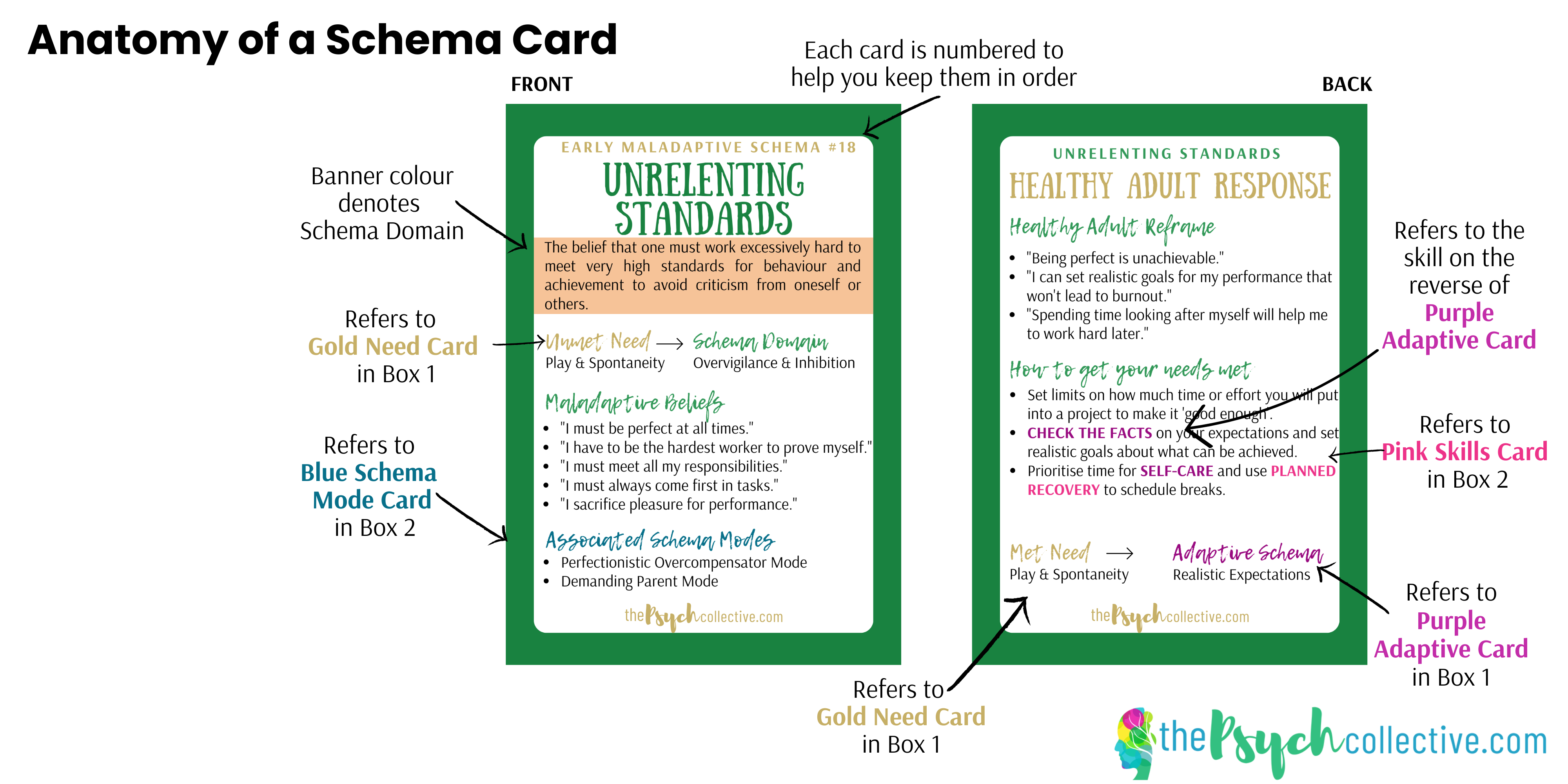
Throughout the schema cards, you'll notice that certain skills are colour-coded.
Some refer to skills found within the Adaptive Schema cards.
Others direct you to the Healthy Adult Skills contained within the Schema Mode deck.
This creates a pathway that looks something like this:
Emotional Need → Maladaptive Schema → Adaptive Schema → Healthy Adult Skills
Rather than isolated concepts, everything connects together.
Clients can follow the pathway visually, making the whole Schema Therapy model much easier to understand.
Not every client learns the same way
One thing I've learnt over years of using these cards is that people learn very differently.
Some clients absolutely love seeing the entire model laid out across the table.
They want to understand how every piece connects.
For those clients, we'll often spread out the Emotional Needs, Maladaptive Schemas and Adaptive Schemas together so they can see the whole picture.
Other clients find that completely overwhelming.
Instead, we'll start with just one card.
Perhaps today we're only talking about Abandonment.
Once they're comfortable with that, we'll introduce the corresponding emotional need.
Later, we'll introduce the adaptive schema.
Eventually, we'll build towards the Healthy Adult skills.
Neither approach is better.
It's simply about matching the therapy to the person sitting in front of you.
If you're unsure which style your client prefers, ask them.
Do they want the big picture?
Or would they rather build it one step at a time?
That simple question often makes therapy feel much more collaborative.
A tool therapists actually use
One unexpected outcome of developing these cards is how often clinicians tell us they reach for them during sessions.
Many keep the decks beside their therapy chair because they're faster than searching through notes or books.
Instead of saying,
"I'll print that worksheet for next week,"
they can immediately hand over the relevant card.
That keeps the momentum of the session going.
Clients stay engaged because they're holding the concept in their hands rather than trying to remember a verbal explanation.
It's a small change that often makes a surprisingly big difference.
Bringing Schema Therapy to life
Schema Therapy is incredibly effective because it helps explain why people repeatedly find themselves stuck in the same emotional patterns.
The challenge has never been the model itself.
The challenge has been making it easy to understand.
Our Schema Therapy Card System was designed to bridge that gap.
By turning emotional needs, schemas, adaptive beliefs, modes and therapeutic skills into something visual and interactive, the model becomes much easier to grasp—for both clients and clinicians.
Whether you're introducing someone to Schema Therapy for the very first time or helping them deepen work they've already begun, the cards provide a practical way to translate complex psychological concepts into everyday conversations.
Because ultimately, therapy works best when people don't just understand the theory.
They can see it, hold it, and start using it in their own lives.
Watch Jess and Dr Al demonstrate
Ready to bring Schema Therapy to life?
Whether you're a clinician looking for practical therapy tools or someone wanting to better understand your own patterns, the Schema Therapy Cards and Schema Mode Cards were designed to make Schema Therapy visual, engaging and easy to use.
Each deck is available individually, but together they create a complete system that connects emotional needs, schemas, modes and practical Healthy Adult skills into one integrated model.
Explore the complete Schema Therapy Card Collection and discover how these carefully designed cards can transform the way Schema Therapy is understood and delivered.
About Our Resources