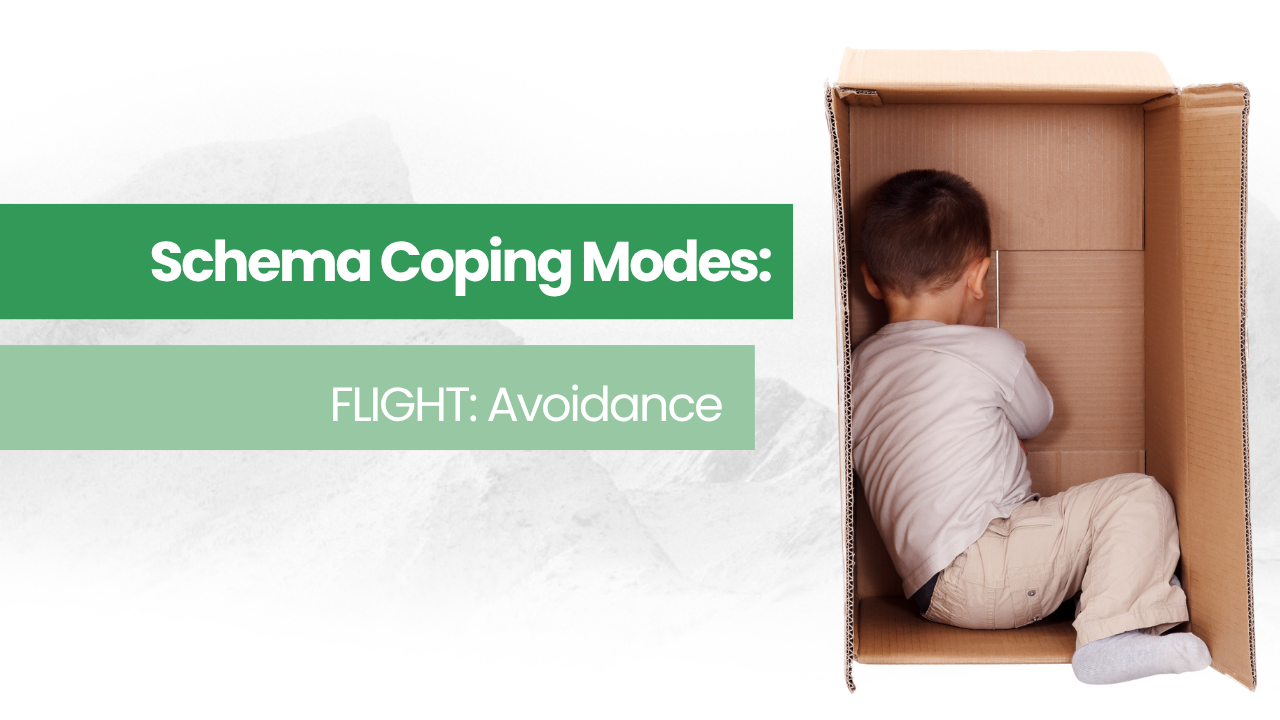
Schema Coping Modes: FLIGHT
Schema Therapy Flight Coping Modes: The Five Ways We Avoid Vulnerability
Written by Jess O'Garr, Clinical Psychologist and Schema Therapy trainer at The Psych Collective.
Flight Coping Modes are Maladaptive Coping Modes in Schema Therapy that help us escape, avoid or disconnect from uncomfortable emotions and vulnerability. Instead of turning towards what we feel, we find a way to get away from it—psychologically, physically, through relationships or by using something else to make the feeling disappear.
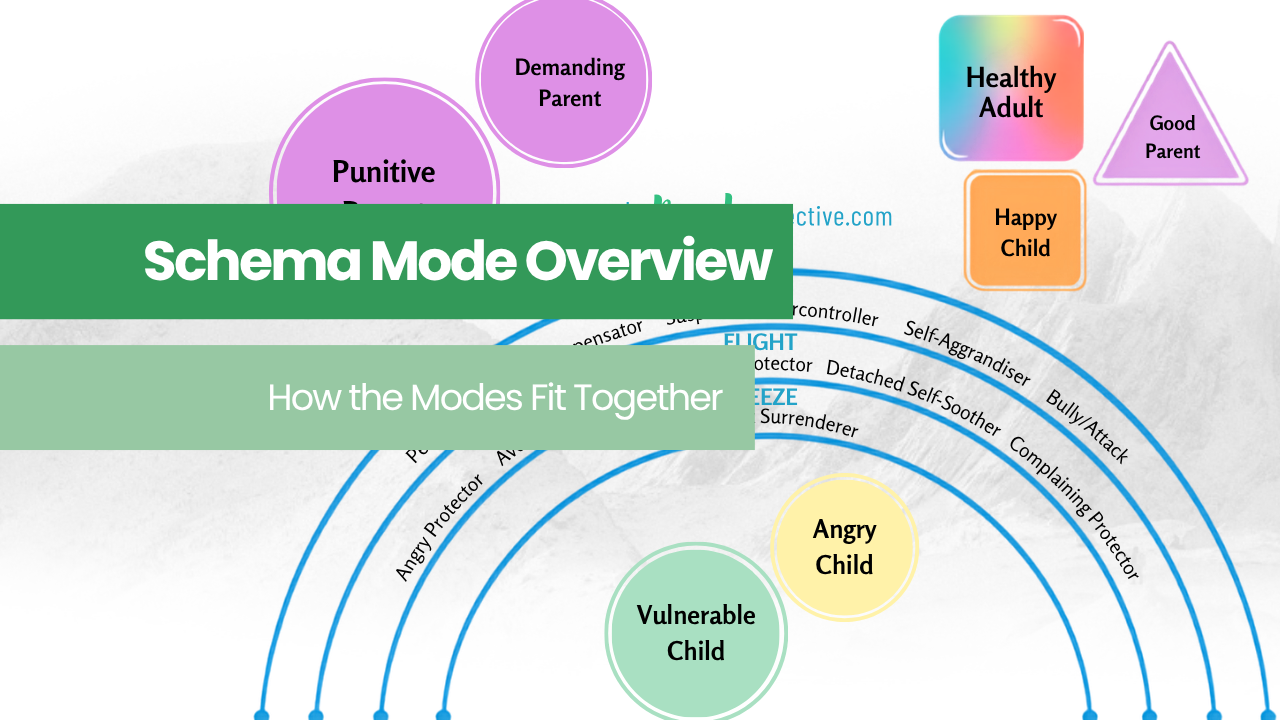
In Schema Therapy, coping responses are often grouped broadly into fight, flight and freeze. These modes usually developed for a reason. If feeling sad, frightened, rejected, ashamed or overwhelmed wasn't safe or manageable earlier in life, avoiding those feelings may have been a very effective way of coping. The problem is that these strategies can become automatic, so we continue escaping vulnerability even when doing so creates more problems than it solves.
Our Schema Mode model includes five main Flight Coping Modes: the Detached Protector, Avoidant Protector, Angry Protector, Detached Self-Soother, and Complaining Protector.
What does "flight" mean in Schema Therapy?
Flight doesn't necessarily mean physically running away. In Schema Mode Therapy, Flight Coping Modes create distance between us and our vulnerability.
Sometimes that distance is emotional. We shut down and stop feeling. Sometimes it is behavioural: we avoid a person, situation or experience that might make us uncomfortable. We might push people away with anger, distract ourselves with alcohol, food, shopping or endless scrolling, or focus entirely on what somebody else has done wrong rather than looking at our own emotional experience.
The behaviour looks different across the five modes, but the function is similar: "Something vulnerable has been activated, and I don't want to feel it."
Understanding that function is important. If we focus only on stopping avoidance without understanding what the person is trying to avoid, we miss a big part of the Schema Mode model.
What are the five Flight Coping Modes?
1. Detached Protector Mode
The Detached Protector manages vulnerability by psychologically disconnecting from feelings. Instead of feeling overwhelmed, the person shuts down, goes numb or creates emotional distance from what is happening.
Someone in Detached Protector Mode may describe feeling nothing at all, even when they logically know that something should be upsetting them. They may disconnect from their own emotions and from other people, which protects them from distress but can also make connection, intimacy and emotional processing extremely difficult.
Read more: Detached Protector Mode →
2. Avoidant Protector Mode
The Avoidant Protector manages vulnerability by avoiding situations where uncomfortable feelings might occur in the first place. Rather than shutting down once the feeling arrives, this mode tries to prevent it from being activated at all.
That might mean avoiding difficult conversations, relationships, social situations, challenges, conflict or anything else associated with a risk of anxiety, rejection, failure or distress. Avoidance works brilliantly in the short term because if you don't encounter the trigger, you don't have to feel it. Unfortunately, it can also make your life increasingly smaller.
Read more: Avoidant Protector Mode →
3. Angry Protector Mode
The Angry Protector uses anger to create distance from other people. Its message is essentially: Don't come anywhere near me.
This can involve obvious anger and aggression, but it can also look like hostility, stonewalling, sulking, or an intimidating attitude that discourages others from getting too close. The anger acts like a wall, protecting the vulnerability underneath it.
This differs from Angry Child Mode, which uses anger to draw attention to an unmet need and essentially says, Come here and help me fix this. Angry Protector does the opposite: Stay away from me so you can't hurt me.
Read more: Angry Protector Mode →
4. Detached Self-Soother Mode
The Detached Self-Soother avoids vulnerability by using something to distract, numb or soothe uncomfortable feelings. This might involve alcohol, drugs, food, shopping, sex, gaming, scrolling, television or any number of other behaviours that temporarily make the feeling go away.
Importantly, the activity itself isn't necessarily the problem. The question is how and why you are using it. Having a glass of wine, watching television or buying something you like doesn't automatically mean you're in Detached Self-Soother Mode. It becomes a coping mode when the behaviour is being used automatically or excessively to avoid emotional experience, particularly when it leads to overuse or regrettable consequences.
Read more: Detached Self-Soother Mode →
5. Complaining Protector Mode
The Complaining Protector manages vulnerability by focusing attention on what everybody else is doing wrong. The person may become stuck in repeated complaints about other people, circumstances or unfairness without moving towards acceptance, responsibility or problem-solving.
This doesn't mean complaining is always unhealthy. Sometimes things genuinely are unfair, and talking about them can be an important form of venting and validation. The distinction is what happens next. Healthy venting helps us process an experience and eventually work out what we can do about it. Complaining Protector keeps us focused externally and away from our own vulnerability or responsibility.
Working with this mode involves what I refer to as radical responsibility: recognising what isn't within your control while also identifying what is yours to manage.
Read more: Complaining Protector Mode →
Why do Flight Coping Modes develop?
Flight Modes develop because avoidance works.
If something makes you anxious and you avoid it, your anxiety usually decreases. If feeling rejected is painful and you emotionally detach, you don't have to feel the rejection as intensely. If closeness has previously resulted in hurt, pushing people away can feel much safer than letting them in.
The problem is that short-term relief can create long-term difficulties.
Repeated avoidance can reinforce the belief that you couldn't have coped with the situation. Detachment can protect you from painful emotions while also disconnecting you from positive ones. Pushing people away protects against rejection but can leave you isolated. Numbing yourself provides temporary relief without addressing what made you distressed.
This is why Schema Therapy asks a different question. Rather than simply asking: "How do we stop this behaviour?", we ask: "What is this coping mode protecting you from?"
How do you change Flight Coping Modes?
As with all Schema Modes, change starts with mode awareness. Notice when you want to shut down, avoid, push someone away, numb yourself or focus entirely on what somebody else has done wrong. Then ask what happened immediately beforehand.
What feeling were you about to experience? What emotional need wasn't being met? Was your Vulnerable Child Mode feeling frightened, rejected, lonely, ashamed, inadequate or unsafe?
Once you can recognise what you're escaping from, you have a choice. You can continue using the coping mode, or you can start bringing in the Healthy Adult Mode to help you tolerate the vulnerability, meet the underlying need and respond differently.
The goal isn't to remove your ability to step away from genuinely unsafe situations, take a break, distract yourself or enjoy soothing activities. Those can all be healthy. The goal is to develop enough flexibility that avoidance is no longer your automatic response whenever something uncomfortable appears.
Frequently asked questions about Flight Coping Modes
What are the five Flight Coping Modes in Schema Therapy?
The five Flight Coping Modes in our Schema Mode model are Detached Protector, Avoidant Protector, Angry Protector, Detached Self-Soother and Complaining Protector. Each uses a different strategy to create distance from vulnerability or uncomfortable emotional experiences.
What is the difference between fight and flight coping modes?
Fight Coping Modes generally try to overcompensate for vulnerability through strategies such as perfectionism, control, dominance or exaggerated confidence. Flight Coping Modes attempt to escape, avoid, numb or create distance from vulnerability.
Is avoidance always unhealthy?
No. Avoidance can sometimes be appropriate, particularly when a situation is genuinely unsafe or unnecessary. It becomes problematic when avoidance is automatic, restricts your life or repeatedly prevents you from addressing important emotions, relationships or problems.
Can you have more than one Flight Coping Mode?
Yes. People can use several coping modes and may move between fight, flight and freeze depending on the situation and which schemas or emotional needs have been triggered.
Understanding your Flight Coping Modes
Your Flight Modes aren't there because you're weak or incapable of dealing with emotions. They developed because, at some point, getting away from vulnerability worked. Schema Therapy is about recognising when those old strategies are still running and developing healthier ways to respond.
If you recognise yourself in any of the five modes above, read the individual article. We'll look more closely at what triggers each Flight Mode, what it looks like, what sits underneath it and how the Healthy Adult can respond differently.
Want to understand your Schema Modes?
Our Schema Therapy Cards make the different modes easier to identify, while our Complete Set of Schema Therapy Worksheets provides practical exercises for building mode awareness and strengthening your Healthy Adult.
Explore our Schema Therapy resources →
Using Schema Modes with clients?
Recognising avoidance is only the beginning. Effective Schema Mode Therapy requires understanding what the avoidance is doing, which vulnerability it is protecting and what intervention is needed next. Our Schema Mode Therapy Clinician Guide provides practical tools for formulation and intervention, while my Schema Therapy and Schema Mode Therapy training focuses on applying these concepts in the therapy room.
Explore upcoming Schema Therapy training →
About Our Resources