Schema Coping Modes: FREEZE
Schema Therapy Freeze Mode: The Compliant Surrenderer
Written by Jess O'Garr, Clinical Psychologist and Schema Therapy trainer at The Psych Collective.
The Compliant Surrenderer is the main Freeze Coping Mode in Schema Therapy. Its function is to give up the fight, give in to the schema and accept its message as true. Instead of fighting against vulnerability or trying to escape from it, the person surrenders: This is just how things are. There's no point fighting it. I give up.
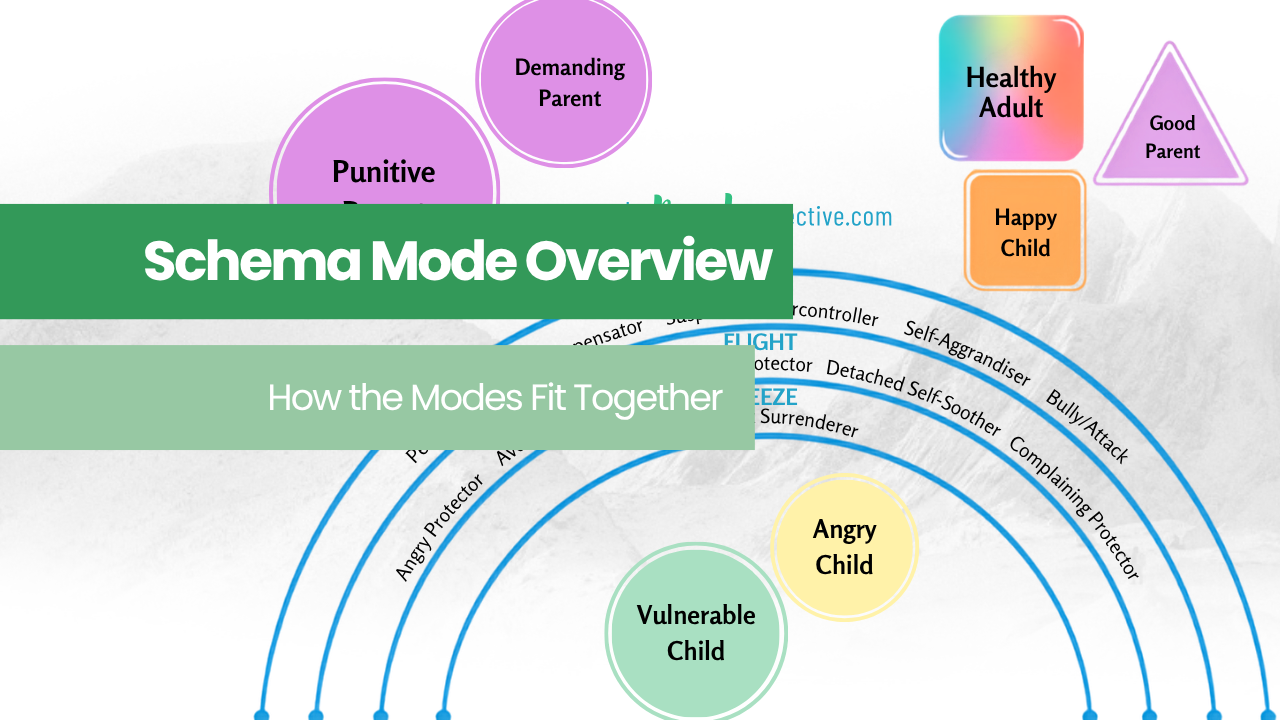
In our Schema Mode model, we broadly group the Maladaptive Coping Modes into fight, flight and freeze responses. Fight Modes attempt to overcompensate for vulnerability. Flight Modes attempt to avoid or escape it. The Compliant Surrenderer takes a different approach: it stops trying.
This can look like passivity, submissiveness, people-pleasing, allowing other people to make decisions or repeatedly putting your own needs last. But underneath those behaviours is often something more fundamental—a belief that there is no point trying to change things anyway.
At present, the Compliant Surrenderer is the main mode we recognise within the Freeze category. There is, however, emerging discussion around whether surrender may be better understood as having different presentations, including a more distinctly Hopeless Surrenderer presentation. I'll come back to that later.
Watch the Video
Hear Jess describe the Compliant Surrenderer Mode
What is the function of the Compliant Surrenderer Mode?
The function of the Compliant Surrenderer is essentially to give up the fight.
Sometimes people arrive at surrender after exhausting their other coping strategies. They've tried overcompensating. They've tried being perfect. They've tried controlling everything. They've tried avoiding, detaching or pushing everyone away. None of it worked, and eventually they get to: "I've got nothing left. What's the point?"
It's almost as though the Fight and Flight Coping Modes have run out of steam.
This isn't always the case. For some people, compliant surrender is a more automatic, default response. But clinically, I often see people move through something of a hierarchy before eventually reaching surrender. The other coping mechanisms have failed or become exhausting, and they stop fighting the schema.
The Punitive Parent or Demanding Parent may also have become so loud that the person no longer challenges what they are saying. The Healthy Adult stops protecting the Vulnerable Child and the person simply accepts the negative message as true.
What does the Compliant Surrenderer look like?
Someone in Compliant Surrenderer Mode can appear very passive, submissive or subservient. This is the classic "doormat" presentation. They may let other people make decisions, go along with what everybody else wants and find it extremely difficult to express their own opinion or needs.
Ask them what they want for dinner, and you might hear: I don't know. Whatever you want. You decide. It's fine. I don't care.
Ask what they want in a relationship, and they may be much more focused on what the other person needs. Ask them to set a boundary and they may immediately start worrying about how the other person will react.
But compliant surrender goes deeper than simply being agreeable. The person is often surrendering to the underlying schema itself.
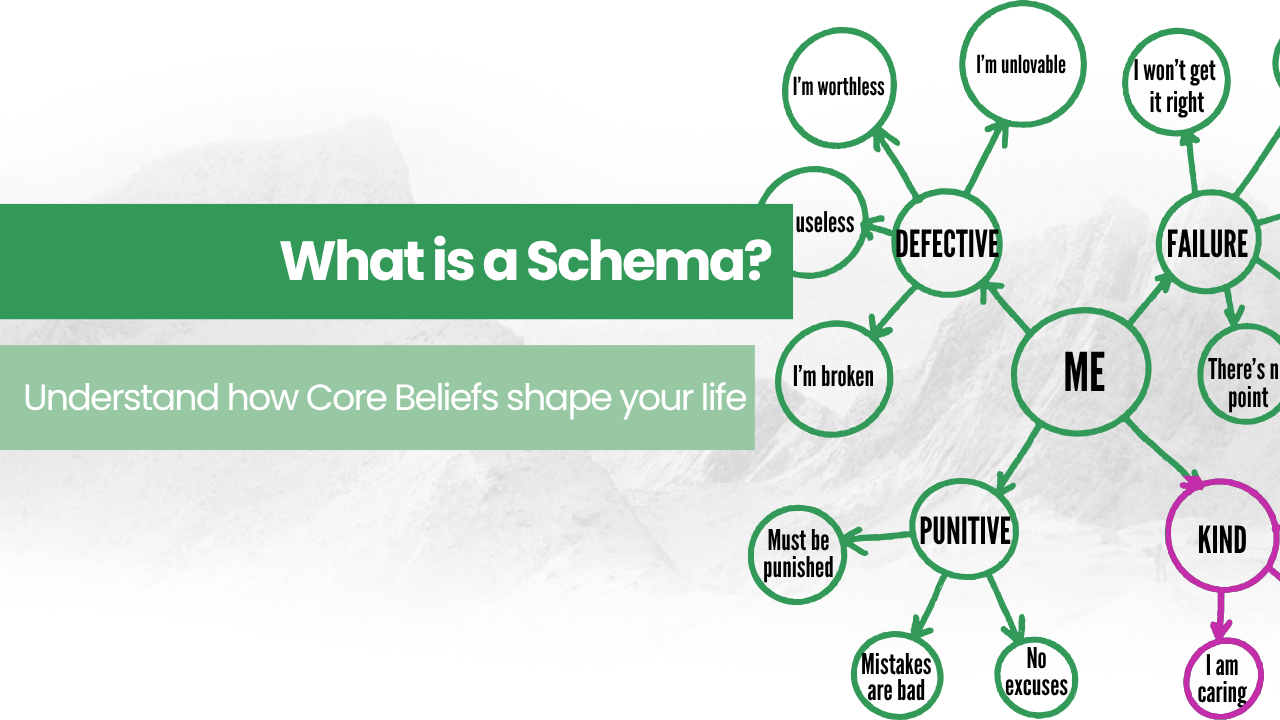
If the schema is Failure, the surrender response might be: "I always fail at everything."
If the schema is Defectiveness, it becomes: "I'm defective. That's just who I am."
If the schema is Abandonment: "Everyone leaves me. My relationships always fall apart."
There is no longer much attempt to argue with the schema. It is simply accepted as reality.
What is the difference between Compliant Surrenderer and Avoidant Protector?
This distinction is particularly useful because both modes can result in someone not taking action, but the reason underneath the behaviour is different.
Imagine somebody has a strong Failure schema.
The Avoidant Protector might say: "I'm not going to try because if I don't try, I can't fail."
The Compliant Surrenderer says: "I fail. That's what I do."
Avoidance attempts to protect the person from having the schema activated. Surrender accepts the schema as true.
You can see the same distinction with relationships. Someone using a Flight Mode might avoid getting close to people because they don't want to experience abandonment. Someone who has surrendered to their Abandonment schema may enter relationships already believing: Everyone leaves me eventually. That's just what happens.
This is why understanding the function of a coping mode matters. Two people can look equally passive from the outside while doing something quite different psychologically.
Which schemas are associated with Compliant Surrenderer Mode?
Compliant surrender can occur in response to many schemas, but we commonly see it alongside schemas involving Failure, Defectiveness, Dependence/Incompetence, Abandonment, Social Isolation and Punitiveness.
The common theme is the person's increasing belief that the schema is simply a fact.
I can't do this.
There's something wrong with me.
I need other people because I can't manage by myself.
Everyone leaves.
I don't belong.
I deserve to be punished.
The more completely the person accepts these messages, the less motivation there is to challenge them. That is one of the reasons Compliant Surrenderer can be such a difficult mode to shift.
Why is the Compliant Surrenderer maladaptive?
The major problem is that surrender keeps you stuck.
If you genuinely believe that nothing will change, why would you try? If you believe your needs don't matter, why would you express them? If you believe you're incapable of making your own decisions, why would you practise making them?
This can create very low willingness to make changes because the person already expects those attempts to fail. The schema becomes self-reinforcing: See? I knew this would happen.
It also means that the person stops advocating for their own emotional needs. They may repeatedly tolerate relationships, environments or situations that aren't good for them because challenging what is happening feels pointless, frightening or simply unfamiliar.
For some people, this pattern developed across a long history of having their autonomy or voice shut down. Experiences of abuse, coercive relationships, domestic violence or environments where asserting yourself repeatedly resulted in negative consequences can all make surrender an understandable way of surviving.
But a strategy that helped you survive an earlier environment can still leave you profoundly stuck as an adult.
What does the Compliant Surrenderer need?
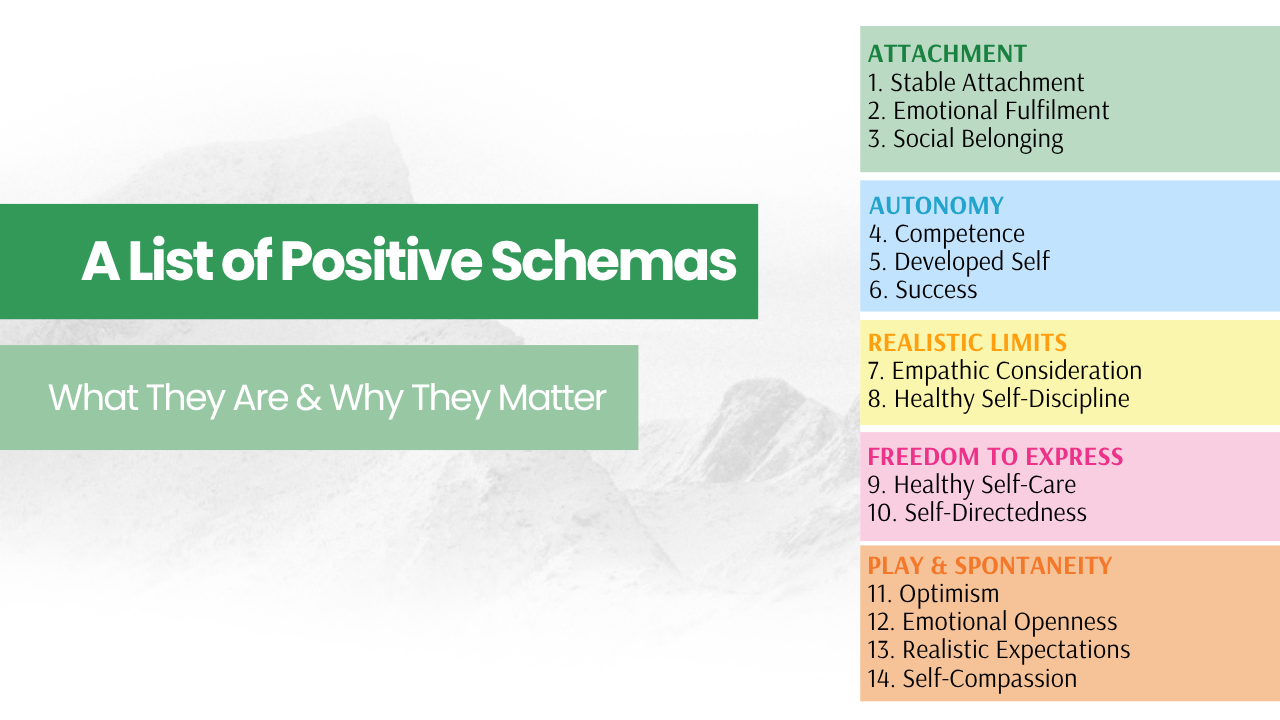
Three particularly important needs for the Compliant Surrenderer are autonomy, freedom to express and appropriate boundaries and self-discipline.
Autonomy means developing the belief that you are capable of making decisions, taking action and having some influence over your own life. Freedom to express means being allowed—and eventually allowing yourself—to say what you think, feel, want and need.
This doesn't mean suddenly becoming demanding or expecting everything to go your way. It means recognising that you get a voice.
And then there is the need for boundaries. Part of moving out of compliant surrender is learning that you can set limits on what you will accept from other people and that another person's displeasure doesn't automatically mean you have done something wrong.
How does the Healthy Adult challenge the Compliant Surrenderer?
The Healthy Adult has an important job here because the Compliant Surrenderer has essentially stopped advocating for the Vulnerable Child.
The Healthy Adult needs to step in and say: Enough. We're going to start doing something differently.
That might sound harsh, but when you repeatedly don't use your voice, don't ask for what you need and don't protect yourself, you can end up participating in your own self-neglect. The Healthy Adult needs to start reversing that pattern.
This doesn't mean going from completely passive to extraordinarily assertive overnight. For people who have spent years or decades surrendering, this can be very slow work. Start with small decisions. Express a preference. Say what you'd actually like for dinner. Disagree with somebody about something relatively unimportant. Say no to something small. Ask for something you need.
Each of these experiences starts communicating a different message: "I have a voice. I can make choices. My needs matter. I can take some responsibility for what happens next."
How can other people help with Compliant Surrenderer Mode?
If you've been highly compliant for a long time, there may be people in your life who quite like it that way.
They may like that you always say yes, do the favours, let them choose, don't set boundaries and rarely ask for anything in return. When you start changing, some of those people may push back.
Their pushback isn't necessarily evidence that you should go back to being compliant. Sometimes it's evidence that the relationship needs better boundaries.
The helpful people are those who encourage you to use your voice. Instead of accepting whatever you want every time they ask your opinion, they might gently encourage you to make a choice: No, I actually want to know what you think. What would you like?
Good support doesn't mean making decisions for someone in Compliant Surrenderer Mode. That can inadvertently reinforce the problem. It means creating enough safety and space for them to begin making decisions for themselves.
Is there also a Hopeless Surrenderer Mode?
Possibly. This is something I'm watching with interest as the Schema Mode model and its measurement continue to develop.
The established mode discussed here is the Compliant Surrenderer. However, surrender may not always present primarily as compliance or submissiveness. Susan Simpson's work in Schema Therapy for eating disorders, for example, has described variations in surrender presentations, including Dependent/Helpless Surrender and Hopeless Surrender.
Clinically, a distinct Hopeless Surrenderer concept makes intuitive sense. There can be a difference between I'll do whatever you want because my needs don't matter and a more global Nothing is ever going to change, so why bother?
For now, however, I would treat Hopeless Surrenderer as an emerging consideration rather than an established additional mode within our model. Our current Schema Mode cards therefore continue to use Compliant Surrenderer. I'm also interested to see how surrender modes are represented as the next generation of Schema Mode assessment develops, including the Schema Mode Inventory 3rd edition.
We'll update our resources if the evidence and model support making that distinction more formally.
Frequently asked questions about Compliant Surrenderer Mode
What is Compliant Surrenderer Mode?
Compliant Surrenderer is a Maladaptive Coping Mode in Schema Therapy in which a person gives in to their schema and behaves as though its message is true. It can involve passivity, submission, people-pleasing, difficulty expressing needs and a sense that there is little point in trying to change things.
Is Compliant Surrenderer a freeze response?
In our Schema Mode model, we group Compliant Surrenderer within the Freeze category of the fight-flight-freeze coping responses. Rather than fighting against vulnerability or escaping from it, the person gives in or surrenders.
What is the difference between avoidance and surrender in Schema Therapy?
Avoidance attempts to prevent a schema or vulnerable feeling from being activated. Surrender accepts the schema as true. For example, an Avoidant Protector might think, I won't try because I might fail, while a Compliant Surrenderer thinks, I always fail; that's just who I am.
How do you change Compliant Surrenderer Mode?
Change involves strengthening the Healthy Adult, developing autonomy, practising expressing wants and needs, setting boundaries and gradually challenging the belief that the underlying schema is inevitably true. For people whose surrender developed through abuse, trauma or coercive relationships, this work may need to happen gradually and with appropriate professional support.
Is Hopeless Surrenderer a Schema Mode?
Hopeless Surrenderer has been discussed as a possible surrender presentation, but we currently treat it as an emerging consideration rather than a separate established mode within our Schema Mode model. We'll update our resources as the Schema Mode model and newer assessment tools develop.
Want to understand your Schema Modes?
Our Schema Mode Therapy Cards make the different modes easier to recognise, while our Complete Set of Schema Mode Therapy Worksheets gives you practical exercises for building mode awareness and strengthening your Healthy Adult.
Explore our Schema Therapy resources →
Using Schema Modes with clients?
Surrender can easily be mistaken for a lack of motivation, when the more useful clinical question is what has this person learned to believe about themselves, their needs and their capacity to change? Our Schema Therapy Clinician Guide provides practical tools for formulation and intervention, while my Schema Therapy and Schema Mode Therapy training focuses on identifying the function of modes and translating the model into practical clinical work.
Explore upcoming Schema Therapy training →
About Our Resources