A List of Positive Schemas
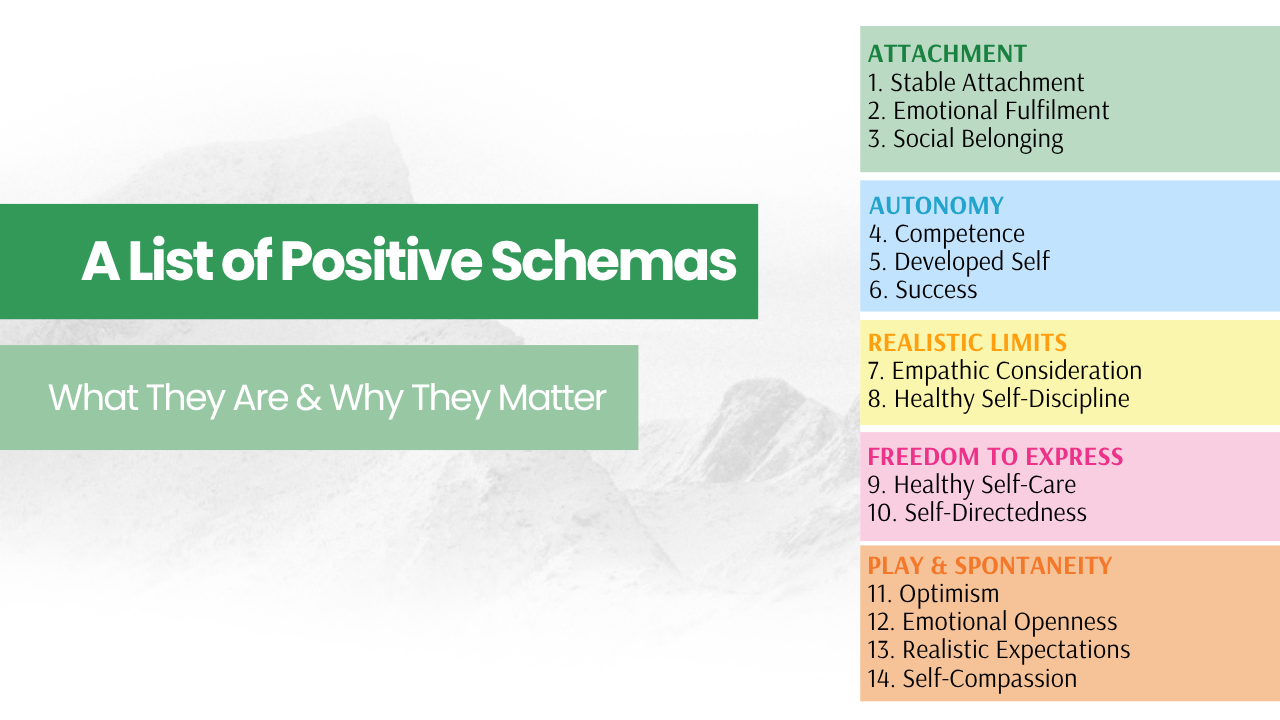
Finally, a List for the Healthy Adult: The 14 Early Adaptive Schemas
Written by Jess O'Garr - Clinical Psychologist
What does a Healthy Adult actually look like in Schema Therapy?
It is a question my patients ask me all the time. We talk a lot in Schema Therapy about strengthening your Healthy Adult Mode, but it can sometimes feel frustratingly vague. What exactly are we trying to strengthen? What beliefs does a Healthy Adult have? What does someone with relatively healthy schemas actually believe about themselves, other people and relationships?
This is where Early Adaptive Schemas are incredibly useful.
Early Adaptive Schemas are healthy, positive belief patterns that develop when our core emotional needs are adequately met. They include beliefs such as I am worthy of love, I can rely on other people, my feelings matter, I can make my own decisions, and I can set reasonable limits. In many ways, they give us a much clearer picture of what we are actually trying to build when we strengthen the Healthy Adult.
And finally, someone has made a list of them.
From Maladaptive Schemas to Healthy Schemas
Early Schema Therapy focused largely on Early Maladaptive Schemas. You can read our complete list of schemas here.
That makes sense, given where Schema Therapy came from. It was originally developed to work with people experiencing complex and longstanding psychological difficulties, including Borderline Personality Disorder (BPD), severe depression and complex trauma. The focus was therefore understandably on what happens when important childhood emotional needs are not adequately met.
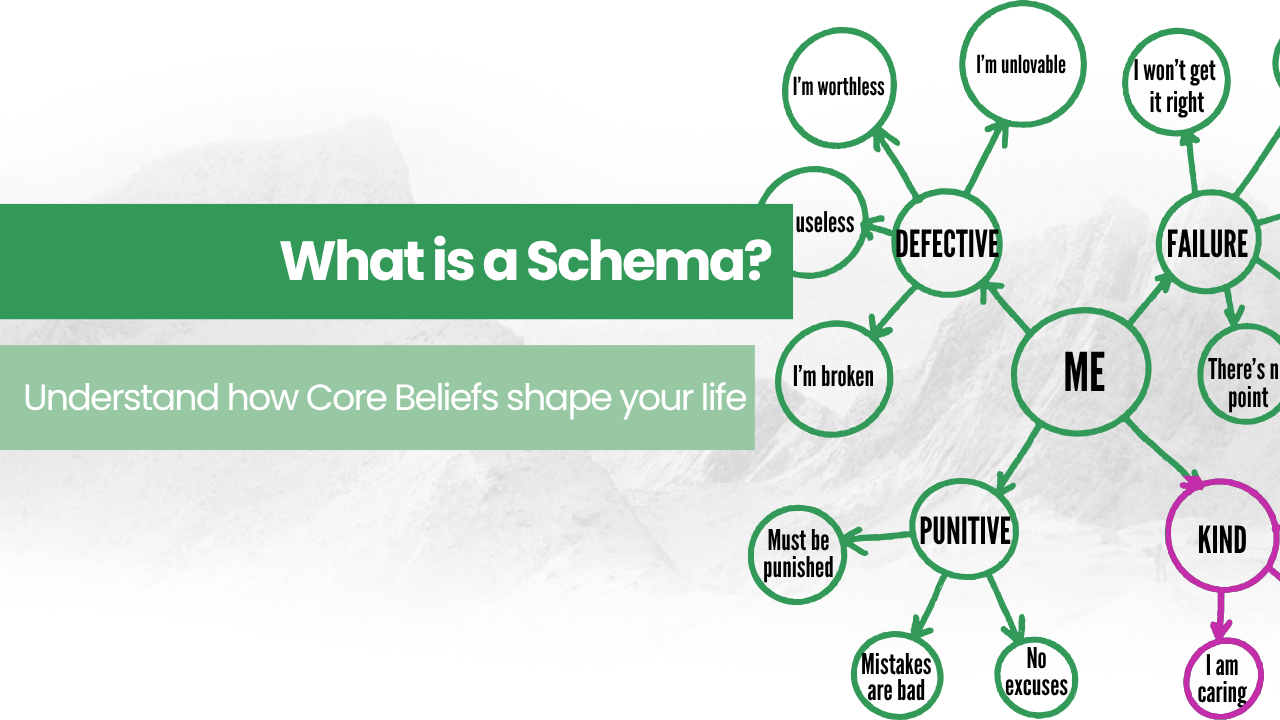
Those experiences can contribute to the development of maladaptive schemas: deeply held patterns and beliefs about ourselves, other people and the world.
So, over time, we become very good at identifying what went wrong.
I'm unlovable.
People will leave me.
I can't trust anyone.
My needs don't matter.
I have to put everyone else first.
But identifying the unhealthy belief is only half the job.
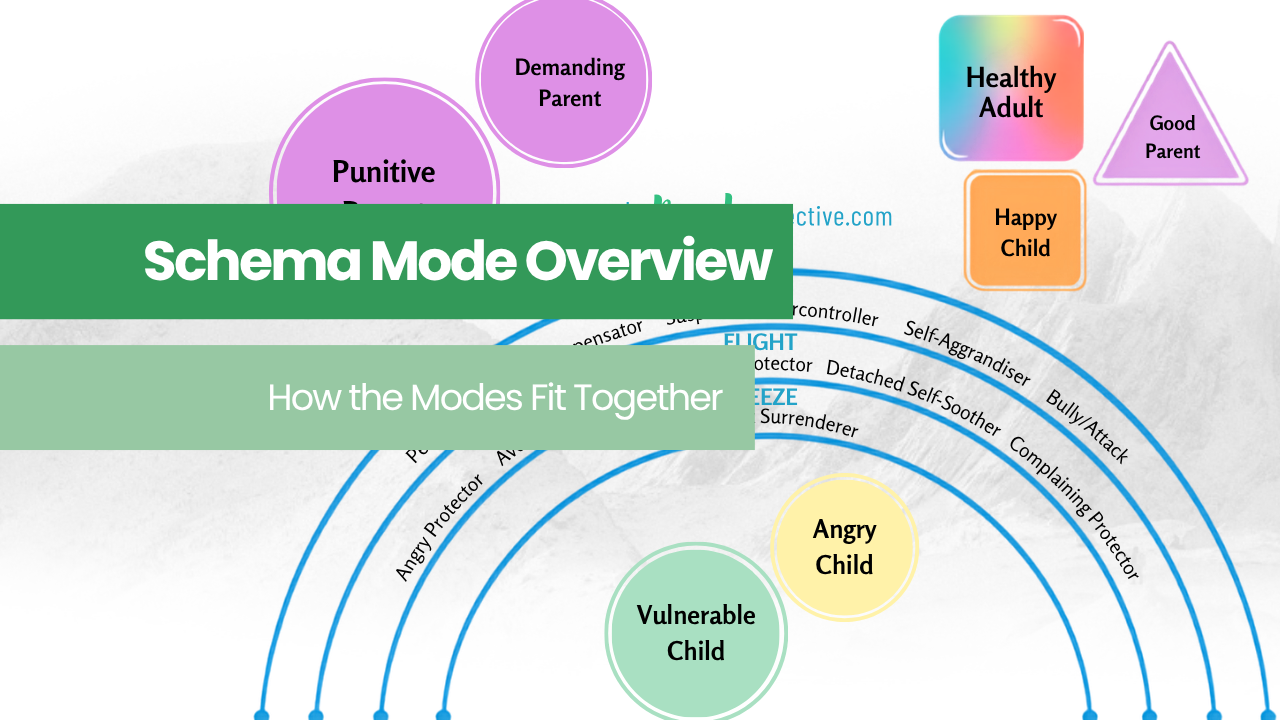
If you combine Schema Therapy with Schema Mode Therapy, treatment involves reducing the influence of Maladaptive Schemas and Maladaptive Coping Modes while strengthening the Healthy Adult Mode.
Which raises a fairly obvious question:
What are we strengthening?
When patients have asked me, “What does a Healthy Adult look like?” or “How do I become a Healthy Adult?”, I have generally talked about things like self-care, setting boundaries, regulating emotions, having healthy relationships, and making choices that are good for you.
This is all true, but perhaps that answer falls a little short. Because the Healthy Adult isn't simply a collection of things you do. There are also healthy beliefs underneath those behaviours. So imagine how excited I was when I discovered that someone had actually done the research and made a list.
What Are Early Adaptive Schemas?
Early Adaptive Schemas are positive patterns of thinking, feeling and relating that reflect the healthy fulfilment of our core emotional needs. They provide a useful counterpart to the Early Maladaptive Schemas traditionally described in Schema Therapy.
Louis, Wood, Lockwood, Ho and Ferguson (2018) developed the concept as part of their work on the Young Positive Schema Questionnaire (YPSQ).
The researchers started with items from the Young Schema Questionnaire and essentially asked: what would the healthy opposite of this belief look like?
For example, the maladaptive item:
“I haven’t had someone to nurture me, share him/herself with me, or care deeply about everything that happens to me.”
was mirrored with:
“For the most part, I have had someone who really listens to me, understands me, or is tuned into my true needs and feelings.”
The researchers then used statistical analysis to test and refine these positive items. The resulting Young Positive Schema Questionnaire contains 56 items measuring 14 Early Adaptive Schemas.
And this gives us something Schema Therapy has arguably needed for a long time:
Not just a map of what we're trying to reduce, but a map of what we're trying to build.
1. Stable Attachment
The belief that your relationships are stable and enduring.
People with this adaptive schema have strong confidence and security in their close relationships. They do not cling to the people they are close to because they trust that those individuals will not leave them. This trust in the loyalty and reliability of their close relationships provides security and peace of mind, allowing them to maintain independence and self-assurance even in the face of potential loss or separation. When they sense someone they care about pulling away, they do not react with panic or desperation. Their confidence and trust allow them to approach these situations with composure and understanding, recognising that people have their own needs and relationship dynamics.
2. Emotional Fulfilment
The belief that you have someone in your life who meets your emotional needs of attachment, connection and safety.
People who have this adaptive schema were likely fortunate enough to experience a nurturing environment where they consistently had someone who cared deeply about them. Whether it was a parent, guardian, or close mentor, someone always invested their time and energy to nurture and support them. They wholeheartedly shared their experiences, wisdom, and affection, ensuring that the individual felt valued and cherished. The warmth these caring individuals provided was a constant presence, creating a sense of security and belonging that shaped their journey.
3. Social Belonging
The belief that you belong and are accepted within groups.
People with this adaptive schema have confidence in their ability to fit in and connect with others. They find common ground and have shared interests with the people they encounter, allowing them to integrate smoothly into various social contexts. They experience a genuine sense of belonging and acceptance among others, feeling deeply connected and included in groups. They do not face significant barriers or feel excluded in social settings. They feel satisfied with the level of connection they have with others. They have enough friends and do not desire or require additional companionship. They can form meaningful connections and foster relationships that contribute to their overall sense of fulfilment and connection.
4. Competence
The belief that you are capable of managing daily tasks and problems.
People with this adaptive schema possess a strong sense of independence and self-reliance in their everyday life. They feel capable and confident in their ability to handle various situations and navigate through daily challenges. They trust their instincts and rely on their own assessment of situations, showing confidence in their ability to make sound decisions and solve problems. They see themselves as independent, emphasising their self-reliance in everyday functioning. They trust their capabilities and do not rely heavily on others for assistance or guidance.
5. Developed Self
The belief that you have matured independently of your parents and can function in everyday life while maintaining appropriate boundaries.
People with this adaptive schema have successfully achieved a level of independence from their parents comparable to most others their age. They have been able to separate themselves and establish their own life, maintaining a healthy level of autonomy. They do not find themselves overly involved in their parents' problems, recognising the importance of maintaining personal boundaries and prioritising their own well-being and individual growth. This encourages the development of their own unique experiences, goals, and sense of self. Thus, their sense of identity is not defined by external influences, allowing them to pursue their own aspirations and forge their own path.
6. Success
The belief that they are capable and competent at work or school tasks.
People with this adaptive schema believe they consistently perform at a high level, perhaps surpassing their peers' achievements. Their track record demonstrates a consistent ability to excel in various tasks and endeavours. They strongly believe in their competence, recognising their capacity for accomplishment and set high standards for themselves. With a keen sense of their capabilities, they confidently navigate work and achievement, matching or even surpassing the talents and intelligence of others in their field. Their commitment to excellence and their belief in their own abilities drive their success and propel them towards continued growth
7. Empathic Consideration
The belief that others are worthy of respect even when their opinions differ from your own, and the capacity to tolerate not always getting your way.
People with this adaptive schema strongly believe in fairness and equality, acknowledging that they should abide by the same rules and limitations as everyone else. They do not seek or expect special treatment and value following established norms and regulations. This mindset allows them to gracefully accept situations where they cannot pursue their desired course of action and instead go along with decisions made by others. They genuinely respect the conventions and guidelines that govern social interactions. They have a humble, inclusive outlook and consistently recognise and appreciate what others have to offer.
8. Healthy Self-Discipline
The ability to maintain routines and persist on difficult goals.
People with this adaptive schema show a strong ability to discipline themselves to complete routine or mundane tasks. They have the self-control to stay focused and committed, allowing them to accomplish these responsibilities effectively. When faced with challenges in reaching their goals, these people exhibit persistence and resilience. They do not give up easily and are determined to overcome obstacles to achieve what they set out to do. Their tenacity drives them forward, even in the face of setbacks or difficulties. They display a remarkable capacity to delay immediate gratification or pleasure in favour of achieving long-term goals. They understand the importance of sacrifice and are willing to forgo immediate satisfaction to pursue their larger aspirations.
9. Healthy Self-Care
The willingness to set aside time for self-care and prioritise your own needs.
People with this adaptive schema have a balanced approach to caregiving and receiving care within their close relationships. They actively care for the people close to them, demonstrating a nurturing approach. However, they are also comfortable letting others reciprocate and care for them when needed. They believe they can be a good person while treating their own needs as equally important as others'. They understand the value of personal time and self-care, avoiding neglect of their own needs while caring for others. They also make it known that they expect others to consider their own needs. They maintain healthy boundaries when they give and help others while also expecting their needs to be taken into account.
10. Self-Directedness
The belief that your opinion of yourself matters more than needing to impress others.
People with this adaptive schema possess a strong sense of self-worth and importance, independent of the attention or recognition they receive from others. They value their own worth and feel important to people, even when they aren't the centre of attention. Their self-esteem does not rely on external validation or praise, and they do not seek recognition or admiration in social or professional settings. Their sense of self-worth is self-generated and not dependent on external factors such as wealth or social connections.
11. Optimism
The belief that things will generally turn out for the best.
People with this adaptive schema will focus on positive moments and favourable circumstances in their lives. They tend to feel genuine happiness and optimism about the future. They can fully embrace and enjoy positive events without succumbing to pessimistic expectations of impending disaster. They hold a belief that things generally work out well and there is no need for constant worry, as catastrophising does not lead to constructive outcomes, so they maintain a relaxed perspective. This optimistic outlook allows them to savour and appreciate the present, fostering a positive mindset that extends into their expectations for what lies ahead.
12. Emotional Openness
The willingness to express your feelings and show affection to people you feel comfortable with.
People with this adaptive schema feel comfortable expressing positive emotions and feelings to others. They feel at ease showing physical affection, such as hugs or other forms of touch, as well as verbally expressing care and affection toward the people they value. They prioritise authenticity and genuine emotional expression, allowing them to share their feelings freely and comfortably when they want to. Their ability to convey their emotions contributes to authentic, meaningful connections with others.
13. Realistic Expectations
The belief that you can set achievable goals and accept yourself as 'good enough'.
People with this adaptive schema maintain a realistic, grounded approach to their expectations for themselves. They find satisfaction in their accomplishments without feeling the need to be among the best. They embrace "good enough" and accept imperfections, avoiding undue stress or pressure. They balance responsibility with letting go, understanding the importance of prioritising relaxation and not over-worrying about unfinished tasks. They allocate time for both productivity and leisure, avoiding excessive concern over things left undone. When they make mistakes, they practice self-compassion and give themselves the benefit of the doubt, fostering a mindset of growth and acceptance.
14. Self-Compassion
The belief that you deserve to treat yourself with kindness and forgiveness.
People with this adaptive schema hold a compassionate view towards themselves, understanding that mistakes are a natural part of life and do not define their worth or character. They do not dwell on self-blame or harsh self-criticism, instead they exhibit a remarkable ability to forgive themselves, recognizing that they do not deserve punishment for their errors. They have a healthy self-perception that lets them accept their efforts and outcomes with peace and contentment. They hold a fundamental belief in their own goodness and have a positive self-image. They embrace their intrinsic worth and maintain self-assurance, which contributes to their overall well-being and resilience in the face of challenges.
Watch the Video
Listen to Jess explain the 14 Adaptive Schemas
Want to Put Schema Therapy Into Practice?
Understanding your schemas is useful. Learning what to do with them is where things start to change.
If You're Working on Your Own Schemas
If you recognise some of these patterns in yourself, our Schema Therapy resources are designed to help you move beyond simply identifying your schemas and start working with them.
The Schema Therapy Patient Workbook takes you step-by-step through understanding your schemas, recognising how they show up in everyday life, and developing healthier ways of responding.
You can also use our Schema Therapy Cards to make schemas, modes and Healthy Adult responses easier to identify and work with, or explore our Complete Set of Schema Therapy Worksheets for practical exercises you can work through at your own pace.
Explore our Schema Therapy resources →
If You're a Clinician Using Schema Therapy
If you work with schemas in clinical practice, our resources are designed to help you turn Schema Therapy theory into practical interventions you can actually use in the therapy room.
The Schema Therapy Clinician Guide provides practical guidance, exercises and strategies for working with schemas and schema modes, while our clinician training takes you much further into formulation, experiential techniques and strengthening the Healthy Adult.
I teach Schema Therapy Part 1 and Schema Mode Therapy Part 2, with a strong focus on giving clinicians practical skills they can take back to their clients immediately.
About Our Resources