What is a Schema?
What Is a Schema?
Understanding the Core Beliefs That Shape Your Life
Written by Jess O'Garr, Clinical Psychologist and Schema Therapy trainer at The Psych Collective.
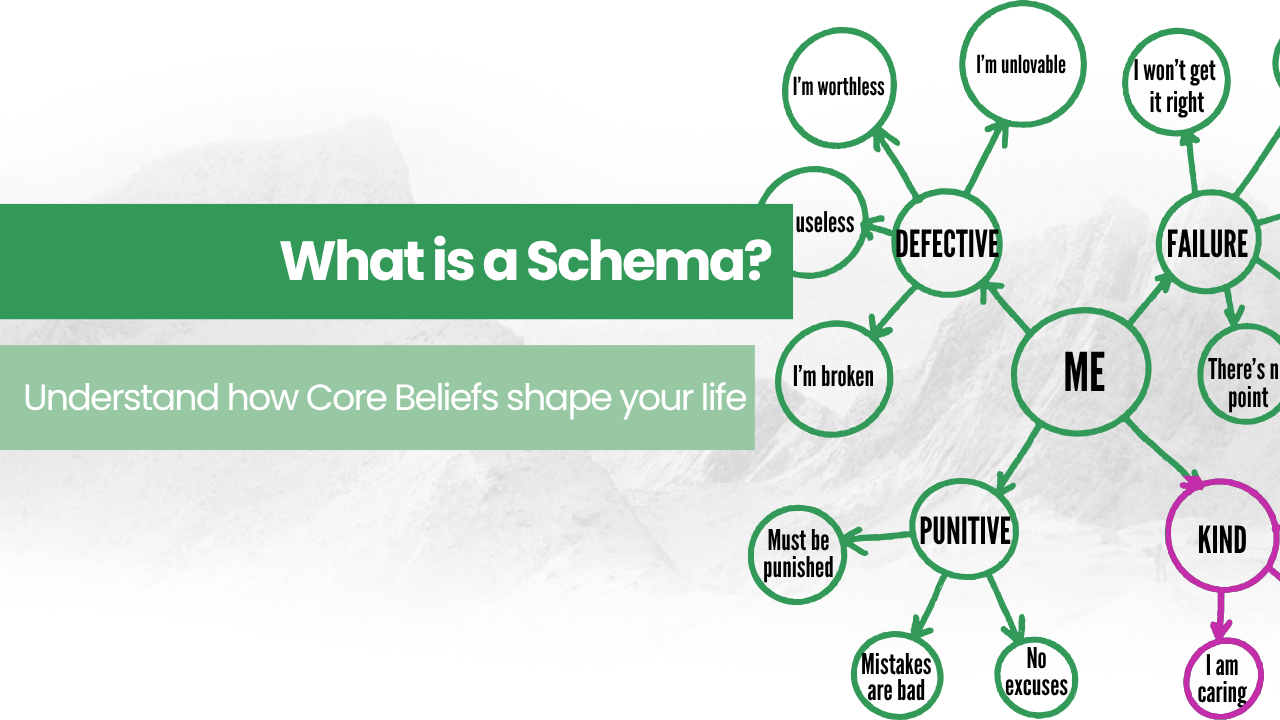
A schema is a deeply held belief about yourself, other people or the world that develops through repeated life experiences. In psychology, you'll often hear these referred to as core beliefs. Schema Therapy hasn't replaced the idea of core beliefs; it has simply organised them into categories that make them easier to understand and treat.
For example, someone with an Abandonment Schema might hold beliefs like:
- People always leave me.
- Nobody stays forever.
- I'll eventually end up alone.
Someone with a Failure Schema might believe:
- I'm not good enough.
- Everyone else is more capable than I am.
- Eventually people will realise I'm a fraud.
The schema is the category. The individual beliefs sit underneath it.
But here's the important part.
People with schemas don't usually experience these as beliefs. They experience them as facts.
If you asked someone with a Failure Schema whether they believe they're a failure, they probably wouldn't stop to analyse the evidence. To them, it simply feels true. That's what makes schemas so powerful. They become the lens through which we interpret everything that happens around us.
Imagine wearing the same pair of tinted glasses every day for thirty years. After a while, you stop noticing the glasses. You don't think, "Everything looks blue because of my lenses." You simply assume that's what the world looks like. Schemas work in much the same way. They quietly colour the meaning we give to everyday experiences until we forget they're there at all.
Here is our video of Jess explaining this in more detail.
How do schemas develop?
According to Jeffrey Young, the psychologist who developed Schema Therapy in the 1980s, schemas generally develop when important emotional needs aren't consistently met during childhood. That's the fundamental assumption underpinning Schema Therapy. Notice I said consistently.
We're not talking about parents making occasional mistakes. Every parent gets things wrong. Children are remarkably resilient, and healthy relationships contain plenty of opportunities for repair after conflict or misunderstanding.
Schemas tend to develop when a child repeatedly receives the same emotional message over and over again. Perhaps they repeatedly feel criticised. Perhaps they're expected to be perfect. Perhaps they're rarely comforted when they're distressed. Perhaps they never quite know whether the adults in their life are emotionally available.
Over time, children start trying to make sense of these experiences.
And here's the problem. Children don't usually conclude, "My parents struggled to meet my emotional needs."
They conclude, "There must be something wrong with me."
Those conclusions slowly become core beliefs. Those core beliefs eventually become schemas.
How does temperament influence the development of schemas?
A child’s temperament plays a big role in the development of maladaptive schemas. Some children are born with a hypersensitive temperament, meaning they feel things more intensely and have bigger reactions when triggered. These children often have a greater need for emotional support from their primary caregivers and can be more impacted by unmet needs or emotional invalidation.
It's really all about Needs
If a schema is repeatedly activated by ongoing unmet core emotional needs, it will strengthen over time. This makes the schema more rigid and our reactions less flexible. It can create harmful patterns of responding to cues by acting in ways that are unhealthy or self-defeating.
If there's one thing I hope you take away from this article, it's this:
Every schema starts with a need.
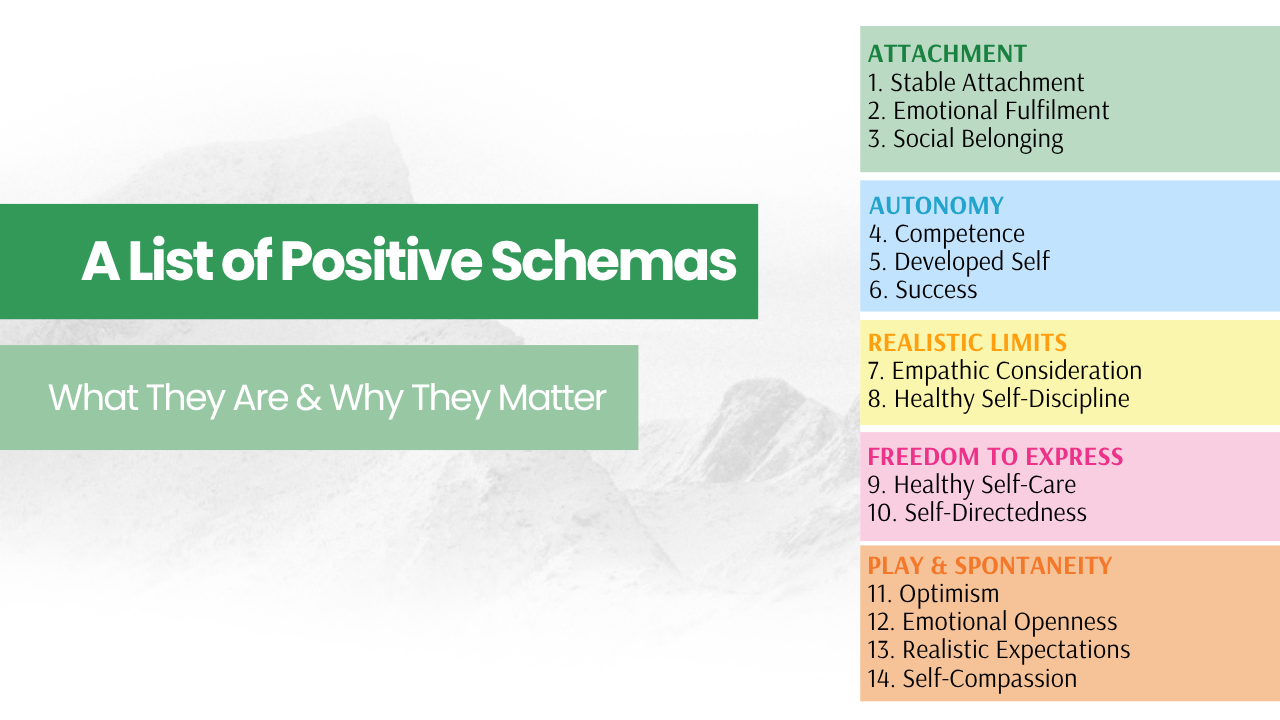
Every child born into this world has five core emotional needs:
- Secure attachment
- Autonomy and competence
- Realistic limits
- Freedom to express emotions and needs
- Spontaneity and play
These aren't wants. They're needs.
When those needs are met consistently, children develop healthy beliefs about themselves. In Schema Therapy, we call these adaptive schemas.
When those needs repeatedly go unmet, children develop unhealthy beliefs instead. These become maladaptive schemas.
This is the part of Schema Therapy that I think is often overlooked.
People become so focused on memorising twenty different schemas that they forget every one of them can be traced back to one of five unmet emotional needs. As soon as you understand that relationship, the whole model suddenly becomes much easier to understand.
An Abandonment Schema points towards an attachment need that wasn't consistently met.
An Unrelenting Standards Schema often reflects difficulties around play, spontaneity or growing up in an environment where achievement mattered more than simply being a child.
The schemas are simply clues. They point us back to the emotional need that requires healing.
It's not about blaming parents
One of the biggest misconceptions about Schema Therapy is that it's about blaming your parents for everything that's wrong in your life.
Good Schema Therapy doesn't do that. Instead, it tries to understand the context in which these beliefs developed.
Many of our parents genuinely loved us.
Many worked incredibly hard.
Many sacrificed enormously for their families.
At the same time, they were also raising children with the knowledge, skills and cultural expectations that existed at the time.
Think back to some of the messages that were common only a generation or two ago.
"Stop crying or I'll give you something to cry about."
"Children should be seen and not heard."
"Harden up."
Those weren't unusual parenting messages. They reflected the culture of the day. Many parents simply didn't have the language around emotional needs because nobody had taught them either.
Understanding that doesn't excuse genuinely harmful experiences. But it does reduce shame. It also helps explain why we sometimes see the same patterns passed from one generation to the next. Parents often raise children using the only blueprint they were ever given. That's how intergenerational cycles develop.
Fortunately, understanding those patterns also gives us the opportunity to break them.
Schemas aren't just thoughts
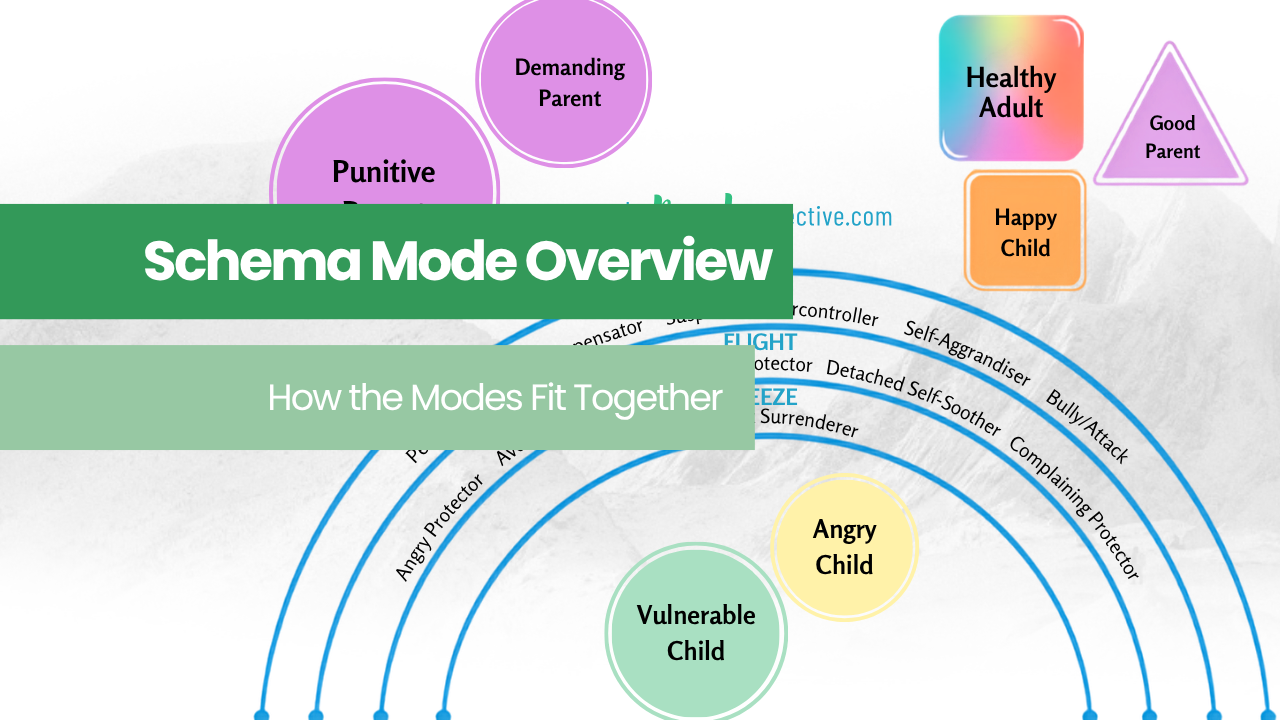
Another area that often causes confusion is the difference between schemas and schema modes.
The easiest way to think about it is this:
The schema is the underlying belief.
The mode is the emotional and behavioural response that happens when that belief gets activated.
Let's imagine somebody has an Abandonment Schema.
Their partner comes home later than expected and forgets to reply to a text message. Objectively, nothing particularly dramatic has happened. But the schema immediately starts interpreting the situation.
"They're losing interest."
"I've done something wrong."
"I knew they were going to leave."
Those thoughts generate powerful emotions such as anxiety, sadness or anger. Those emotions then influence behaviour. Perhaps they repeatedly seek reassurance. Perhaps they become controlling. Perhaps they emotionally withdraw before they can be rejected. The behaviour isn't random. It's an attempt to protect the person from the pain their schema predicts is coming.
This is one of the reasons schemas become so persistent.
They don't simply influence what we think. They influence how we behave. And those behaviours often create exactly the outcomes we're trying to avoid. The person who fears abandonment may become so anxious and controlling that their partner eventually does pull away.
The schema then says,
"See? I told you everyone leaves."
The original belief becomes even stronger.
If schemas helped us survive, why change them?
This is probably one of the most compassionate aspects of Schema Therapy. Rather than assuming your behaviours are irrational, Schema Therapy assumes they once made perfect sense.
Children are incredibly adaptable.
If expressing emotions wasn't safe, they learnt to suppress them.
If perfection was the only way to receive praise, they became perfectionists.
If asking for help always led to disappointment, they became fiercely independent.
These weren't personality flaws. They were survival strategies.
The problem is that strategies developed by an eight-year-old don't always work particularly well when you're forty. The behaviours that once protected you may now be preventing you from developing healthy relationships, trusting other people or asking for support when you need it. Schema Therapy isn't about criticising those coping strategies. It's about recognising that you may no longer need them.
Recovery starts with understanding
Perhaps the greatest gift Schema Therapy offers is that it replaces shame with understanding.
Instead of asking,
"What's wrong with me?"
it encourages us to ask,
"What happened that led me to develop this belief?"
That single shift changes everything.
You stop seeing yourself as broken and begin recognising that your brain developed a set of beliefs that made sense given the experiences you had. Those beliefs may no longer serve you. They may be keeping you stuck. But they are not who you are. And because schemas are learned, they can also be changed.
That's ultimately the goal of Schema Therapy. Not to erase the past or pretend difficult experiences never happened, but to help people build healthier beliefs about themselves, meet the emotional needs that went unmet for so long, and create a future that is no longer dictated by the blueprints they developed as children.
Continue learning about Schema Therapy
If you'd like to understand your own schemas in more depth, our Schema Therapy Patient Workbook, Schema Therapy Worksheets, Schema Cards and single-page worksheets have been designed to make Schema Therapy practical and actionable. Rather than simply explaining the theory, they guide you through identifying your schemas, understanding where they came from and beginning the process of changing them.
Are you a clinician?
Our Schema Therapy Workshop takes the same practical approach. You'll learn how to assess schemas, formulate cases, identify unmet emotional needs and confidently integrate Schema Therapy into your clinical practice using worksheets, demonstrations and real-world examples. We have also developed a Clinician's Guide to Schema Therapy, available for immediate download.
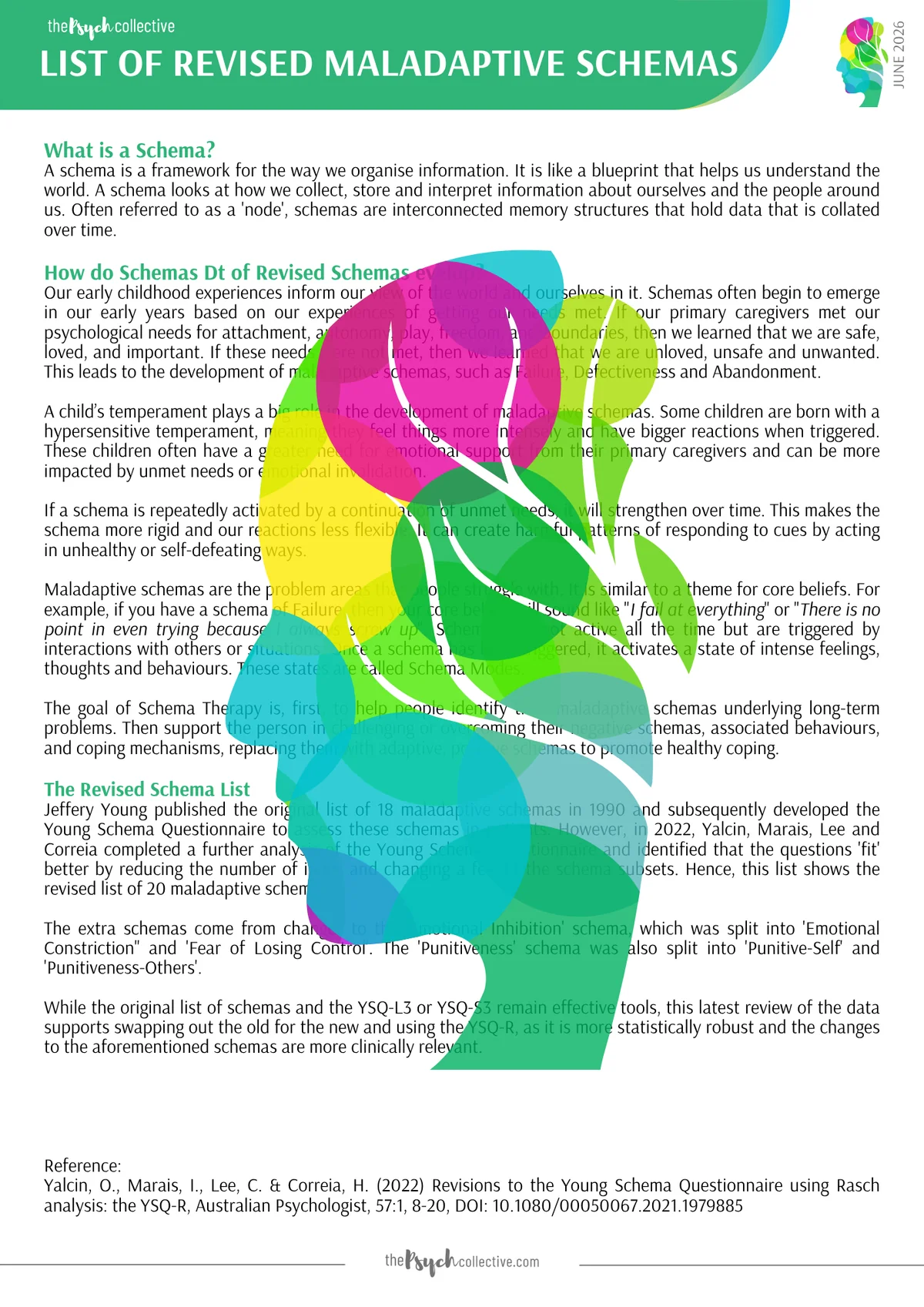
Here is an example of a single-page handout you can download from our Store here.
About Our Resources