Perfectionistic Overcompensator Mode
Perfectionistic Overcompensator Mode: When Perfectionism Becomes a Coping Strategy
Written by Jess O'Garr, Clinical Psychologist and Schema Therapy trainer at The Psych Collective.
The Perfectionistic Overcompensator is a Fight Coping Mode in Schema Therapy that uses perfectionism, achievement and control to protect against vulnerability. The underlying belief is often something like: If I do everything perfectly, stay in control and prepare for every possibility, then nothing bad will happen. If nothing goes wrong, perhaps I won't be criticised, I won't fail, and I won't have to experience the uncomfortable feelings underneath.
This is a tricky Schema Mode because it can look incredibly functional. Perfectionistic Overcompensators are often hardworking, organised, conscientious and successful. High standards aren't necessarily a problem either. The problem starts when perfectionism becomes the strategy you rely on to feel safe or good enough, and anything less than perfect starts to feel like failure.
What is the function of the Perfectionistic Overcompensator?
At the core of the Perfectionistic Overcompensator is often a fear that something bad will happen if I don't get this right. The solution is to try to control everything: have a plan B and plans C through to Z, dot every I, cross every T and perhaps micromanage everyone else to make sure they get it right as well. If you're in charge of everything and leave nothing to chance, maybe nothing bad can happen.
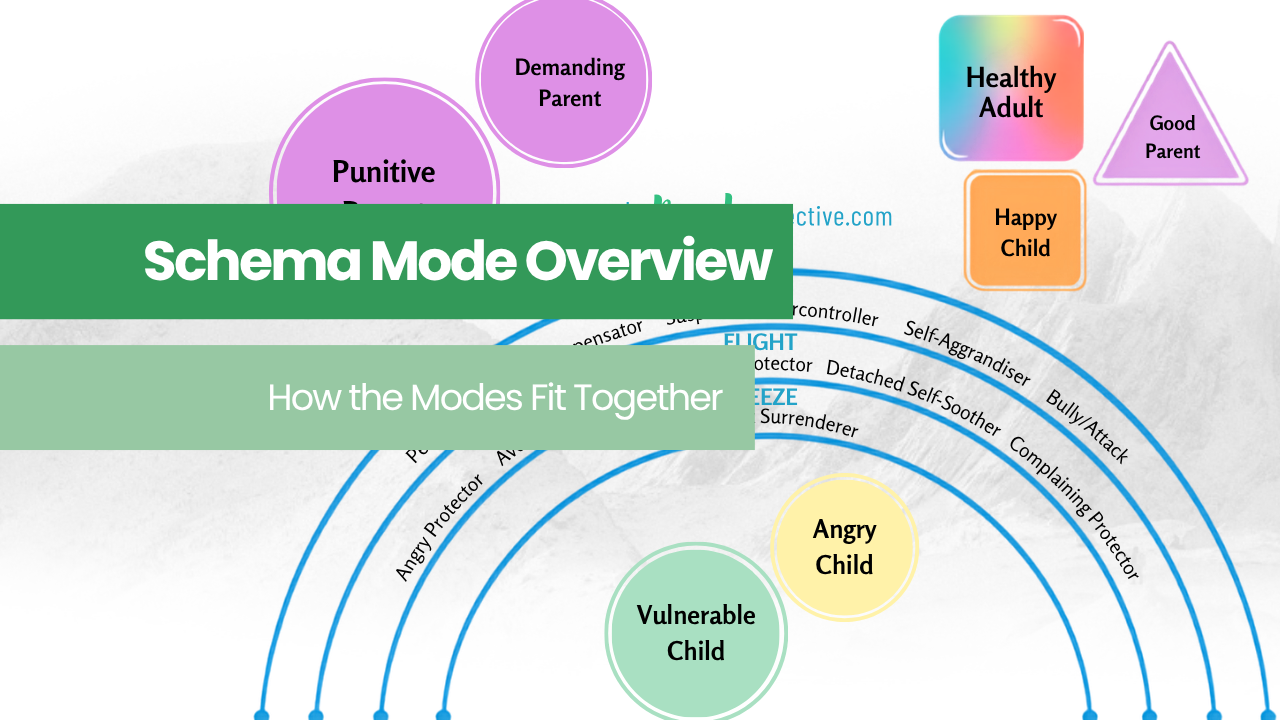
The feared outcome is often criticism. That might be criticism from a boss, parent, teacher, partner or somebody else whose opinion matters to you. But the criticism can also come from inside, particularly from a strong Demanding Parent or Punitive Parent Mode. When your internal voice is already waiting to point out what you did wrong, getting everything perfect can feel like the best way to stay one step ahead.
Which schemas can drive perfectionism?
The obvious schema associated with this mode is Unrelenting Standards, but we can also see schemas such as Failure and Defectiveness underneath perfectionistic behaviour. Remember, this is an overcompensatory coping response. When a schema is activated, the Fight response attempts to make sure the thing you're frightened of doesn't happen.
If the underlying schema is Failure, the response can become: I'm going to make absolutely sure I don't fail. If you fear being defective or not good enough, achievement can become a way to continually prove your worth. You work harder, prepare more, check everything, and aim for 100%, because making a mistake risks exposing the vulnerability you've worked so hard to avoid.
What does Perfectionistic Overcompensator Mode look like?
A classic thought is: If you want something done right, do it yourself. You may find it difficult to delegate, and if you do hand something over, you might repeatedly check the other person's work or eventually take the task back because they're not doing it properly. At work, that can mean staying late, overpreparing, constantly checking details or micromanaging colleagues. At home, it might be checking whether your partner remembered everything, looking over your children's shoulders, or deciding that apparently the washing won't dry properly unless the pegs are colour coordinated.
This mode can also bring a frantic, nervous energy. You may feel as though there is always something you should be doing, achieving, or finishing, with real difficulty resting or having downtime. There can be endless planning and list writing—sometimes even a contents list of all the other lists you have. The overall feeling is that everything needs to be under control, because being out of control feels incredibly uncomfortable.
When does perfectionism become unhealthy?
There is a sliding scale between having healthy high standards and being stuck in Perfectionistic Overcompensator Mode. Someone with healthy standards can work hard for a maths test, get 85% and think, I'm really pleased with that. I worked hard and did well. When perfectionistic overcompensation becomes maladaptive, anything less than 100% can feel unacceptable.
The irony is that perfectionism eventually sets you up to experience exactly what you're trying to avoid. If you set standards so high that they're impossible to maintain, you're guaranteed to fall short eventually. The underlying schema then gets to say, See? I knew you were going to fail. This can create enormous stress, self-criticism and burnout, followed by even more pressure to perform perfectly next time.
Perfectionism can also interfere with actually getting things done. If you can't do something perfectly, you might put it off because starting means risking getting it wrong. Sometimes we see Avoidant Protector Mode first—I'm not going to try because then I can't fail—followed by a frantic Perfectionistic Overcompensator as the deadline approaches. Suddenly it's 3 am and you're desperately trying to make the task perfect, creating a cycle of procrastination, panic, overcompensation and exhaustion.
Perfectionistic Overcompensator or Demanding Parent?
There is a lot of crossover between the Perfectionistic Overcompensator and Demanding Parent, but they aren't the same mode. The Perfectionistic Overcompensator is the coping response saying, I have to get this right. I've got to be perfect. I need to keep everything under control. The Demanding Parent is the internal voice saying, You'd better get this right. You should be doing more. You need to work harder.
The Demanding Parent sets the impossible standard, and the Perfectionistic Overcompensator desperately tries to meet it. That is why simply telling someone to "stop being a perfectionist" isn't particularly helpful. We also need to address the internal demands that keep moving the goalposts and telling the person that whatever they've done is still not enough.
Perfectionism can create relationship problems too. People generally don't enjoy being micromanaged, repeatedly checked or told that they're not doing something correctly. Sometimes other people will happily let the perfectionist take responsibility for everything, but that creates its own problem: you become increasingly overloaded while reinforcing the belief that if I don't do it, nobody will.
What does the Perfectionistic Overcompensator need?
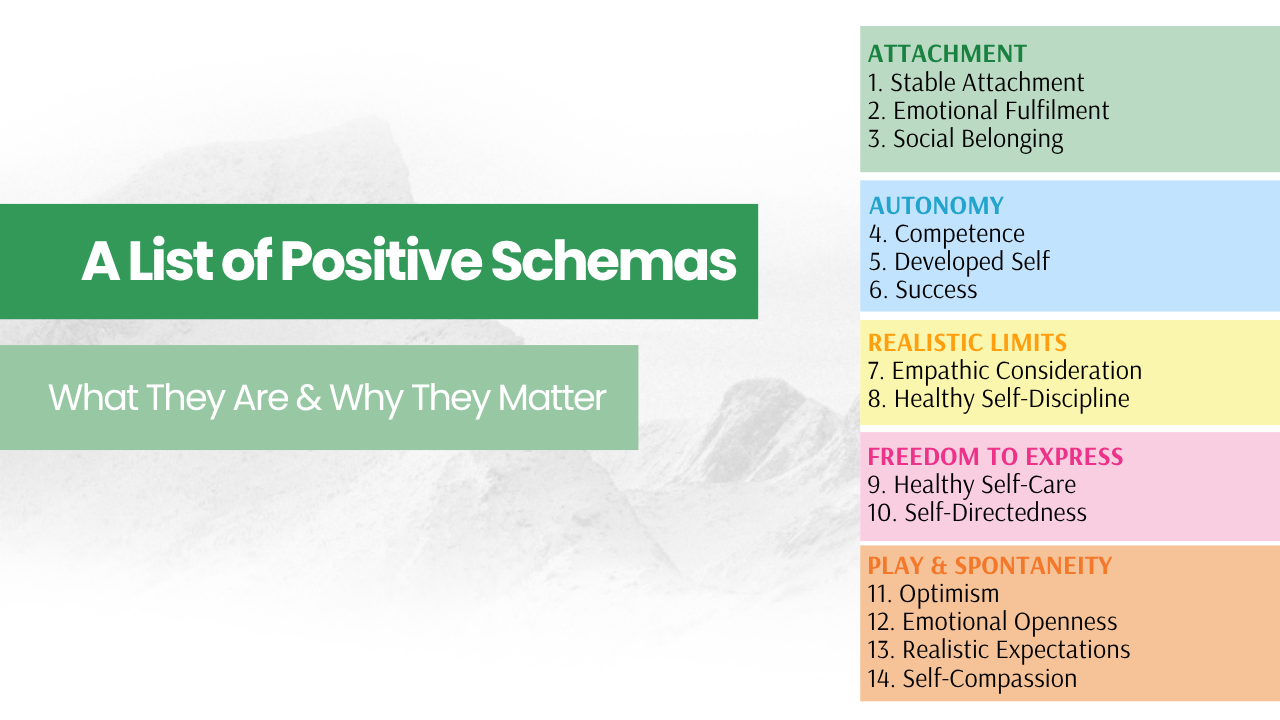
One of the biggest core emotional needs here is realistic limits. The Perfectionistic Overcompensator needs to learn to put a limit on the task and say: This is good enough. I've done what is reasonably required, and I'm stopping now. Perfect is a myth. You might get 100% on a particular test, but nobody gets 100% on every task, relationship, decision and area of life forever.
Validation of effort rather than outcome is also really important. Instead of only feeling successful when the outcome is perfect, the focus becomes: I worked hard. I prepared appropriately. I did the best I reasonably could. That is a very different message from only giving yourself credit when you achieve an A, get the promotion, receive praise or complete something without a single mistake.
The other need that the Perfectionistic Overcompensator tends not to like very much is spontaneity and play. There is usually an immediate response of: I haven't got time for fun. I've got too much to do. But if you keep pushing at that pace, eventually you're going to crash and burn. Rest, fun and planned recovery need to be part of your life rather than something you're only allowed once every possible task has been completed.
How does the Healthy Adult manage perfectionism?
The Healthy Adult Mode doesn't tell you to stop caring, stop achieving or lower every standard. It helps you work out when you genuinely need to be conscientious and when good enough is actually good enough. There are times when details matter and extra effort is appropriate; the problem is when maximum effort becomes your permanent state.
The Healthy Adult starts dialling down the Demanding Parent: You've done a really good job here. You've tried really hard. That's enough. Let's take a break. It rewards effort, moderates unrealistic standards and deliberately brings some Happy Child back into the picture through fun, spontaneity and recovery.
Other people can help with this too. Sometimes you need the boss who says, It's seven o'clock—go home, or the partner who points out that you've been working for four hours and need a break. Helpful people validate your effort rather than only praising your performance, and they can encourage you to practise letting things slide occasionally, tolerating someone else doing something differently and discovering that the world doesn't collapse when everything isn't perfect.
How do you start changing Perfectionistic Overcompensator Mode?
Start by noticing when pushing yourself is creating more distress than benefit. Look for the frantic energy, constant productivity, excessive checking, micromanaging, overplanning and difficulty resting. Then ask the more important question: What am I frightened will happen if I don't get this right?
That is where you're more likely to find the vulnerability underneath the mode. Perhaps it's criticism, failure, rejection, loss of control or someone discovering that you're not as capable as you want them to believe. Once you recognise that vulnerability, your Healthy Adult has a different job: set some boundaries, practise good enough, validate your effort, plan some recovery and cut yourself some slack.
Frequently asked questions about Perfectionistic Overcompensator Mode
What is Perfectionistic Overcompensator Mode?
Perfectionistic Overcompensator is a Fight Coping Mode in Schema Therapy that uses perfectionism, achievement and control to protect against vulnerability, particularly fears of criticism, failure, or not being good enough.
Is perfectionism always unhealthy?
No. High standards, conscientiousness and attention to detail can be healthy. Perfectionism becomes maladaptive when standards become rigid or unrealistic, create significant distress, prevent rest or task completion, damage relationships, or make your self-worth dependent on performance.
Why can perfectionism cause procrastination?
If something has to be done perfectly, starting can feel threatening because failure is possible. Avoidance can then take over until the approaching deadline triggers frantic perfectionistic overcompensation.
How do you manage Perfectionistic Overcompensator Mode?
The Healthy Adult learns to moderate unrealistic standards, set boundaries, practise "good enough", recognise effort rather than only outcomes, tolerate other people doing things differently and deliberately make room for rest, spontaneity and play.
Want to understand your Schema Modes?
Our Schema Mode Therapy Cards and Complete Set of Schema Mode Therapy Worksheets can help you identify your coping modes underneath patterns such as perfectionism and start strengthening your Healthy Adult.
Explore our Schema Therapy resources →
Are your a Clinician?
Our Schema Mode Therapy Clinician Guide provides practical tools for Schema Therapy formulation and intervention, while my Schema Therapy and Schema Mode Therapy training focuses on recognising coping modes and knowing what to actually do with them in the therapy room.
Explore upcoming Schema Therapy training →
About Our Resources