How to Calm Down During a Panic Attack: 3 Crisis Skills That Work
Three Crisis Skills to Calm Your Body During Panic or Acute Distress
Pause Breathing | Burst Exercise | Ice Packs
Written by Jess O'Garr – Clinical Psychologist
When you're experiencing intense anxiety, panic or emotional distress, your body can go into fight-or-flight mode. Your heart races, your breathing changes, your muscles tense and thinking clearly becomes difficult. At this point, trying to reason with yourself or solve the problem may not be particularly helpful.
The first step is to calm your body so that your brain can function properly again.
These three crisis skills are adapted from Dialectical Behaviour Therapy (DBT) and are designed to help reduce intense physiological arousal. You don't need to use all three. Choose whichever is most appropriate for your situation.
1. Pause Breathing: Slow Your Breathing and Reduce Hyperventilation
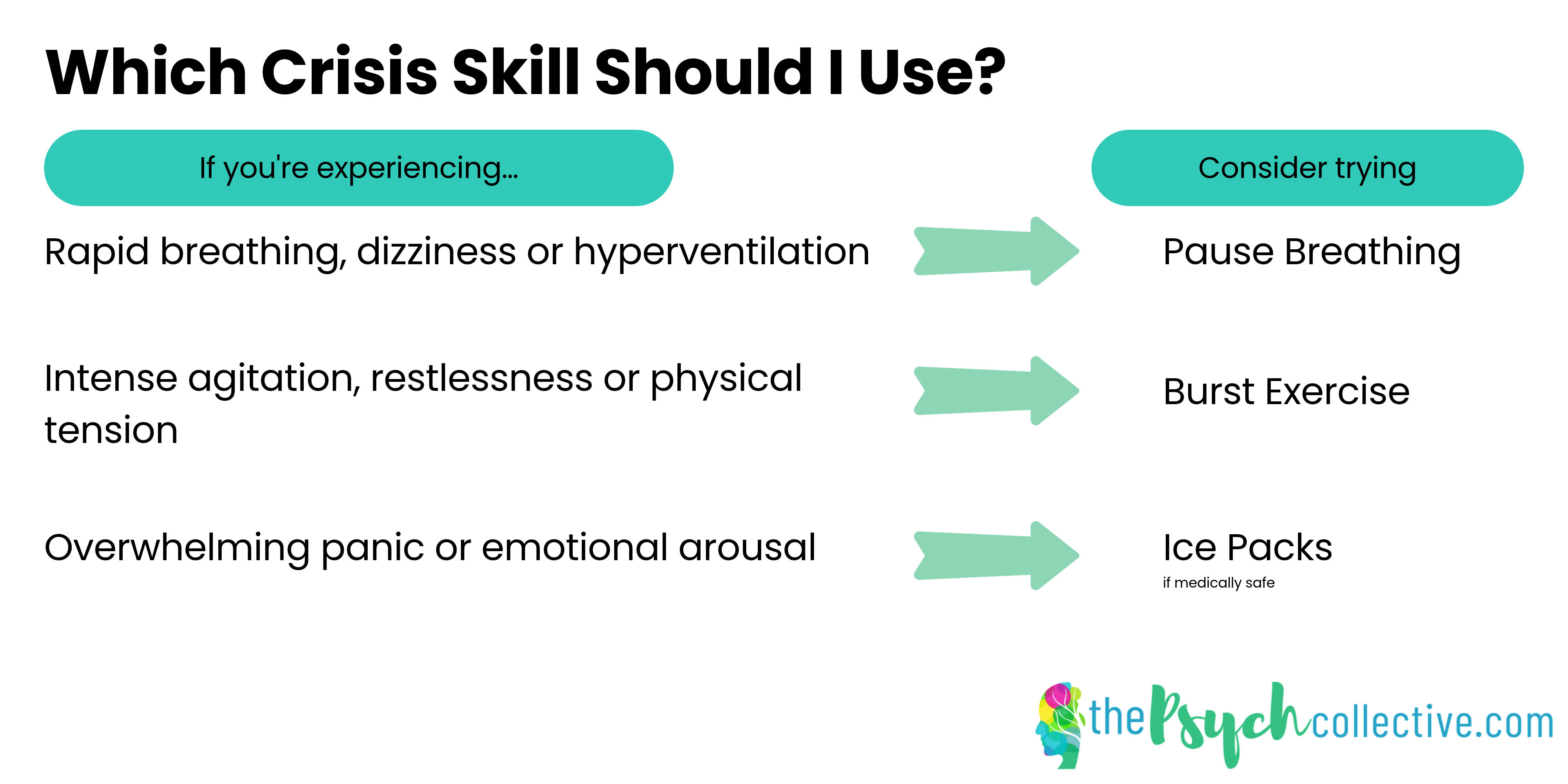
Best for: Panic attacks, hyperventilation, racing thoughts, dizziness and feeling overwhelmed.
How to do Pause Breathing
-
Sit somewhere comfortable and drop your shoulders.
-
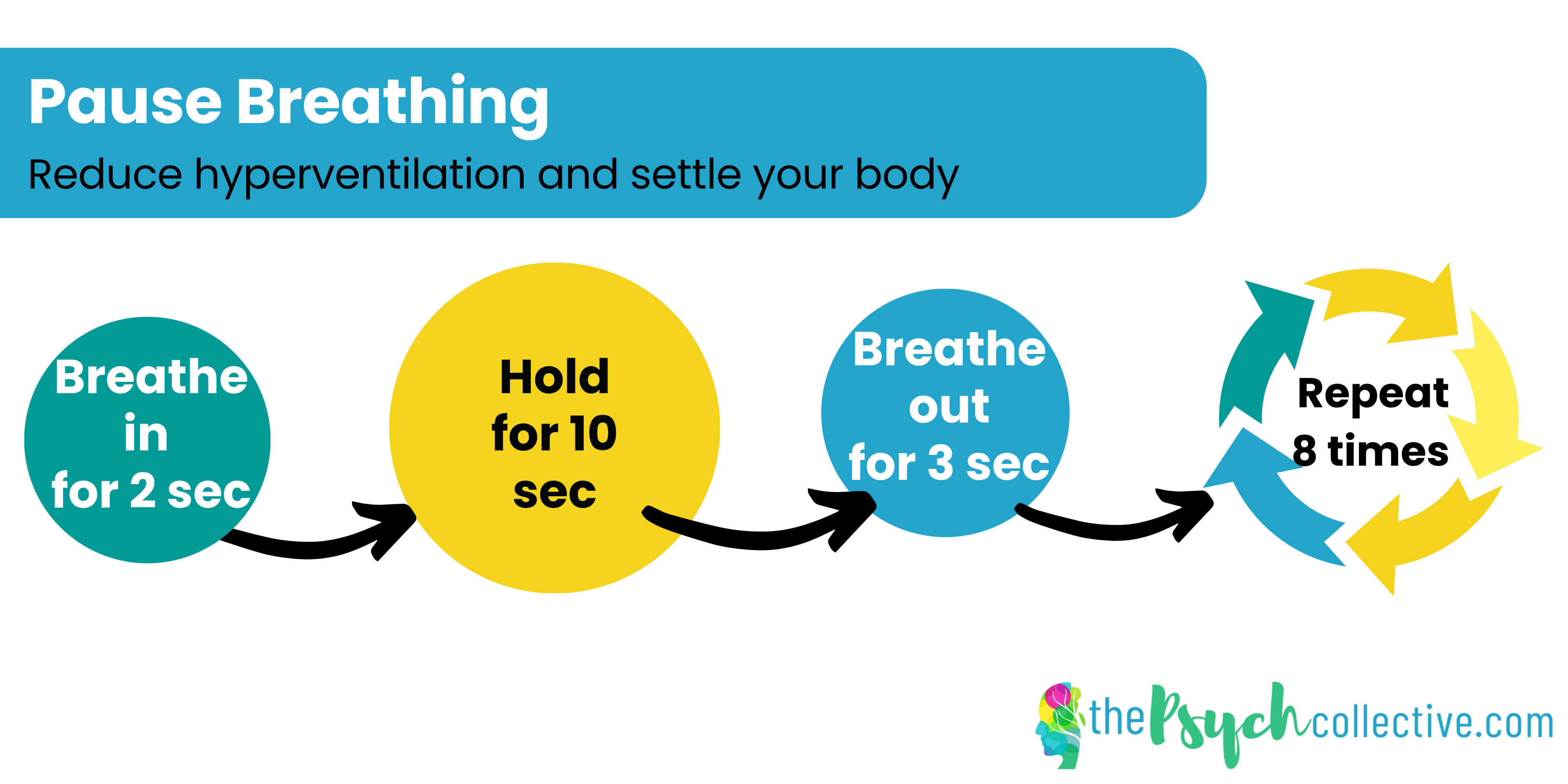
Breathe IN for 2 seconds. Take a normal, gentle breath. Don't fill your lungs to maximum capacity.
-
HOLD for up to 10 seconds. Keep your shoulders relaxed and avoid straining.
-
Breathe OUT gently for 3 seconds.
-
Repeat for several cycles, as long as it remains comfortable.
The full cycle takes 15 seconds, reducing your breathing rate to approximately four breaths per minute.
Important: If you're already hyperventilating, you may not manage a 10-second hold immediately. Start with a shorter, comfortable pause and gradually increase it. If breath-holding makes you dizzy, faint or more panicked, stop and return to gentle, comfortable breathing.
Why does Pause Breathing work?
When you're distressed, you may start breathing faster or deeper than your body needs. This is called hyperventilation. Although it can feel like you're not getting enough oxygen, the problem is often that you're breathing out too much carbon dioxide (CO₂).
Carbon dioxide plays an important role in regulating your blood's acidity. When you breathe out excessive amounts, your CO₂ levels fall, making your blood temporarily more alkaline. This is called respiratory alkalosis.
The resulting changes can cause dizziness, tingling, light-headedness, confusion and feelings of unreality. Unfortunately, these sensations can make you feel even more frightened, creating a cycle of panic and hyperventilation.
Pause Breathing aims to reduce excessive ventilation, allowing carbon dioxide levels to return towards normal. The emphasis is on smaller, slower breaths rather than taking enormous deep breaths.
What if focusing on breathing makes me more anxious?
Some people feel more panicked when they focus on their breathing, especially if they already feel short of breath. If this happens, stop concentrating on your lungs and focus on your shoulders instead.
Drop your shoulders, relax your upper body and allow your breathing to settle naturally. Once you feel more comfortable, you can try the breathing sequence again.
2. Burst Exercise: Use Your Muscles to Interrupt Panic
Best for: Intense agitation, restlessness, panic and overwhelming physical tension, when vigorous exercise is safe for you.
How to do Burst Exercise
-
Find a safe space where you can move freely.
-
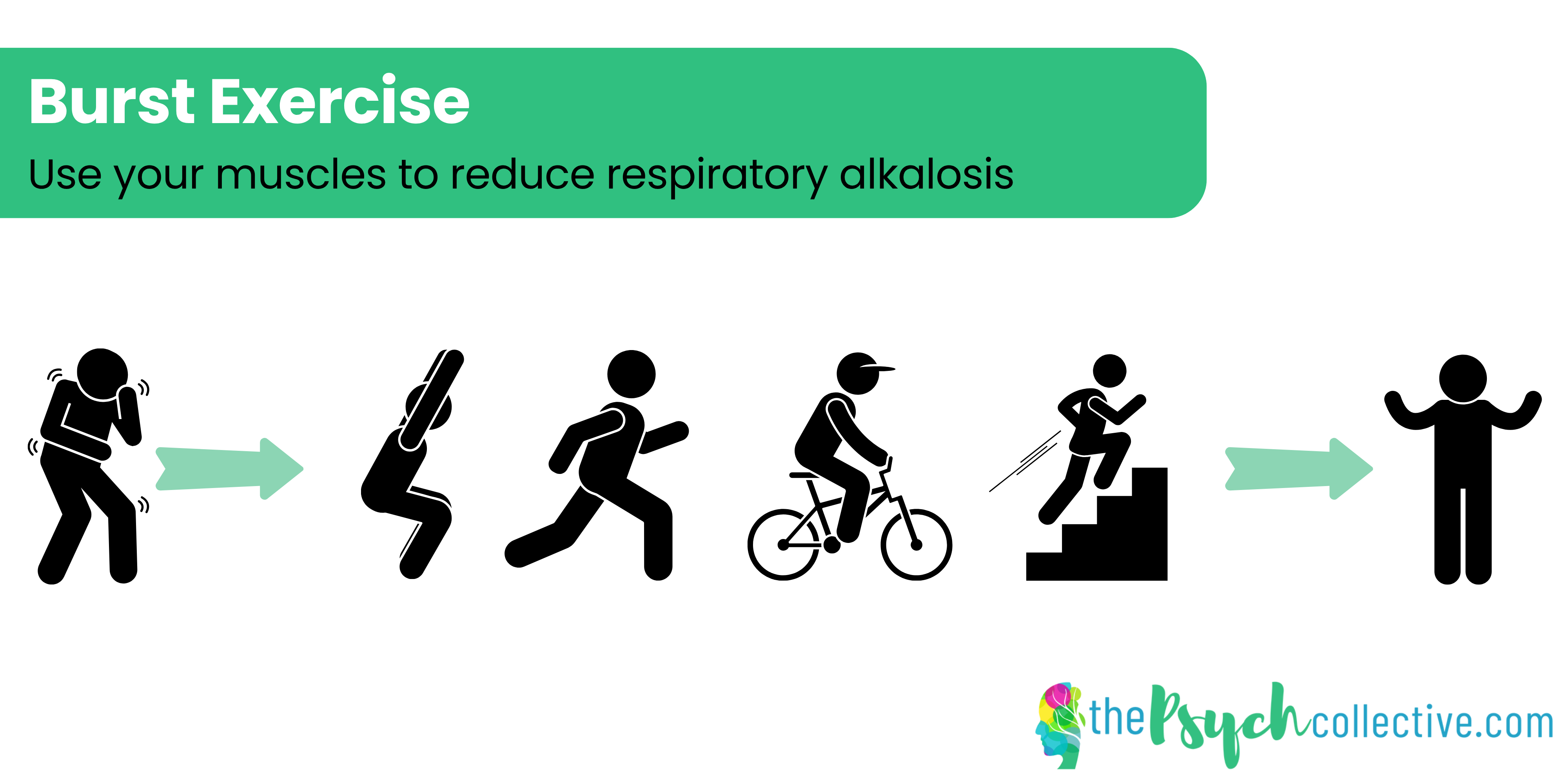
Choose an exercise that uses large muscle groups, such as star jumps, running on the spot, an exercise bike or burpees.
-
Exercise vigorously for approximately 1–2 minutes, within your physical capabilities.
-
Stop, recover, and let your breathing settle naturally.
-
Reassess your distress before deciding what to do next.
The aim is a short burst of substantial muscular activity, rather than a gentle walk or prolonged workout.
Why does Burst Exercise work?
During hyperventilation, your body can lose carbon dioxide faster than it produces it, contributing to respiratory alkalosis. One way your body naturally produces carbon dioxide is through muscular metabolism.
When your muscles work hard, they consume energy and produce more CO₂. This provides a physiological rationale for using brief, vigorous exercise when hyperventilation is contributing to distress. Exercise may also help discharge some of the physical agitation associated with fight-or-flight.
However, exercise also increases breathing, so it isn't a guaranteed way to correct respiratory alkalosis. Its effects depend on your breathing response and physical condition.
Important: Don't use vigorous exercise if you have chest pain, feel faint, are severely breathless or have a medical condition that makes strenuous activity unsafe. If you're unsure whether vigorous exercise is appropriate for you, choose a gentler skill and seek medical advice.
3. Ice Packs: Activate the Mammalian Dive Reflex
Best for: Intense panic, overwhelming emotional arousal and situations where you need a rapid physical calming strategy.
How to use an ice pack
-
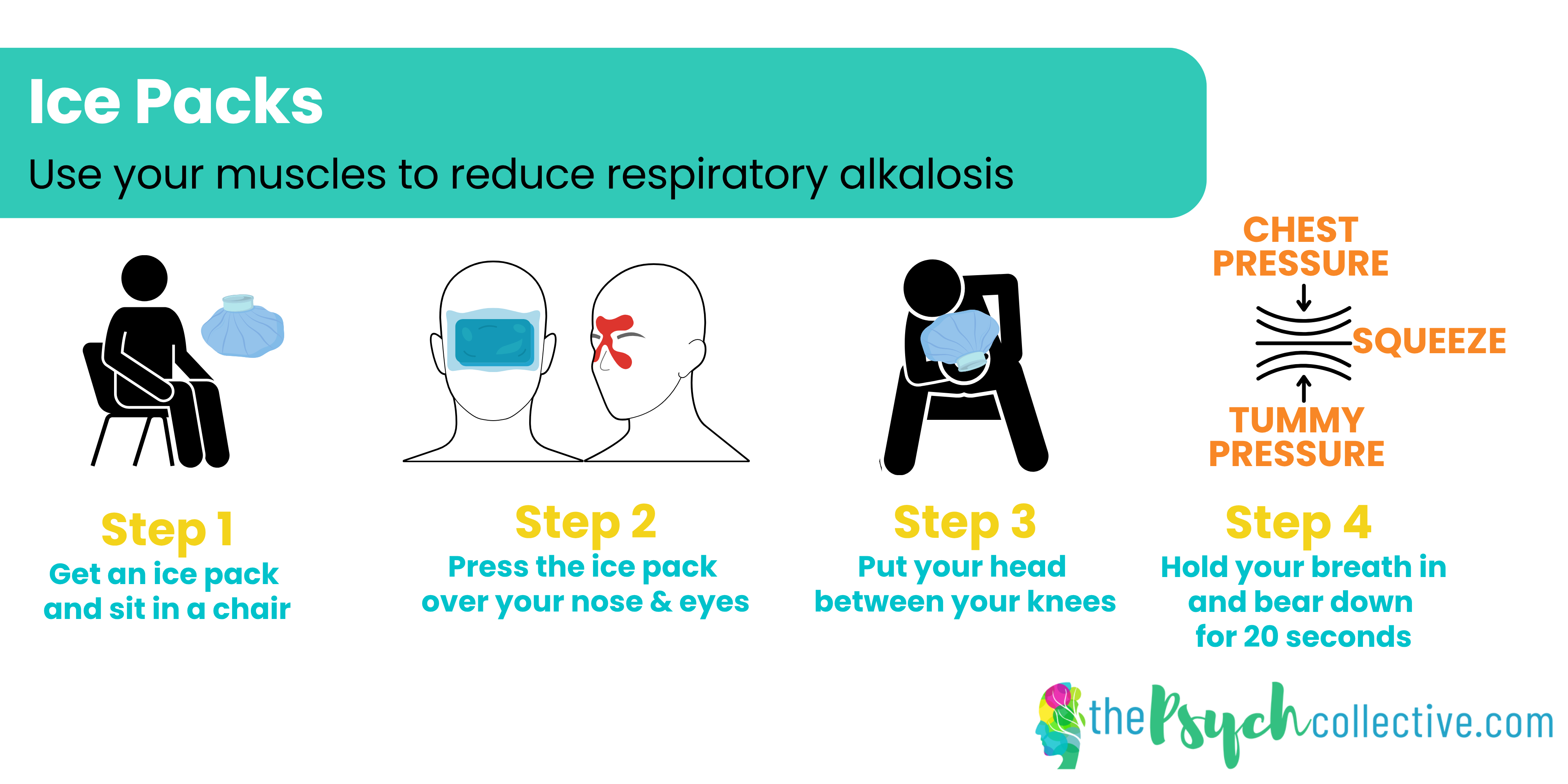
Get a soft, flexible cold pack and sit down in a chair.
-
Place the cold pack across the upper part of your face, particularly around the bridge of your nose and upper cheeks, without obstructing your breathing.
-
Lean forward and put your head between your knees.
-
Hold your breath and bear down for 20 seconds.
-
Sit up slowly. You'll likely be dizzy.
You can repeat a brief application if needed, as long as it remains comfortable and safe. Use a thin cloth barrier to protect your skin from excessive cold.
THIS SKILL IS NOT RECOMMENDED IF YOU ARE PREGNANT, HAVE BLOOD PRESSURE ISSUES, CARDIOVASCULAR ISSUES OR POTS.
Why does an ice pack work?
This technique draws on a biological response called the mammalian dive reflex.
When mammals submerge their faces in cold water, the body activates an automatic survival response that helps conserve oxygen. Cold stimulation of the face, particularly areas supplied by the trigeminal nerve, sends signals to the brainstem that can slow the heart rate through parasympathetic pathways.
The reflex also involves changes in blood flow that help preserve oxygen for essential organs. Importantly, the mammalian dive reflex is an automatic physiological response. You don't need to convince yourself to relax or think positively to activate it.
Applying cold to your face can trigger elements of this response without submerging yourself underwater. The effect varies by individual, but it can interrupt intense physiological arousal.
What if I don't have an ice pack?
You can use a cold, damp face washer from the fridge or a flexible cold compress. If you experience frequent episodes of acute distress, consider keeping a suitable cold pack at home, at work or in an insulated bag when travelling.
A soft pack is generally more practical than a rigid bottle because it can make contact with the contours of your face.
Important: The dive reflex can affect heart rate and blood pressure. Avoid deliberately triggering it if you have significant cardiac problems, fainting episodes, autonomic conditions such as POTS, or during pregnancy unless a healthcare professional has advised that it is safe. Don't force yourself to hold your breath, strain or bend forward if this causes discomfort.
Why Should You Calm Your Body Before Trying to Solve the Problem?
When you're in acute distress, your body is preparing to respond to a threat. Your attention narrows, your thinking becomes less flexible and it can be difficult to make considered decisions. If you're also hyperventilating, the resulting changes in carbon dioxide can further interfere with concentration and increase frightening physical sensations.
This is why we recommend regulating your physiology before trying to regulate your thoughts.
Pause Breathing, Burst Exercise and Ice Packs target different aspects of your body's stress response. They won't necessarily resolve the problem that caused your distress, but they may help you regain enough control to use other coping skills, make a sensible decision or address the situation more effectively.
Once your physical arousal has reduced, you can move on to problem-solving, grounding, self-validation or other distress tolerance skills.
Remember: Practise these skills when you're calm, not just when you're in crisis. The more familiar they become, the easier they are to access when you're distressed.
These techniques are intended for familiar episodes of anxiety or emotional distress, not unexplained medical symptoms.
Seek urgent medical assistance for new or severe chest pain, fainting, significant breathing difficulties or other symptoms that may indicate a medical emergency.
In Australia, call 000 for emergencies.
Want More Practical Skills for Managing Distress?
At The Psych Collective, we teach practical, evidence-informed skills to help people manage overwhelming emotions, panic and difficult situations.
Explore our Surviving Distress resources, including our practical skills course and coping cards, to build a toolkit of strategies you can use in everyday life.
Explore The Psych Collective resources
Are you a Mental Health Clinician?
Our CPD workshops teach these skills in great detail so you can feel confident when leading your clients through these techniques.
About Our Resources