Is an ADHD Assessment Worth It? GP vs Psychologist Assessments Explained
Written by Jess O'Garr, Clinical Psychologist, in consultation with Peter Bland, Registered Psychologist at The Psych Collective.
Is it worth paying for a comprehensive ADHD assessment when you might be able to see your GP instead? With changes to ADHD assessment and prescribing pathways in NSW, more people are asking whether a psychological assessment is actually necessary, particularly if their main goal is to access medication.
The answer depends on what you're hoping to achieve. If you primarily want to explore medication, a medical assessment pathway may be appropriate. But if you want to understand how ADHD affects your thinking, behaviour, emotions, relationships and everyday functioning, a comprehensive psychological assessment can provide a much more detailed picture.
We spoke with Peter Bland, who conducts ADHD assessments for children and adults at The Psych Collective, about what makes an assessment worthwhile, what it actually involves and how to decide whether it's the right investment.
What are the signs of ADHD in children and adults?
ADHD (Attention-Deficit/Hyperactivity Disorder) is a neurodevelopmental condition involving persistent difficulties with attention and/or hyperactivity and impulsivity that interfere with everyday functioning. Symptoms begin in childhood, although they aren't always recognised until adolescence or adulthood.
ADHD is commonly divided into three presentations:
-
Predominantly inattentive: Difficulties sustaining attention, organising tasks, remembering instructions and following through.
-
Predominantly hyperactive-impulsive: Restlessness, excessive talking, interrupting, impatience and difficulty inhibiting behaviour.
-
Combined presentation: Significant symptoms of both inattention and hyperactivity-impulsivity.
In children, ADHD might look like constantly needing reminders, losing school equipment, struggling to finish homework, interrupting conversations or being unable to remain seated when expected.
In adults, it can be less obvious. Someone might be chronically late, overwhelmed by competing responsibilities, constantly switching between tasks or unable to organise their workload. Others appear extremely productive but only because they're working twice as hard to compensate for their difficulties.
However, recognising a few of these behaviours doesn't automatically mean someone has ADHD.
Most children occasionally ignore instructions, and most adults procrastinate. What matters is how persistent the symptoms are, whether they are developmentally inappropriate, and how much they affect everyday life.
How do I know if it's ADHD or just normal behaviour?
The most important question is not simply whether the behaviour exists, but how much it interferes with the person's ability to function.
During our interview, Peter offered a particularly useful way for parents to think about this. Instead of asking, "How many times do I have to tell my child to clean their room?", consider how much the behaviour affects family life.
Are you constantly frustrated because your child cannot follow through with instructions? Are arguments about homework becoming a daily occurrence? Is your child's relationship with siblings or parents deteriorating because of their impulsivity or distractibility?
At school, teachers might notice that a child understands the work but repeatedly needs redirection, cannot finish tasks, or struggles to stay engaged.
The same principle applies to adults. Forgetting an appointment occasionally is normal. Repeatedly missing appointments, struggling to manage work responsibilities and experiencing relationship conflict because of persistent difficulties with attention or organisation may warrant further investigation.
ADHD is not diagnosed based on personality traits alone. Evidence must show that symptoms interfere with functioning.
Importantly, the amount of support someone receives can affect how visible those difficulties are. A child whose parent provides constant reminders, structures every activity and supervises homework may appear to function well precisely because those accommodations are in place.
A good assessment considers what happens without that support, rather than simply concluding that everything is fine because the child is managing.
Can you have ADHD if you can concentrate on things you enjoy?
Yes. ADHD does not mean someone is incapable of concentrating. It involves difficulty regulating attention, particularly with repetitive, uninteresting, or sustained mental effort tasks.
A child might spend an hour absorbed in a video game but struggle to complete homework in ten minutes. An adult might become completely immersed in an interesting project yet repeatedly put off paying bills or answering emails.
This intense engagement is sometimes described as hyperfocus or hyperfixation.
Peter explains that strong engagement with a particular activity can occur in ADHD, but it is not exclusive to ADHD and can also occur in autism or in people without either condition.
The key distinction is whether the person can regulate their attention when needed.
Can they stop the enjoyable activity when required? Can they shift their attention to something less interesting? Can they complete necessary tasks without constant prompting?
These patterns are more informative than whether someone can concentrate on a favourite activity.
Can ADHD symptoms get worse as you get older?
Yes. ADHD symptoms may become more noticeable when the demands of everyday life increase beyond a person's existing coping strategies.
Peter describes this as a loading issue.
A child might cope reasonably well in primary school, where their teacher provides structure and reminders. When they transition to high school, they suddenly have multiple teachers, different classrooms, changing timetables, and greater responsibility for managing assignments.
ADHD may not have suddenly developed. The demands have simply increased.
The same thing can happen when someone moves from high school to university, starts full-time employment, becomes a parent or takes on additional responsibilities.
A person who has managed for years using routines, reminders, and sheer determination may suddenly find those strategies no longer sufficient.
This is particularly relevant for adults who have never previously considered ADHD. They may have experienced symptoms throughout childhood but only seek assessment when adult demands become difficult to manage.
Why are so many adults being diagnosed with ADHD later in life?
Many adults seek an ADHD assessment after recognising longstanding patterns of difficulty that were overlooked during childhood. This is particularly common among people whose symptoms were less disruptive or who developed effective ways to compensate.
Peter describes how some parents begin recognising their own difficulties when their child undergoes an ADHD assessment.
They hear the questions about forgetfulness, distractibility, impulsivity or organisation and realise they've experienced many of the same problems throughout their lives.
In my clinical work, I also see adults who have spent decades believing there is something fundamentally wrong with them.
Perhaps they were repeatedly described as lazy, careless, disorganised, naughty or difficult. Over time, those descriptions can become deeply ingrained beliefs about who they are.
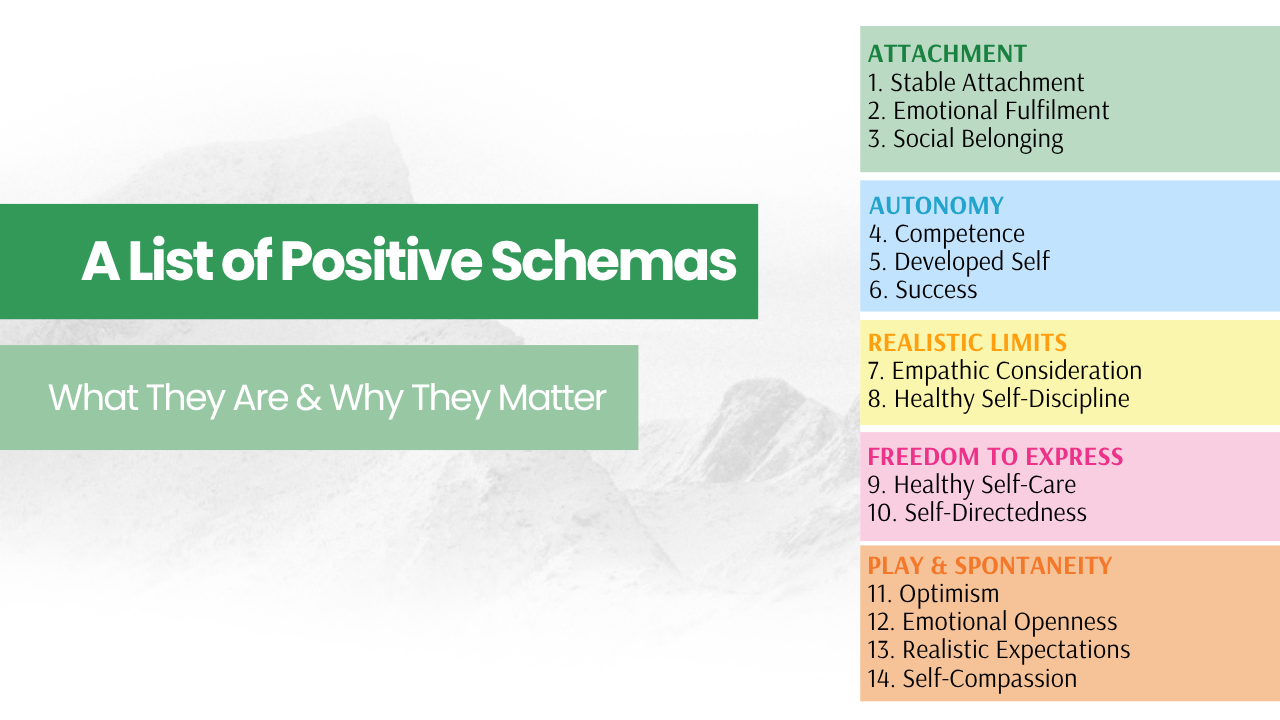
In Schema Therapy, we describe these enduring beliefs as schemas. Someone who has spent their life being criticised for difficulties they didn't understand may develop strong feelings of defectiveness or failure.
A late ADHD diagnosis can help them reinterpret their experiences. It doesn't erase the consequences, but it may help explain why certain things have always been difficult.
For some people, that understanding becomes an important starting point for psychological treatment.
Why does ADHD sometimes become more noticeable in women during perimenopause or menopause?
Some women report worsening attention, organisation and emotional regulation difficulties during perimenopause and menopause, potentially due to hormonal changes, sleep disruption and increased life demands.
Historically, ADHD was more readily recognised in children displaying obvious hyperactivity, particularly boys. Girls with predominantly inattentive symptoms could be overlooked because they weren't necessarily disrupting the classroom.
As adults, some women compensate by becoming exceptionally organised, keeping constantly busy or relying on highly structured routines. During perimenopause, hormonal changes may coincide with difficulties sleeping, changes in mood and reduced cognitive efficiency. These experiences can make previously manageable ADHD symptoms feel significantly harder to control.
In our discussion, Peter noted that he sees women in their 40s and 50s presenting for ADHD assessments, although they don't necessarily identify menopause as the reason for seeking help.
It's important not to assume that new concentration difficulties are automatically ADHD. Menopause-related symptoms, anxiety, depression, sleep problems and other health conditions can produce similar experiences.
A thorough assessment considers the person's history and whether ADHD symptoms were present earlier in life.
Can my GP diagnose ADHD, or do I need a psychologist?
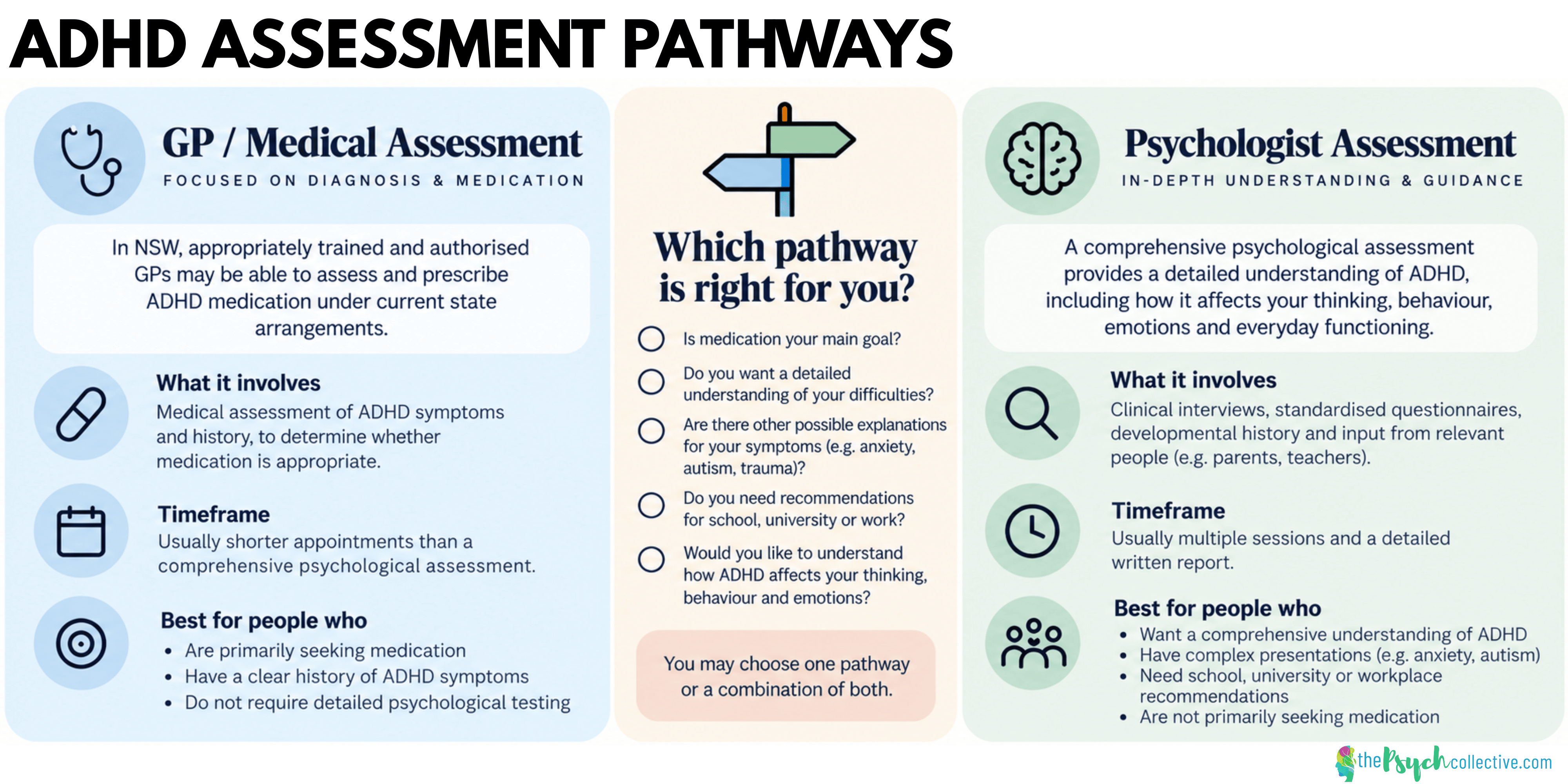
ADHD can be assessed through different medical and psychological pathways. In NSW, appropriately trained and authorised GPs may provide ADHD assessment and medication management under relevant state arrangements, while psychologists can conduct comprehensive diagnostic assessments but cannot prescribe ADHD medication.
Traditionally, people seeking ADHD medication were commonly referred to a psychiatrist or, for children, a paediatrician. NSW has been expanding GP involvement in ADHD care, but qualifications, authorisations, and prescribing requirements still matter.
Not every GP offers ADHD assessment or prescribing, and the availability of a GP pathway does not mean diagnosis should be based on a brief consultation.
So, which pathway should you choose?
That depends on whether you're primarily seeking medical treatment, diagnostic clarification, a detailed understanding of your difficulties or a combination of these.
A medical assessment may be the most direct route when medication is the main consideration. A comprehensive psychological assessment may be especially valuable when the presentation is complicated, there are multiple possible explanations for symptoms, or you want detailed recommendations beyond medication. The Australasian ADHD Professionals Association (AADPA) supports this recommendation. You can access their guidelines HERE ->
You may also benefit from both approaches.
What does a psychologist do during an ADHD assessment?
A comprehensive psychological ADHD assessment examines symptoms, developmental history, everyday functioning, and other possible explanations for the difficulties, using clinical interviews, standardised assessment tools, and information from people close to the person.
At The Psych Collective, Peter uses structured diagnostic interviews and standardised questionnaires to investigate the different aspects of ADHD.
Depending on the person's age and circumstances, these may include tools such as the DIVA or Young DIVA, Conners rating scales and the BRIEF, which examines aspects of executive functioning.
For children, information from parents and teachers is particularly valuable. For adults, developmental history and observations from people who know them well may help establish whether the difficulties have been longstanding.
The assessment is designed to look beyond a simple yes-or-no answer.
For example, someone might report difficulty concentrating, but further investigation reveals that they are also experiencing significant anxiety. Their attention problems might be primarily related to anxiety, ADHD or a combination of both.
Peter explains that this distinction matters because treatment recommendations may differ.
What if parents and teachers disagree about whether a child has ADHD?
Different reports from home and school don't automatically rule out ADHD. They indicate that the psychologist needs to investigate why the child's behaviour appears different across environments.
A parent might describe a child as constantly distracted, emotionally reactive, and difficult to redirect, while the teacher reports no significant concerns.
Sometimes this reflects differences in structure, expectations or the support available in each environment. Some children also work extremely hard to maintain their behaviour at school and become overwhelmed once they return home.
Peter explains that when parent and teacher questionnaires produce different results, he examines the individual responses, considers additional executive functioning measures and looks at what he observes during the assessment.
The aim is not to decide which adult is right.
It is to understand the child's functioning across different environments and determine whether the overall evidence supports a diagnosis.
Is an ADHD assessment worth the money if I can just get medication from my GP?
A psychological ADHD assessment can be worth the investment if you want detailed diagnostic evidence, a better understanding of your difficulties and practical recommendations for managing them. However, not everyone needs a separate comprehensive psychological assessment before accessing appropriate care.
This was one of the central questions I put to Peter during our interview.
If someone can access an appropriate medical assessment and medication pathway, why would they spend additional money on psychological testing?
Peter answered that a comprehensive assessment offers more than a diagnostic label: it helps the person understand exactly how ADHD affects them.
During the interview, people often recognise difficulties they hadn't previously connected with ADHD.
Perhaps they regularly interrupt other people without realising it. Perhaps they rush through work and make avoidable mistakes. Perhaps they struggle to begin tasks, even when they genuinely want to complete them.
These are all areas that can be targeted with practical interventions.
A comprehensive report can also identify associated difficulties with anxiety, depression or emotional regulation, providing useful direction for future treatment.
That said, a psychological assessment is not automatically necessary for every person seeking ADHD medication. Nor does receiving a psychologist's report guarantee that a medical prescriber will prescribe medication without conducting their own assessment.
The question is whether the additional information will meaningfully improve your understanding or treatment planning.
Can an ADHD assessment identify anxiety, depression or other problems?
Yes. A comprehensive ADHD assessment should consider whether symptoms may be better explained by another condition, or whether ADHD is occurring alongside other psychological difficulties.
Anxiety can interfere with concentration because the mind is preoccupied with worries. Depression can affect motivation, memory and mental energy. Poor sleep can produce distractibility, irritability and difficulties with executive functioning.
Trauma-related symptoms may also affect attention, emotional regulation and the ability to remain engaged with tasks.
Peter explains that someone may genuinely experience inattention but not necessarily meet the criteria for ADHD. Alternatively, they may have ADHD alongside anxiety or depression, meaning both conditions need attention.
This is one advantage of taking a broader psychological approach.
Rather than assuming ADHD causes every difficulty, the assessment helps identify which problems require intervention.
For people experiencing both attention difficulties and social communication differences, a combined ADHD and autism assessment may also be worth considering. We'll explore this further in our article on ADHD, autism and AuDHD.
What happens after an ADHD diagnosis?
An ADHD diagnosis can help guide medication decisions, psychological treatment, practical accommodations and strategies for managing everyday life. It is the beginning of a treatment plan, not the treatment itself.
Medication can be extremely helpful for some people, but it doesn't automatically teach organisation, communication, emotional regulation or relationship skills.
For adults, psychological treatment may focus on building routines, managing procrastination, improving task initiation, addressing emotional reactivity and working through longstanding beliefs about inadequacy or failure.
At The Psych Collective, our adult therapy services include support for ADHD-related difficulties, neurodivergence and relationship challenges.
For children, assessment recommendations can help parents and teachers identify strategies that support attention, learning and behaviour without relying exclusively on repeated reminders or punishment.
The objective is to identify what the person finds difficult, what they already do well, and how their environment can better support their functioning.
Should I get an ADHD assessment?
Consider an ADHD assessment if difficulties with attention, organisation, impulsivity, or restlessness have been persistent, occur across important areas of life, and affect your wellbeing, learning, work, or relationships.
It may be particularly useful if you've spent years wondering whether ADHD explains your experiences, if previous treatment hasn't addressed your difficulties, or if several possible diagnoses need to be considered.
But you don't need to decide which assessment pathway is right for you.
ADHD Assessments at The Psych Collective
At The Psych Collective, Registered Psychologist Peter Bland provides comprehensive ADHD assessments for children, adolescents and adults.
Our assessments aim to provide diagnostic clarity, explain the person's individual difficulties and strengths, and identify practical recommendations for moving forward.
Whether you're seeking answers for your child or trying to understand lifelong difficulties yourself, the goal is the same: to understand what's happening and what you can do about it.
About Our Resources