Suspicious Overcontroller Mode
Suspicious Overcontroller Mode: When Control Is About Staying Safe
Written by Jess O'Garr, Clinical Psychologist and Schema Therapy trainer at The Psych Collective.
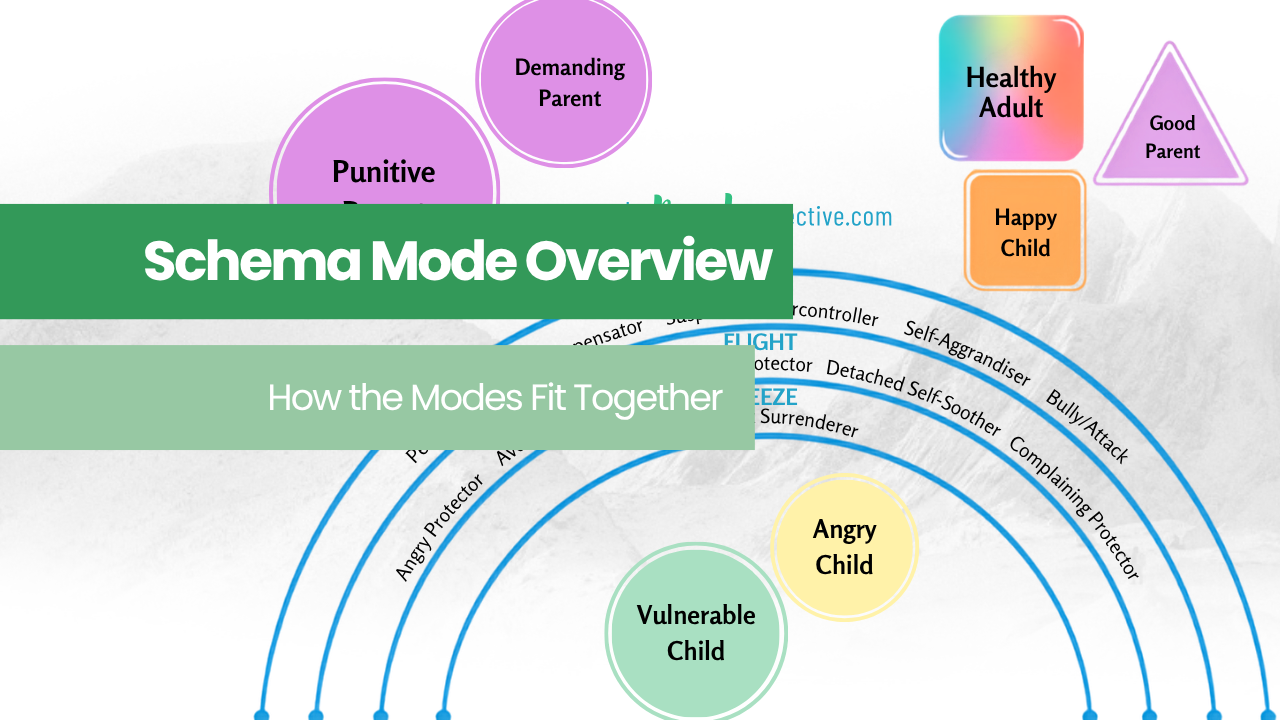
The Suspicious Overcontroller is a Fight Coping Mode in Schema Therapy that tries to prevent anything bad from happening by controlling everything, suspecting everyone and trusting no one. Underneath the control is usually fear: Something bad could happen; other people can't necessarily be trusted to prevent it, so I need to stay alert and take control.
This mode can look controlling, rigid or mistrustful from the outside, but it often comes from a genuine attempt to keep yourself or the people you care about safe. The problem is that the more you check, monitor and control, the more you reinforce the belief that you are the only thing preventing disaster. Other people can also become increasingly frustrated at being monitored or told what to do, creating significant problems in relationships.
What causes Suspicious Overcontroller Mode?
One of the main maladaptive schemas underneath the Suspicious Overcontroller is Mistrust/Abuse. If you've experienced abuse, betrayal or repeated situations where other people couldn't be trusted, it makes sense that you might develop the belief that other people have their own agendas or will eventually hurt you.
We may also see Vulnerability to Harm: the belief that something bad is going to happen and that you or someone you care about could be hurt, become sick or experience some other catastrophe. Abandonment can also sit underneath the mode, especially when mistrust is tied to the expectation that people will eventually leave.
The trigger is therefore usually some form of perceived danger. The danger doesn't have to be objectively imminent. It simply needs to feel sufficiently possible that the Suspicious Overcontroller decides it needs to take charge.
Watch the Video
Hear Jess explain the Suspicious Overcontroller Mode
What does the Suspicious Overcontroller look like?
There is often a strong sense that nothing is completely safe and nobody can be completely trusted. This can lead to hypervigilance, suspiciousness, questioning, monitoring, checking and micromanaging. The person constantly looks for what could go wrong and tries to prevent it before it happens.
This might involve monitoring a partner or children, repeatedly checking where people are or using location-sharing apps to make sure somebody arrived safely. It might involve rigid rules about what other people should do, repeated safety checks or taking responsibility for every decision because "I'm the only person who understands how dangerous this could be."
Some people develop repetitive checking or safety behaviours that can start to resemble obsessive-compulsive behaviour. The key is the function: "I need to do this to make sure nothing bad happens."
Unlike the Perfectionistic Overcompensator, the focus isn't primarily on doing everything perfectly. It's about safety. The Suspicious Overcontroller isn't necessarily thinking, Nobody else will do this well enough. They are thinking, Nobody else will keep this safe enough.
Why can trauma lead to overcontrol?
I see this mode quite frequently in people with PTSD and other trauma presentations, including military and emergency services personnel who have had repeated exposure to genuinely dangerous situations. If you have spent years seeing how badly things can go wrong, it can fundamentally alter how you assess danger.
The internal logic can become: I've seen what people are capable of. I've seen things go wrong without warning. I know the world isn't safe, so don't tell me I'm overreacting.
That history matters. The Suspicious Overcontroller hasn't necessarily invented danger out of nowhere. The problem is that possibility can start being treated as probability. Something could happen; therefore, it begins to feel as though it is likely to happen, and control becomes the strategy used to prevent it.
The result can be a life organised around preventing every possible threat rather than responding proportionately to probable threats.
How does the Suspicious Overcontroller become maladaptive?
The biggest problem with safety behaviours is that they can reinforce themselves. Imagine your 20-year-old son is driving to a friend's house and you repeatedly check his location until you see that he has arrived. You feel relieved when he gets there safely.
Your brain then makes the wrong connection: "Everything was okay because I checked."
The reality is that checking the app had absolutely no influence on whether he arrived safely. But because checking reduced your anxiety, it starts to feel necessary. Next time, you're even more likely to check.
The same thing happens with control. If you make every decision, establish all the rules and closely monitor everyone else, you never get the opportunity to discover that things can also be okay without you controlling them.
Relationships can suffer enormously. From your perspective, you may be trying to protect the people you care about. From their perspective, they're thinking: "For God's sake, leave me alone. I'm an adult. I can make my own decisions." The best of intentions can eventually turn into a level of control that other people experience as intrusive or oppressive.
Suspicious Overcontroller or Perfectionistic Overcompensator?
These two Fight Coping Modes can look very similar because both can involve checking, micromanaging and difficulty giving up control. The difference is why the person is controlling.
The Perfectionistic Overcompensator is primarily focused on performance: I need this done perfectly because I can't risk failing, being criticised or getting it wrong.
The Suspicious Overcontroller is primarily focused on safety: I need to control this because something bad could happen and I don't trust other people to prevent it.
Understanding the function matters because the intervention needs to address the vulnerability underneath the behaviour. Telling someone to simply "stop controlling everything" doesn't address their genuine fear that letting go of control will put themselves or somebody they love in danger.
What does the Suspicious Overcontroller need?
As with our other Maladaptive Coping Modes, an important core emotional need is realistic limits. There need to be limits on checking, monitoring, micromanaging and making decisions for other people.
But this mode also needs opportunities for autonomy, freedom and spontaneity—both for the person themselves and for the people around them. Other healthy adults need to be allowed to make decisions, express their own preferences and manage their own safety.
This can be very uncomfortable because we're essentially asking the Suspicious Overcontroller to do the thing it fears most: let go of some control.
That needs to happen gradually and thoughtfully. The goal isn't to abandon reasonable safety precautions. It is to distinguish between sensible safety and excessive control being used to manage anxiety.
How does the Healthy Adult manage Suspicious Overcontroller Mode?
One of the Healthy Adult's biggest jobs is reality checking. Ask yourself whether you are responding to what is probable or simply what is possible. Could the bad thing happen? Maybe. But how likely is it actually to happen?
The Healthy Adult also needs to start reducing unnecessary safety behaviours. If you always check an app to make sure someone arrived safely, experiment with checking less or agreeing on another arrangement. If you constantly make decisions for everybody else, deliberately allow another person to decide. If you micromanage because you don't trust other people to handle something safely, give them an opportunity to demonstrate that they can.
Approaches similar to exposure and response prevention (ERP) can sometimes be useful clinically where checking and safety behaviours are prominent. The basic principle is that you experience the worry without immediately performing the behaviour that normally reduces it. Over time, you have an opportunity to learn that your checking behaviour wasn't actually keeping the world together.
It is also useful to notice the relationship between fear and anger. The Suspicious Overcontroller may primarily be frightened, but when somebody refuses to follow their rules, that fear can come out as anger. Recognising I'm frightened right now can help the Healthy Adult respond more effectively than automatically becoming controlling or aggressive.
How can other people respond to a Suspicious Overcontroller?
Other people need boundaries too. It is reasonable to say: I'm not willing to have you monitoring my location all the time. But because the control is usually coming from fear, simply withdrawing all reassurance can sometimes intensify the response.
Compromise can be useful. For example: I don't want you tracking me on an app, but I'll send you a message when I arrive. Over time, repeated experiences of other people behaving reliably can help build trust, while the Suspicious Overcontroller also takes responsibility for gradually backing away from excessive monitoring.
If you're supporting someone with this mode, don't deliberately weaponise their fears about danger or abandonment to make a point. If you want somebody to trust that you can make your own decisions safely, behaving recklessly to prove that they can't control you is unlikely to help. The healthier goal is for one person to demonstrate trustworthiness while the other gradually learns to tolerate not being in control.
Frequently asked questions about Suspicious Overcontroller Mode
What is Suspicious Overcontroller Mode?
Suspicious Overcontroller is a Fight Coping Mode in Schema Therapy that attempts to prevent danger by staying vigilant, mistrusting others, checking, monitoring and maintaining control.
What schemas are associated with Suspicious Overcontroller Mode?
Common schemas include Mistrust/Abuse and Vulnerability to Harm, with Abandonment sometimes also contributing to the person's difficulty trusting other people.
What is the difference between Suspicious Overcontroller and Perfectionistic Overcompensator?
Both can involve control and micromanagement, but their functions differ. Perfectionistic Overcompensator controls primarily to prevent failure or criticism. Suspicious Overcontroller controls primarily to prevent danger and maintain safety.
How do you manage Suspicious Overcontroller Mode?
The Healthy Adult works on reality checking, distinguishing possibility from probability, reducing unnecessary checking and safety behaviours, allowing other people greater autonomy and gradually learning that safety doesn't depend on controlling everything.
Want to understand your Schema Modes?
For clients: Our Schema Therapy Patient Workbook, Schema Therapy Cards and Complete Set of Schema Therapy Worksheets can help you identify the schemas, needs and coping modes underneath patterns such as mistrust, checking and overcontrol, and strengthen your Healthy Adult.
Explore our Schema Therapy resources →
Are you a Mental Health Clinician?
Our Schema Mode Therapy Clinician Guide provides practical tools for formulation and intervention, while my Schema Therapy and Schema Mode Therapy training focuses on understanding the function of coping modes and knowing what to do with them in therapy.
Explore upcoming Schema Therapy training →
Written by Jess O'Garr, Clinical Psychologist and Schema Therapy trainer at The Psych Collective.
About Our Resources