

Over-Control of Emotions
What is Over-Control of Emotions
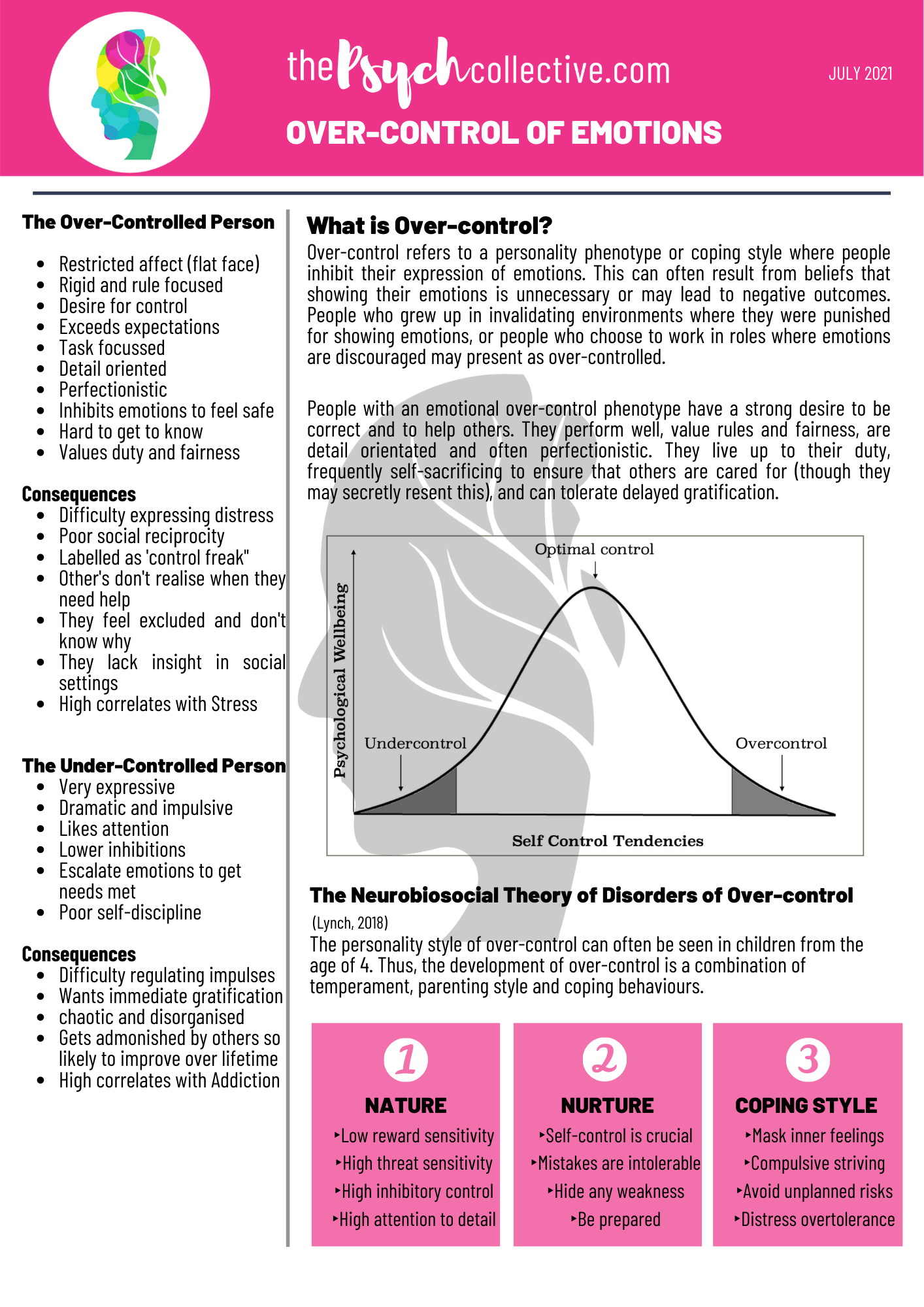
Here we provide a brief description of the characteristics of someone who is over-controlled in their emotional expression and how Radically Open Dialectical Behavioural Therapy proposes to treat it.
Are your emotions over-controlled?
An overview of the theory and therapy for overcontrol.
This concept, which has gained attention in the field of psychology, explores how individuals inhibit and suppress their emotions to an extreme degree. By examining the bell curve analogy, Jessica helps us understand the two ends of the spectrum: under control of emotions and overcontrol of emotions. While the former group is characterized by expressive behavior, the latter group struggles with limited emotional expression, often leading to loneliness and relationship difficulties. In this blog post, we will delve deeper into the concept of emotional overcontrol, its effects, and potential coping strategies.
The Spectrum of Emotional Control
Emotional control exists on a spectrum, with most individuals falling in the middle. On one end, we have individuals who display under control of emotions. They express their feelings openly, exhibit excitability, impulsivity, and enjoy attention. Conversely, those with overcontrol of emotions tend to inhibit and suppress their emotions, appearing stoic and unresponsive. This extreme form of emotional control stems from a desire for safety and protection but can result in challenges in interpersonal relationships.
Understanding Overcontrol of Emotions
Emotional overcontrol is a relatively new concept that has gained recognition in the literature. It was first introduced by Thomas Lynch, a UK-based psychologist, who developed "radically open DBT" (Dialectical Behavior Therapy). People with emotional overcontrol exhibit perfectionistic tendencies, are highly driven, detail-oriented, and excel in delayed gratification. They often struggle to express their emotions to others, leading to difficulties in communication. Commonly referred to as having a "flat face," they have limited emotional responsiveness, making it challenging for others to connect with them. Consequently, they often feel excluded and struggle with loneliness and envy.
Factors Contributing to Overcontrol
Emotional overcontrol is influenced by a combination of nature and nurture factors, as well as coping mechanisms. The individual's temperament, such as high reward sensitivity and heightened sensitivity to negative experiences, can predispose them to overcontrol. Parenting styles that emphasize constant control, avoidance of emotional expression, and focus on task performance further contribute to the development of emotional overcontrol. Coping mechanisms like masking inner feelings, compulsive striving, and avoiding risks play a role in reinforcing the need for control and perpetuating loneliness.
Challenges and Reinforcement
Unlike those with under control of emotions, individuals with overcontrol often struggle to improve over time. Their controlled demeanor is often praised and reinforced in society, particularly in specific professions such as the military or emergency services. Consequently, their coping strategy of tolerating distress and suppressing emotions becomes further entrenched, leading to persistent loneliness and difficulty in building meaningful connections.
Addressing Emotional Overcontrol
Recognizing the challenges associated with emotional overcontrol, clinicians have developed approaches to facilitate change. Radically Open DBT focuses on three core areas for creating change: self-inquiry, social signaling, and social connectedness. Self-inquiry involves developing awareness of internal emotional experiences and identifying the mismatch between internal and external expressions. Social signaling aims to teach individuals how to communicate their emotions effectively through facial expressions and body language. Lastly, social connectedness emphasizes allowing oneself to experience and express emotions to foster genuine connections with others.
Emotional overcontrol is a complex struggle that can lead to isolation and relationship difficulties. Understanding the factors contributing to overcontrol, including both innate traits and learned coping mechanisms, is crucial for individuals to seek support and develop healthier ways of expressing emotions. By embracing self-inquiry, learning effective social signaling, and fostering social connectedness, individuals with emotional overcontrol can work towards a more balanced emotional expression and improved well-being.
If you resonate with the concept of emotional overcontrol or wish to learn more, feel free to visit CollectiveTop.com for additional resources and support. You can also engage with the community by leaving comments on the YouTube channel, sharing the video on social media, or connecting via Instagram. Remember, acknowledging and addressing emotional overcontrol is a crucial step toward personal growth and healthier relationships.
Styles of Coping Word Pairs
If you are interested in checking your own level of control, this list of coping styles asks you to tick which word most suits you from each pair. Then add up the number from each column. More from column A suggests Undercontrol, whereas column B shows Overcontrol.
To download our handout on Over-Control of Emotions, go to our Resources page. It's free!
To download the Styles of Coping Word Pairs, just click on it.
Share
Categories
About Our Resources
We offer actionable resources and teach real skills to help people make meaningful change in managing mental health issues through different modes depending on people's learning preferences including infographics, text, worksheets, handouts and video.

Ever wondered if you have ADHD? Use our 2-minute self-test to find out

Family therapy in Wollongong with Laura Marett at The Psych Collective. Gottman-informed, trauma-sensitive support to rebuild communication, trust & connection.

What is an accredited mental health social worker and what do they do

Strengthen your relationship with evidence-based couples counselling at The Psych Collective in Wollongong.

Parental burnout puts relationships under real pressure. Laura Marett explains how Gottman Method couples therapy helps partners stay connected through it all.

Heal and rebuild trust after infidelity with Gottman Method couples therapy in Wollongong. Evidence-based support for betrayed and unfaithful partners.

Discover practical, evidence-based strategies to reduce conflict and improve communication in your relationship with couples therapy in Wollongong using the Gottma Method.

Find out how couples counselling works and learn the methods used in this type of therapy.