

A Hierarchy of Mindfulness
Exploring Different Levels of Mindfulness
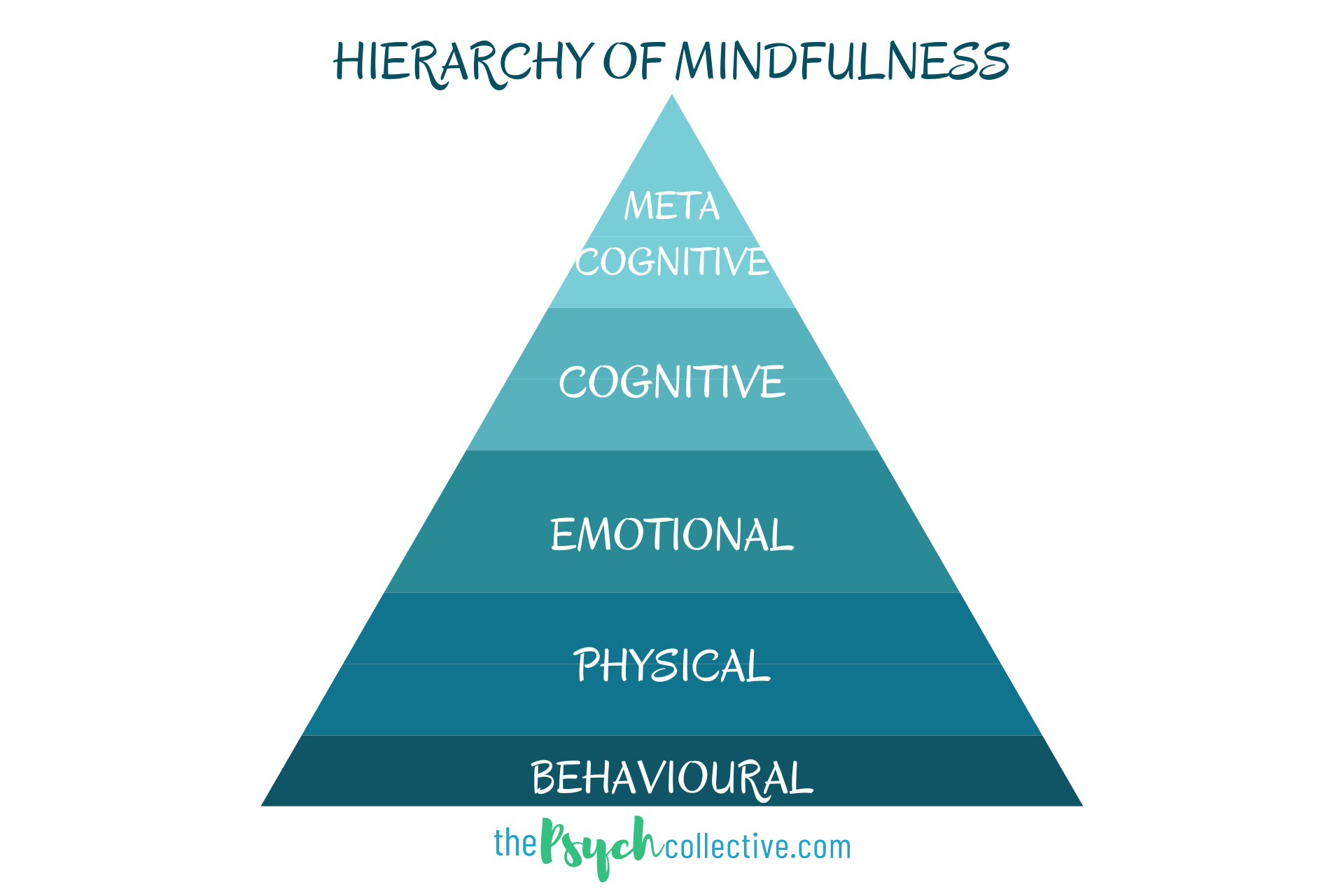
In this follow-up blog on mindfulness, Jess and Dr Al share their perspectives on this practice. While Al discussed mindfulness of thoughts in a previous video, Jess introduces a comprehensive approach to mindfulness that acknowledges different levels of engagement. This breakdown allows individuals to find a starting point that feels accessible and gradually progress towards deeper levels of mindfulness. Join us as we explore Jess's hierarchy of mindfulness and discover how to cultivate awareness and attention in various aspects of our lives.
Level 1: Awareness of Behaviours
Jess begins by highlighting the importance of paying attention to our behaviours. This level involves choosing an activity and engaging in it with full attention. By focusing on the present moment, we can bring awareness to our actions and immerse ourselves in the experience. This level is particularly helpful for individuals who find it challenging to tune into their thoughts or are seeking a safe way to address distressing emotions.
Level 2: Physical Awareness
Moving up the hierarchy, Jess emphasises the significance of turning our attention inward to the physical sensations in our bodies. Conducting a body scan, starting from the top of the head and working downward, allows us to notice any tension, discomfort, or other sensations. By becoming familiar with our physical state, we gain a deeper understanding of our bodies and foster a sense of mastery over our well-being.
Level 3: Emotional Awareness
The next level involves bringing awareness to our emotional state. Jess suggests that after conducting a body scan, we can identify clues that connect physical sensations to emotions. For those who struggle to label or describe their emotions, she recommends using an emotions list or an emotion wheel to find the closest approximation. This practice enables us to develop a greater awareness of our emotional landscape and enhances our ability to navigate and understand our feelings.
Level 4: Cognitive Awareness
At this level, Jess encourages us to examine our thoughts and cognitive patterns. Journaling can be a helpful tool for capturing and processing our thoughts, especially when they feel overwhelming or difficult to articulate. By documenting our thoughts and reading them back, we can identify themes and gain insights into our mental processes.
Level 5: Meta-Cognitive Awareness
As we ascend the levels of mindfulness, we reach a crucial stage: metacognitive awareness, the art of thinking about our thinking. Jess emphasises the significance of cultivating this higher level of mindfulness, where we become conscious of when our thoughts wander off track and redirect our attention to the present moment. By nurturing metacognitive awareness, we gain the ability to observe our thoughts without judgment and disentangle ourselves from their grip, fostering a sense of clarity and control over our mental landscape. With practice, we can harness the power of metacognition to enhance focus, regulate emotions, and deepen our overall mindfulness practice.
Choosing the Right Starting Point
While some people will vary in their readiness to engage with different levels of mindfulness. Some may be comfortable starting at the higher levels, while others may benefit from beginning with the more accessible levels. It's important to assess your mindfulness practice and determine areas that require more attention and development. By building skills gradually, you can strengthen you capacity for attention and awareness.
Share
Categories
About Our Resources
We offer actionable resources and teach real skills to help people make meaningful change in managing mental health issues through different modes depending on people's learning preferences including infographics, text, worksheets, handouts and video.

Ever wondered if you have ADHD? Use our 2-minute self-test to find out

Family therapy in Wollongong with Laura Marett at The Psych Collective. Gottman-informed, trauma-sensitive support to rebuild communication, trust & connection.

What is an accredited mental health social worker and what do they do

Strengthen your relationship with evidence-based couples counselling at The Psych Collective in Wollongong.

Parental burnout puts relationships under real pressure. Laura Marett explains how Gottman Method couples therapy helps partners stay connected through it all.

Heal and rebuild trust after infidelity with Gottman Method couples therapy in Wollongong. Evidence-based support for betrayed and unfaithful partners.

Discover practical, evidence-based strategies to reduce conflict and improve communication in your relationship with couples therapy in Wollongong using the Gottma Method.

Find out how couples counselling works and learn the methods used in this type of therapy.